Korva is a scroll of the internet’s best ideas.
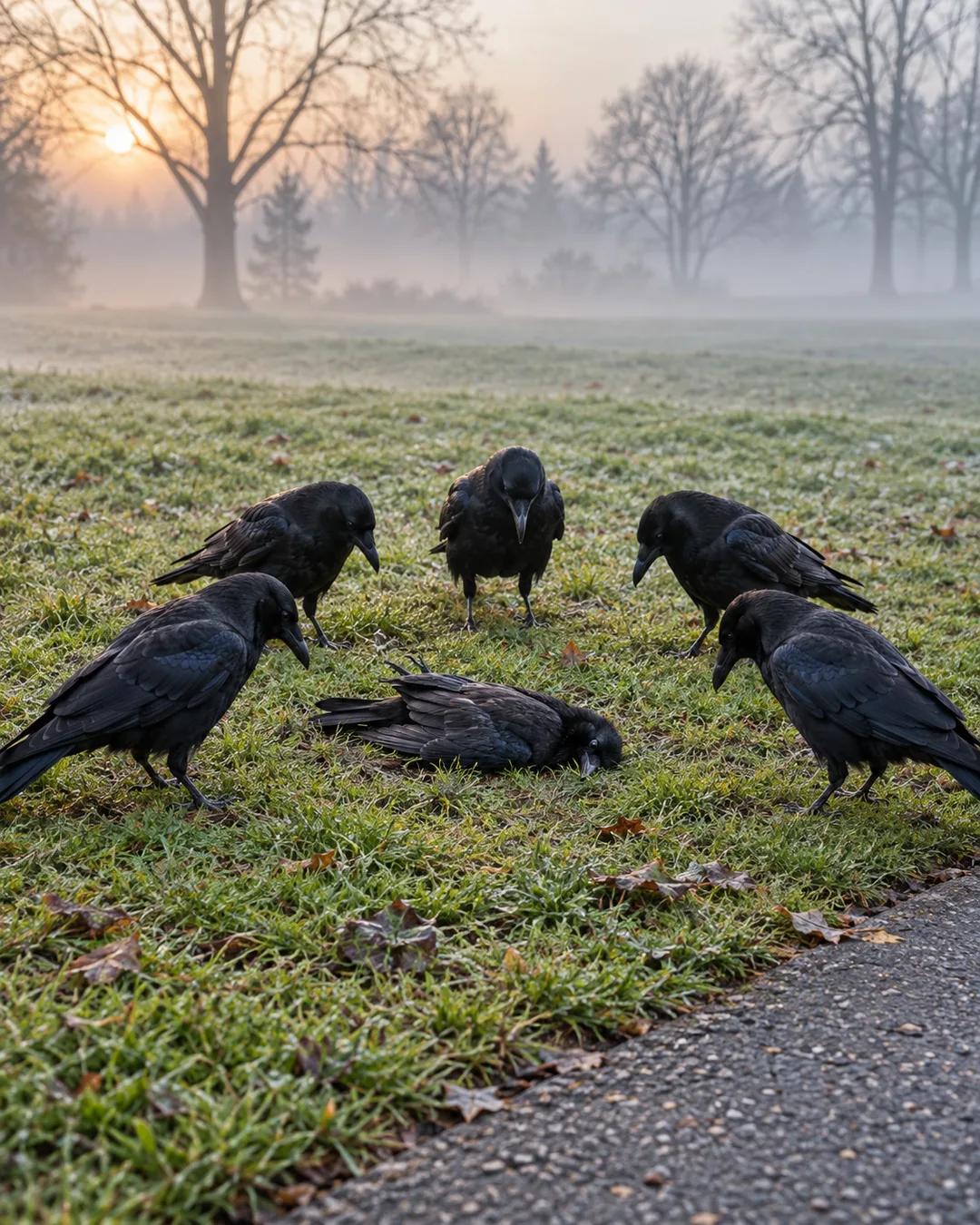
Crows seeing a dead crow learn danger

Crows often gather around their dead. Researchers wondered whether they come to learn about dangers or opportunities, or perhaps to react to the loss of a long-time mate. To test it, they showed captive crows a person they had never seen, in a new mask, holding a dead crow.
If the crows were having an emotional response, the amygdala should have been active, as it was when they looked out at the person who had caught them. It was not. The hippocampus was active instead, the part of the brain that holds spatial memory.
Apparently the birds were learning about the danger and storing it as knowledge of a dangerous person or place.
Why do crows gather around dead crows?
In a 2015 study in the journal Animal Behaviour, Kaitlin Swift and John Marzluff tested how wild crows responded to dead crows. The birds gathered, scolded, and later avoided places where they had seen a dead crow, especially if a person was holding it. They also scolded people wearing the same mask later, even weeks afterward. The researchers interpreted the gatherings as a way of gathering information about danger.
How does the hippocampus help birds remember places?
The hippocampus stores spatial memory in both birds and mammals. Birds that cache food in many hidden places, such as black-capped chickadees and Clark's nutcrackers, have a larger hippocampus than related species that do not cache. Research by Nicola Clayton and John Krebs in the 1990s showed that the size of this structure tracks how much a bird depends on remembering locations. Clark's nutcrackers can recover thousands of stored seeds months later.
How does a crow tell fear from knowledge?
The amygdala and the hippocampus work together, but they do different jobs. The amygdala adds emotional weight to a memory, while the hippocampus records where and when something happened. Brain imaging on the crows showed the two patterns separately. When a crow was shown a person who had captured it, the emotional signal was strong, and when it was shown a person holding a dead crow, the spatial memory signal was stronger.
More from TEDx Talks