Korva is a scroll of the internet’s best ideas.
Cut off for 9,600 years

First Australians
Modern humans first reached the continent around 50,000 years ago. Sea levels were much lower then, so people could walk down the Sunda Peninsula, cross a few islands, and reach New Guinea, which was joined to Australia as the prehistoric continent of Sahul. They stayed almost entirely undisturbed by any other humans for tens of thousands of years.
Rising Seas
As seas rose after the last ice age, Sahul flooded, and the land bridge to New Guinea sank beneath the waves around 10,000 years ago. That made Australia more remote than before and even less likely to be visited by outsiders.
Two Visitors
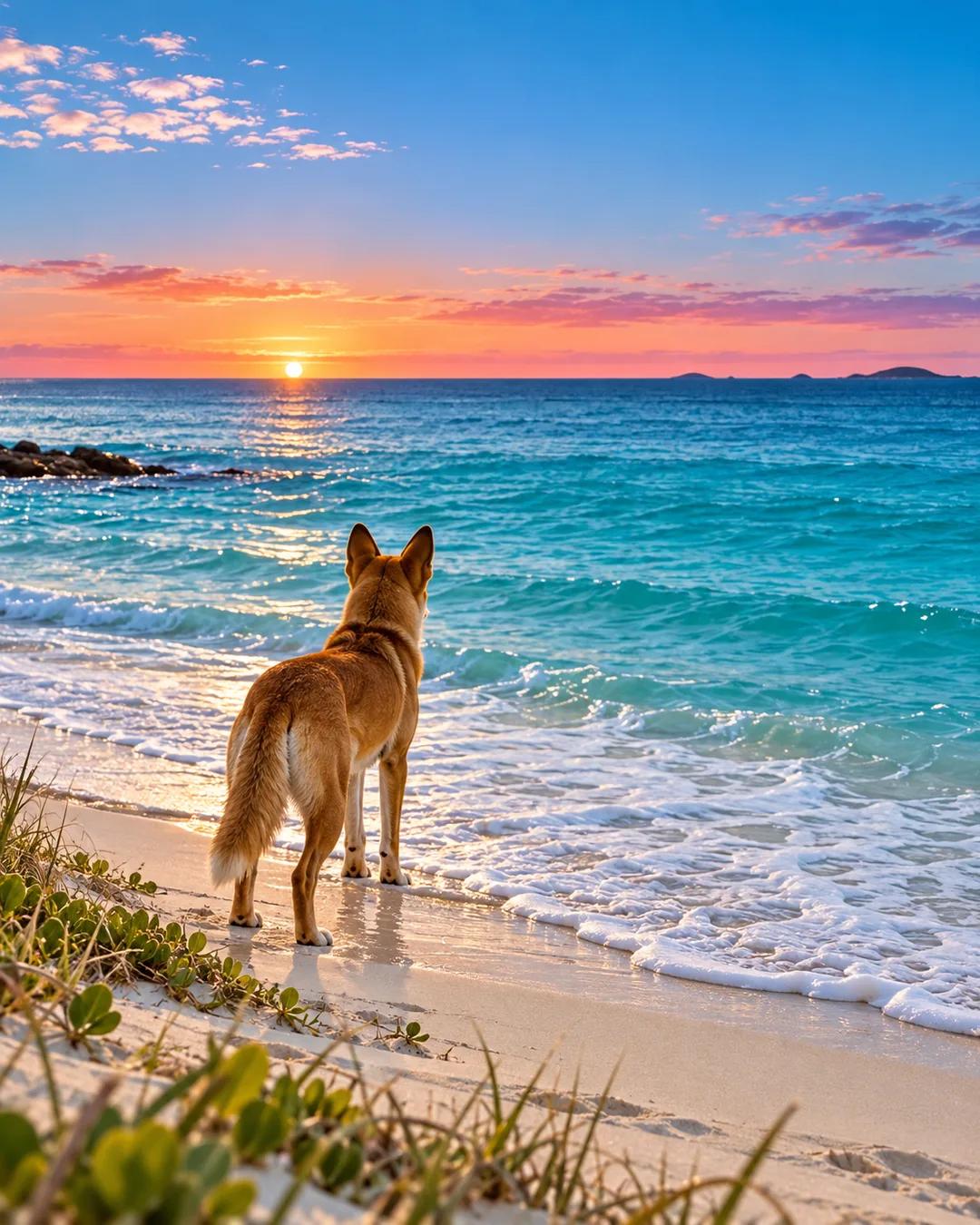
The first likely visit was the dingo, an invasive species of dog probably from New Guinea, which arrived around 8,300 years ago, potentially with an unknown group of human visitors. The second came around 4,000 years ago: about 11% of modern Aboriginal Australian DNA derives from Indians, which suggests an encounter with a group of humans from South Asia.
The next outsiders showed up in 1606, when a Dutchman and his crew landed on the western side of the Cape York Peninsula.
Why did the first settlers still need boats?
Sea level during the last ice age sat roughly 120 meters below today's, according to reconstructions of the last glacial maximum. That joined Australia to New Guinea and mainland Asia's Sunda shelf into two large landmasses, Sahul and Sunda. A band of deep ocean called Wallacea still separated the two, and travelers had to cross open water of tens of kilometers between islands. Those crossings make the arrival around 50,000 years ago one of the earliest known sea voyages.
How does DNA reveal an ancient visit from India?
In 2013, a team led by Irina Pugach at the Max Planck Institute for Evolutionary Anthropology compared genome-wide variation across Aboriginal Australians, New Guineans, and populations from Asia. They found a signal of gene flow from India into Aboriginal Australian ancestors, and their estimate put it at about 4,000 years ago. Because mixing leaves long matching stretches of DNA that break up at a predictable rate each generation, geneticists can date it. The same study found no sign of other contact in that window.
What did dingoes change on the mainland?
Dingoes became the mainland's top land predator, filling a role that no other dog-like animal had held there. The thylacine, a marsupial predator, and the Tasmanian devil both disappeared from the mainland around 3,000 years ago, which overlaps with the dingo's spread. Researchers debate how much dingoes, shifts in climate, and human hunting each contributed. The last known thylacine died in a Tasmanian zoo in 1936.
More from RealLifeLore