Korva is a scroll of the internet’s best ideas.
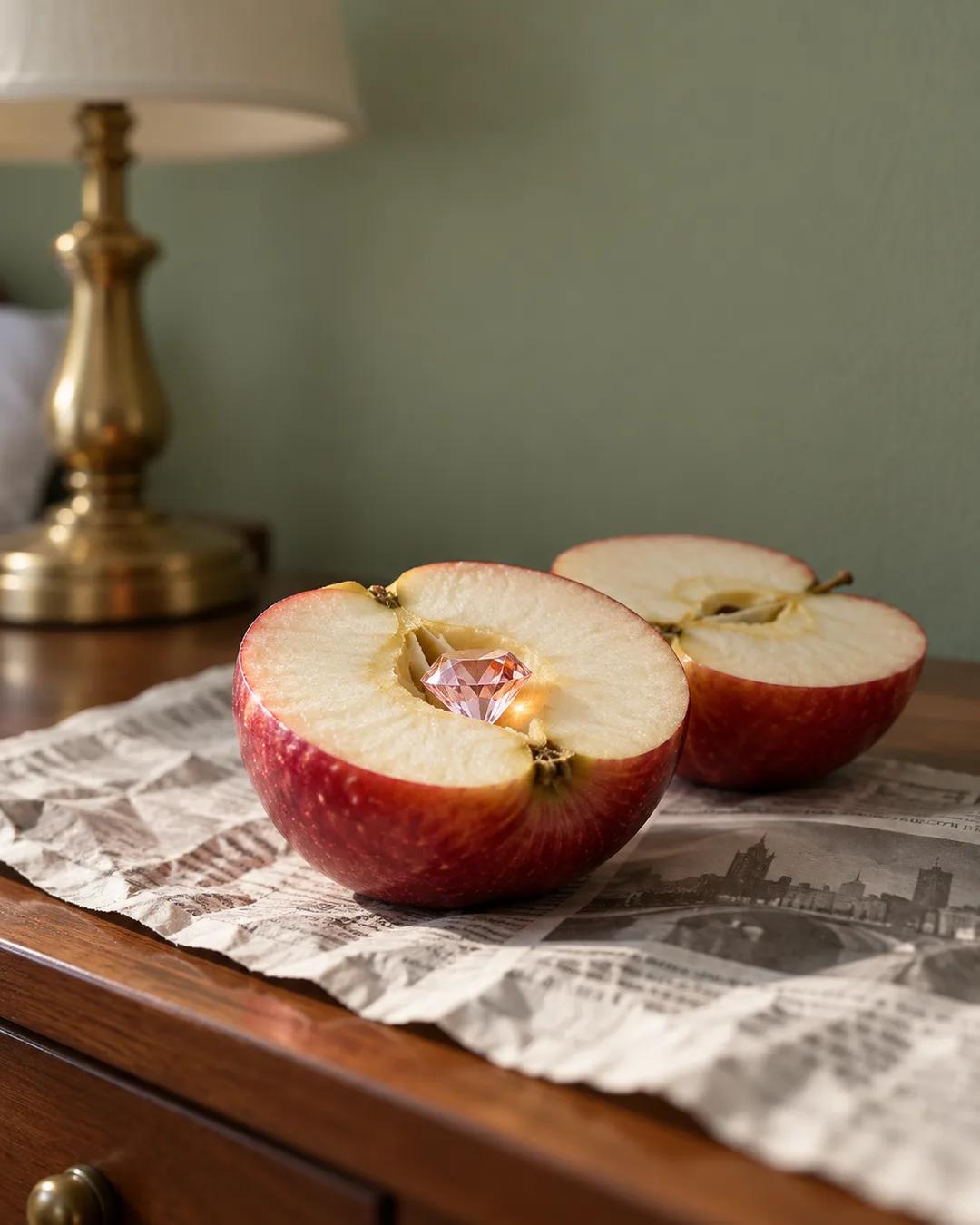
Diamond hidden inside an apple

The theft
The diamond left the Château de Chantilly in France in 1926, along with other jewels from the château. Its picture had run in all the newspapers, which left the two men holding a gem nobody would buy.
They left the apple in their bedroom at a hotel in Paris, and a maid found the diamond by eating the apple. The jewels were recovered two months later and brought back to the château.
The stone itself
The diamond has been kept in a safe place ever since, out of public view for a full century. Its color is a very subtle pink with a touch of orange, and gemologists count it among the purest diamonds in the world. It was faceted in London in the early eighteenth century, and it may have come from India. The Prince de Condé, a cousin of the French kings, owned it from the eighteenth century on.
Back on display
Now the stone, valued at tens of millions of dollars, is back on display at the château's Condé Museum, exactly 100 years after the theft. It belongs to the museum as a public French treasure, and it will be on view until January 3. Showing it took a whole security system, which is why the exhibit is temporary.
Why are some diamonds pink?
Gemological labs such as the GIA attribute pink color to distortion in the diamond's crystal lattice, with no chemical impurity involved. Intense pressure after the crystal forms is thought to bend the lattice so that it absorbs some green light and reflects pink. For decades the Argyle mine in Western Australia supplied the bulk of the world's pink diamonds, until it closed in 2020.
Why can't thieves sell famous gems?
A famous stone is recognizable by its cut, its weight, and its inclusions, the tiny internal features that work like fingerprints. Dealers who handle large diamonds know the notable ones on sight. The usual workaround is recutting, which can erase the identifying features but costs the stone much of its weight and value. Insurers and police also circulate descriptions of stolen stones to dealers worldwide, which narrows the pool of buyers further.
What makes a diamond one of the purest?
Gemologists sort diamonds by how much nitrogen sits in the crystal. Type IIa diamonds contain almost none, and the GIA reports that they make up only a small share of natural stones. Their lack of nitrogen gives them exceptional transparency, and the celebrated colorless diamonds of Golconda in India were largely of this type. Type IIa diamonds also conduct heat better than other natural diamonds.
More from Global News Podcast