Korva is a scroll of the internet’s best ideas.
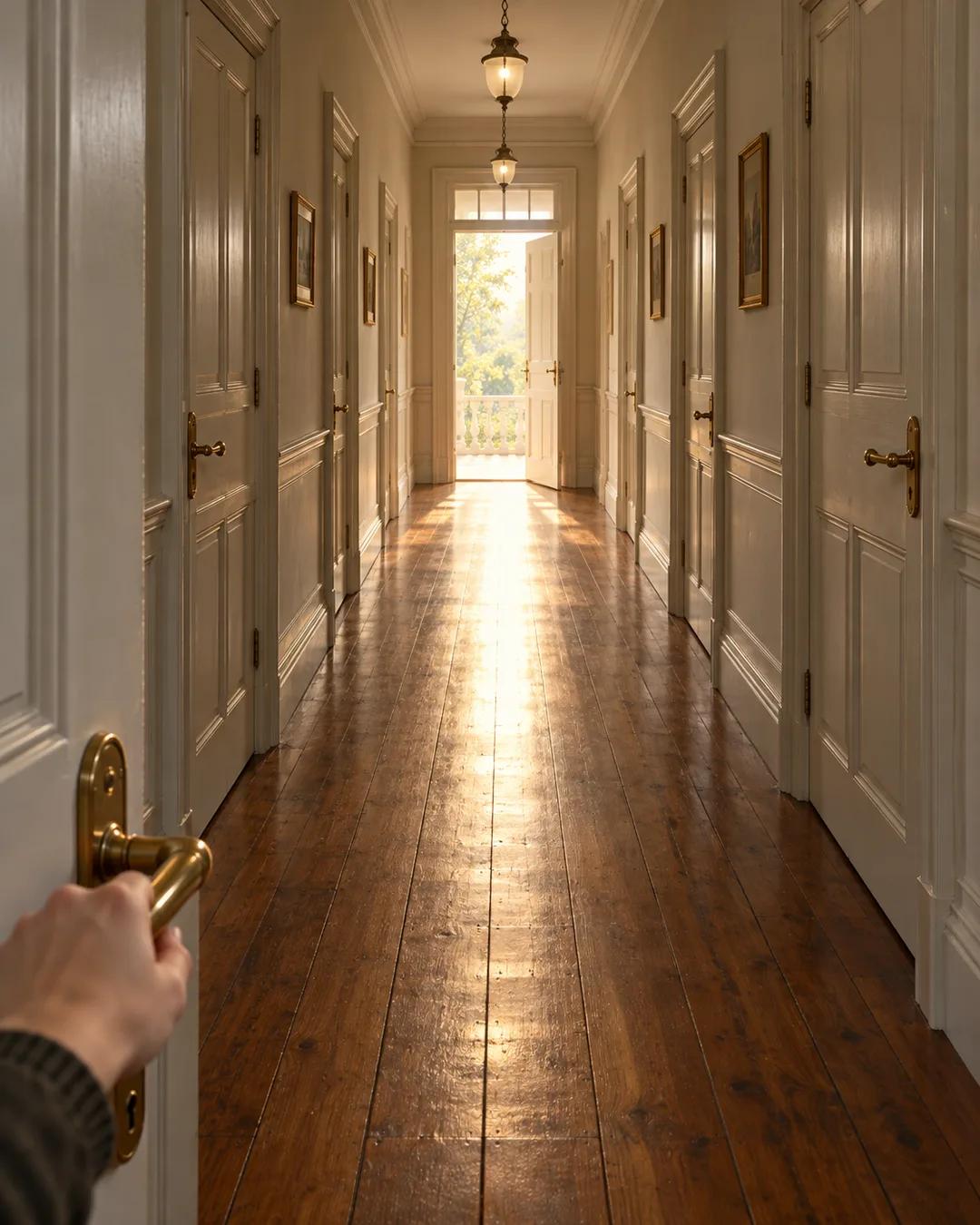
Doors should be closing behind you
Dodging relative deaths keeps life from blooming. Someone who likes to keep options open isn't moving in the right direction. Commitment and responsibility are dirty words to a sensitive young man, yet they are what he needs most.
Taking on more responsibility feels like a prison to people who always want to be in control, and like freedom to people who can let go and let the natural process unfold.
A friend who constantly insisted he was worthless, didn't deserve anything, and was a victim of society's harsh ways was using a defense mechanism: surely no one worthless should bear any responsibility.
Why do people hold onto options that cost them?
In a 2004 Management Science study, Jiwoong Shin and Dan Ariely gave participants a computer game with three doors, where each click inside a room earned money. Doors left unvisited gradually vanished. Participants kept spending clicks to hold doors open, even doors that paid less, and they earned less than players whose doors never disappeared.
Why are irreversible choices easier to like?
In a 2002 study in the Journal of Personality and Social Psychology, Dan Gilbert and Jane Ebert had photography students choose one of two prints to keep. One group could swap within five days, and the other's choice was final. The students with the final choice liked their print more. A follow-up in the same paper found most people said beforehand they would prefer the version where they could change their minds.
More from Hyde