Korva is a scroll of the internet’s best ideas.
Drivers meet rare bugs every week

Heavy users hit rare bugs
A typical consumer is in and out of the app in about a 30 second interaction, maybe once, twice, or three times a day. Drivers and couriers keep the app open six, eight, or ten hours a day, and they stay on the platform much longer than the typical consumer. That puts a premium on quality and on making sure everything goes right.
Delivering by e-bike
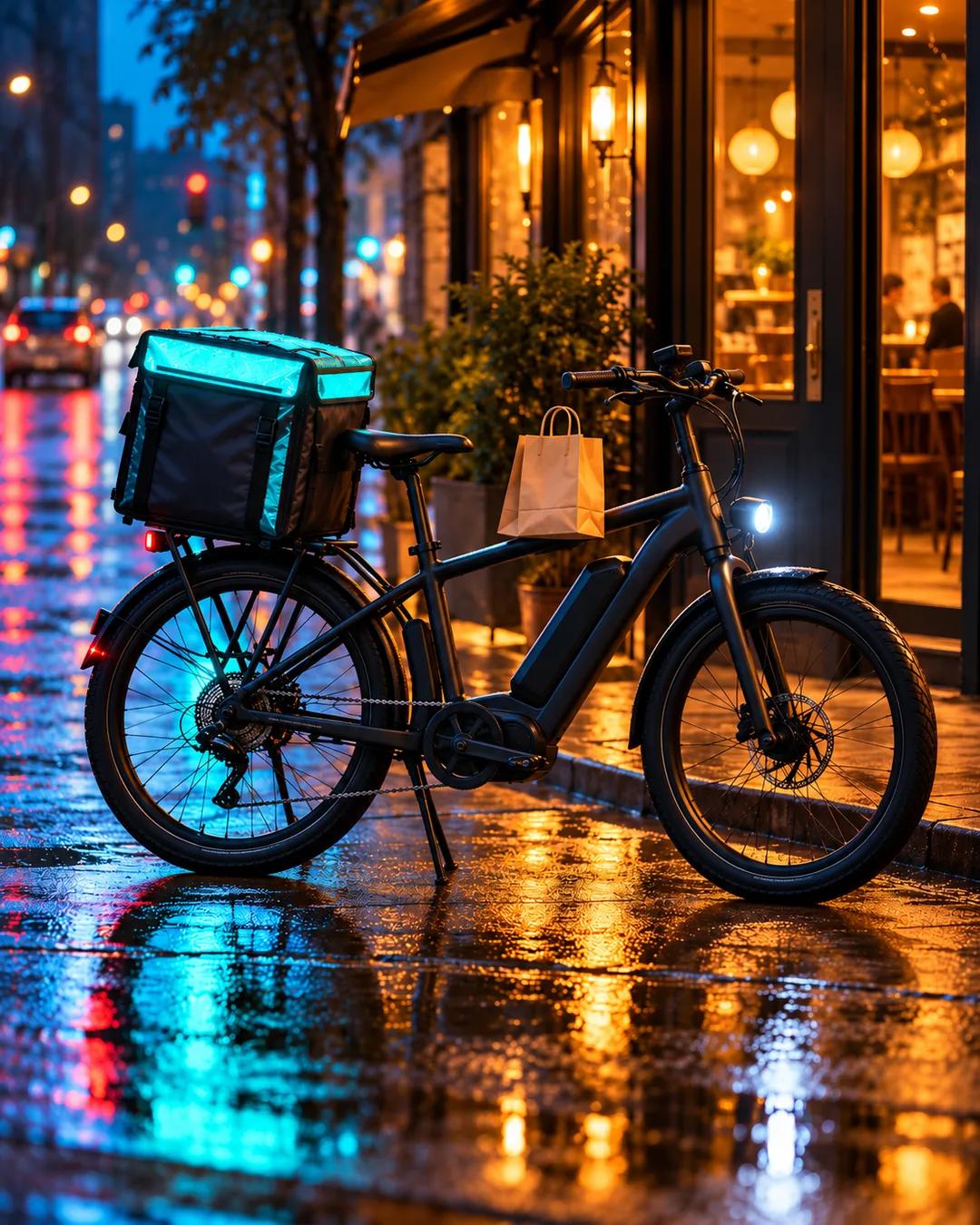
To understand it, Uber's CEO bought an e-bike and started delivering food in San Francisco, after a couple of years of driving people in his own Tesla. Finding where to pick up and getting the order right was hard. About 50% of orders are batched, so a courier may pick up two deliveries from the same restaurant or from another, while also dealing with real-world traffic.
Building with heart
A consumer pushes a button and the car or the food shows up, while the courier is processing far more behind the scenes. The lesson was to have more of the company's people put themselves in the shoes of drivers, couriers, and merchants, which is part of what the company calls building with heart.
Why do heavy users hit rare bugs?
If a bug appears once in every thousand actions, a person who takes a thousand actions will meet it about 63 percent of the time. Engineers track this with percentile measures: a p95 figure means 95 percent of requests are better than that value and 5 percent are worse. Google engineers Jeffrey Dean and Luiz Andre Barroso published a 2013 article called The Tail at Scale, showing how rare slow responses come to dominate large systems.
Why is batching orders hard for couriers?
Combining several pickups and drop-offs into one trip is a version of the vehicle routing problem. George Dantzig and John Ramser introduced it in 1959 as the truck dispatching problem. Finding the best route is computationally hard, and the number of possible orderings grows factorially with each added stop. Real deliveries add time windows, food that cools, and traffic, so practical systems settle for good routes rather than provably best ones.
More from Invest Like the Best with Patrick O'Shaughnessy