Korva is a scroll of the internet’s best ideas.
Earthquake-proof IKEA furniture

Move-in day
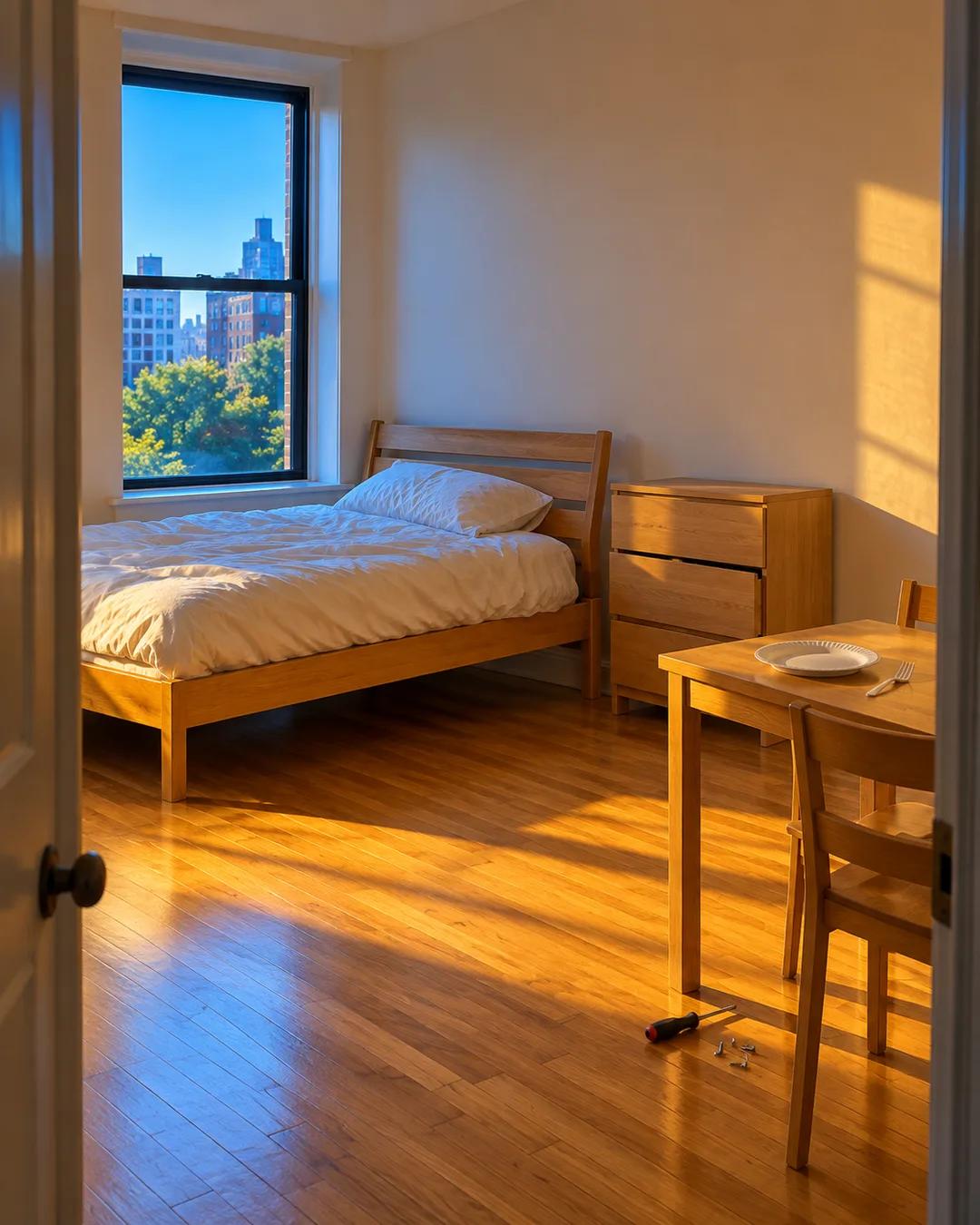
In August 2014, a young hire in finance signed the lease on his first solo apartment, a 400-square-foot studio close to his office. On Saturday, August 23rd, he picked up the keys and went straight to IKEA for a bed, a dresser, a small table, and one chair, about $350 in all.
He spent the rest of the day building every piece. He wasn't handy, and there were crooked pieces and stripped screws along the way, but he got it done. That evening he ate dinner off a paper plate at the new table with a big smile, and it felt like one of the freest moments of his life.
The night of the quake
In the middle of the night, the bed began shaking violently. Half asleep, he looked underneath it, convinced someone was playing a prank from below. After a few seconds the shaking stopped, and he fell right back asleep.
By morning he had about a hundred unread texts from his parents. The shaking had been a 6.0 magnitude earthquake that rocked the area. He looked around the tiny apartment, saw all of his janky furniture still standing, and an immense pride settled over him. I built that. Earthquake-proof.
That furniture is long gone now, replaced by nicer brands that professionals assemble. He still counts those few pieces as the most highly valued furniture he has ever owned.
Why did a distant quake shake Palo Alto?
The August 24, 2014 South Napa earthquake measured magnitude 6.0, according to the US Geological Survey, and struck in the early morning hours. Its epicenter lay north of the Bay, dozens of miles from Palo Alto. Seismic waves keep traveling through rock for many miles, losing strength as they spread, so people far from the epicenter tend to feel a slower rolling motion rather than a sharp jolt. It was the largest earthquake to hit the Bay Area since the 1989 Loma Prieta earthquake.
Why does low, light furniture survive earthquakes?
When the ground accelerates, every object feels a sideways force that grows with its mass. Tall, heavy pieces have a high center of gravity, so that force acts like a lever and tips them over. A low bed or small table sits close to the floor on a wide base, so it has little leverage working against it. Friction against the floor is often enough to hold such pieces in place.
Why does a quake feel like a shaken bed?
Earthquakes release two main kinds of seismic waves. P waves travel faster and arrive first, pushing and pulling the ground along their path. S waves arrive seconds later and move the ground from side to side, and they usually cause most of the strong shaking. The delay between the two is what earthquake early warning systems such as California's ShakeAlert use to send alerts.
More from Curiosity Chronicle