Korva is a scroll of the internet’s best ideas.
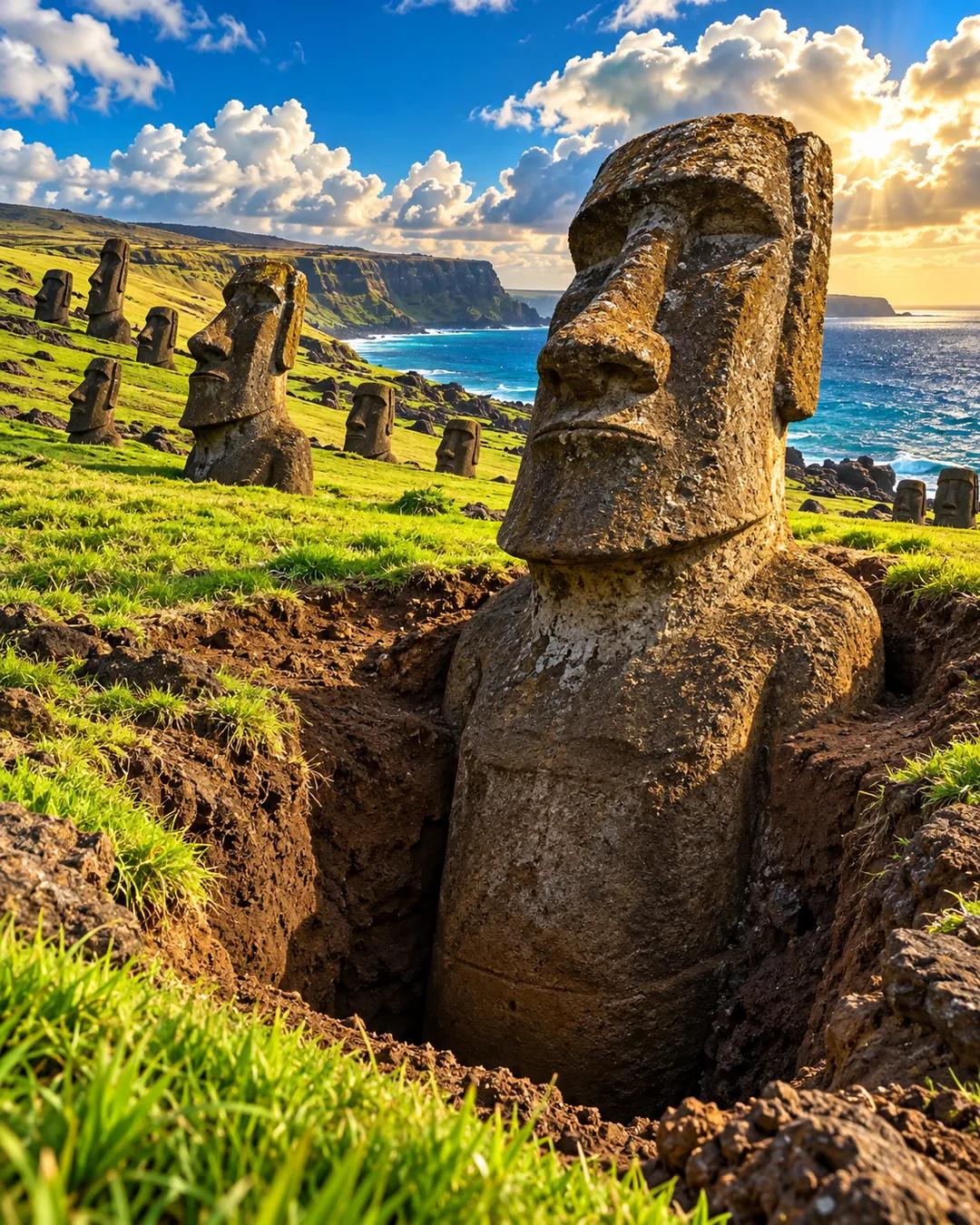
Easter Island heads have bodies

Buried bodies
The famous heads are a misunderstanding. They stand in the quarry, where erosion has buried their bodies. There is not a single actual head on the island: every one is a full body. Photographs make it look like maybe 50, but the count is over a thousand.
The Rapanui today
The island is five hours by air from Santiago, and the town of Hanga Roa has hotels and good food. Only about 6,000 Rapanui people remain. Thirteen clans live there, and they no longer know where their land was.
Mapping the land
An archaeologist has mapped about one-third of the island's settlement for the Rapanui, aiming to show where villages, crops, houses, and chicken coops stood so clans can recover their land, and plans to finish the rest.
How did the statues get buried?
Soil washed down the quarry slopes over centuries and buried the statues that stood there. The Easter Island Statue Project, led by archaeologist Jo Anne Van Tilburg, excavated some of them. The digs revealed full torsos with carvings on the back, including belts and designs. Photographs usually show only the heads above the ground.
How were the statues moved?
Rapanui oral tradition says the statues walked to their platforms. In 2012, researchers Terry Hunt and Carl Lipo showed that a crew could rock an upright statue forward with ropes. The method moved a replica a short distance in this walking motion. The road network on the island suggests statues were moved upright.
Why were so many carved at one quarry?
The Rano Raraku quarry holds compacted volcanic ash called tuff, which is soft enough to carve with hand tools of harder basalt. Nearly all of the island's statues were carved there. Unfinished figures still lie in the quarry wall, some of them very large. Carvers cut each figure out of the rock face before moving it.
More from Shawn Ryan Show