Korva is a scroll of the internet’s best ideas.
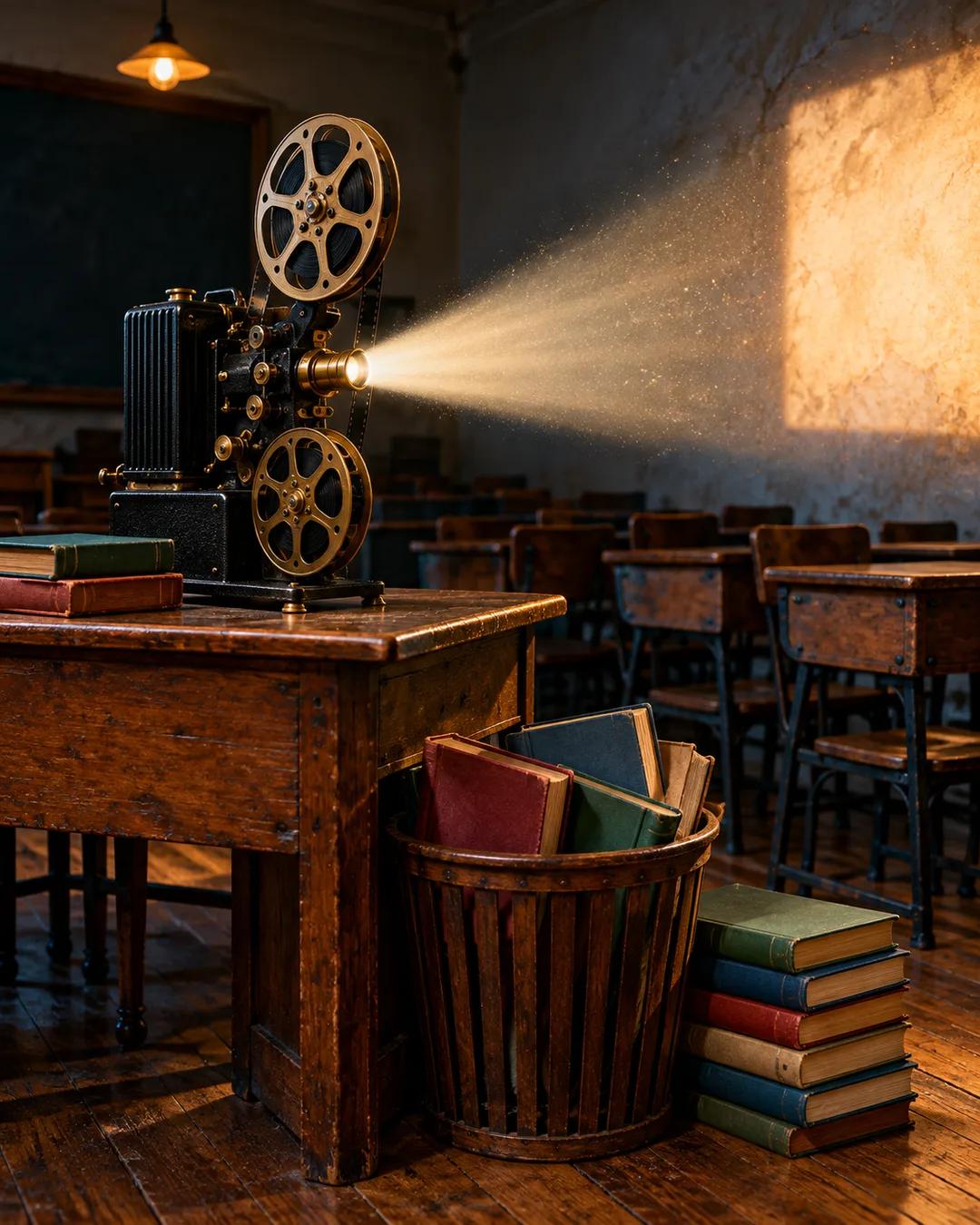
Edison wanted books thrown out

Edison's projector
In 1912, Thomas Edison argued that his moving-picture projector belonged in every school. Books were boring and rote, teachers taught them in boring ways, and films about people, news, and animals would keep kids riveted, so the books could go.
Computers to chatbots
In the early 1980s, Steve Jobs pushed for an Apple computer in every school to democratize learning and make kids creative. Decades later, Google pitched the cheap, sturdy Chromebook as a way to democratize access to education and give kids career skills. Now the pitch is a chatbot for every kid, to democratize and customize learning and teach career skills.
The business motive
These pitches come from hopeful, well-meaning inventors, most of them men. A business imperative sits underneath each one: Edison wanted to sell more projectors, Apple wants to sell iPads to schools, and Google and Microsoft want more schools using their AI products.
Why did earlier classroom machines fade?
Stanford historian Larry Cuban studied film, radio, and instructional television in his 1986 book Teachers and Machines. Each was predicted to transform teaching, and each ended up used only occasionally. Equipment was hard to schedule, and the content rarely matched what teachers were already required to cover. Lectures and textbooks remained the main way of teaching through all of it.
How did Apple get computers into classrooms?
In 1982, Apple's Kids Can't Wait program offered an Apple II computer to every public school in California. The offer followed a California law that gave companies a tax break for donating computers to schools. About 9,000 schools received machines under it. Apple had also backed a similar federal bill in Congress, which did not pass.
More from The Vergecast