Korva is a scroll of the internet’s best ideas.
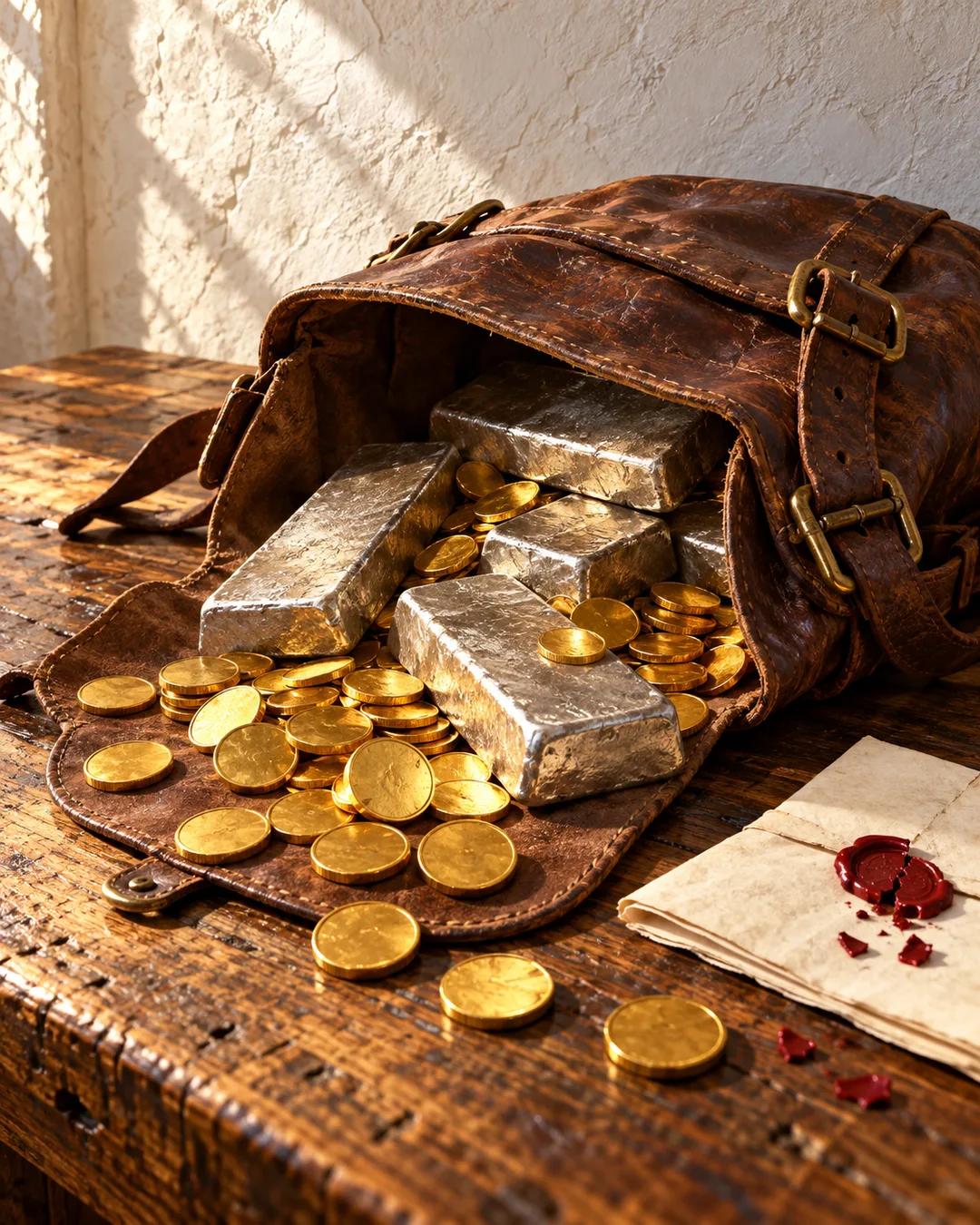
Elizabeth secretly kept Drake's loot

Drake's return
Drake landed at Plymouth in September 1580 afraid that Elizabeth would hand the treasure back to Spain and sacrifice him to keep the peace. A few weeks later a letter arrived telling him to fear nothing for his safety and to bring her some of the loot.
He loaded pack horses with Spanish gold and silver and rode to London, where she gave him a six-hour interview. Officially, he was to register the treasure and send it to the Tower. Unofficially, he was to siphon off 10,000 pounds of the 400,000 pounds, and she winked at his quietly taking another 14,000 pounds for his men.
Fooling Spain's ambassador
Spain's ambassador, Bernardino de Mendoza, suspected as much and had no proof. Elizabeth refused to see him until he accounted for the Spanish invasion in Ireland, a force that had been wiped out at Smerwick by November. She licensed the return of 30,000 pounds to Spanish merchants who could prove claims, provided they came to London to do it, and many never did. Then she announced that Drake had no charge to answer and that she was shocked, shocked, that the ambassador would spread such lies.
Some of the silver went to the Dutch rebels fighting Philip II in the Low Countries. Drake had learned that new technology in South America was boosting silver extraction, and that the extra silver was feeding Philip's war against Protestantism. Elizabeth saw no reason not to use his silver against him.
Why did silver matter so much to Philip II?
Spain's silver came largely from Potosí, in present-day Bolivia, where mining boomed after the 1540s. The crown claimed a fifth of all the silver mined, and fleets carried it across the Atlantic. That income paid for Spanish armies in the Netherlands and Italy. Even so, the crown declared bankruptcy in 1575 and again in 1596.
How did Drake find so much treasure?
Spanish ships and ports along the Pacific coast of South America had never faced an English raider, so they were lightly defended. Drake passed through the Strait of Magellan in 1578 and raided ports such as Valparaíso. Off Ecuador in March 1579 he captured the treasure ship Nuestra Señora de la Concepción, nicknamed Cacafuego, which carried silver, gold, and jewels. Spanish and English accounts of the exact amount differ.
How did Elizabeth's share of the loot grow?
Elizabeth had put money into the voyage, and part of her share went into the Levant Company, a trading firm chartered in 1581. Profits from the Levant Company later helped launch the East India Company in 1600. The economist John Maynard Keynes calculated that her share, compounding through those ventures, matched the total of Britain's overseas investments in 1930.
More from The Rest Is History