Korva is a scroll of the internet’s best ideas.
End every AI session with a skill

The session-end skill
Claude Code is connected to an Obsidian vault that holds a daily log of everything put through the terminal: decisions, open tasks, learnings, and notes. Claude's memory stores all of this, but it isn't easy to see. The session-end skill analyzes the session, distills what was worked on, what the frame was, whether the goal was accomplished, and what is still outstanding, and moves it into Obsidian.
Connecting days
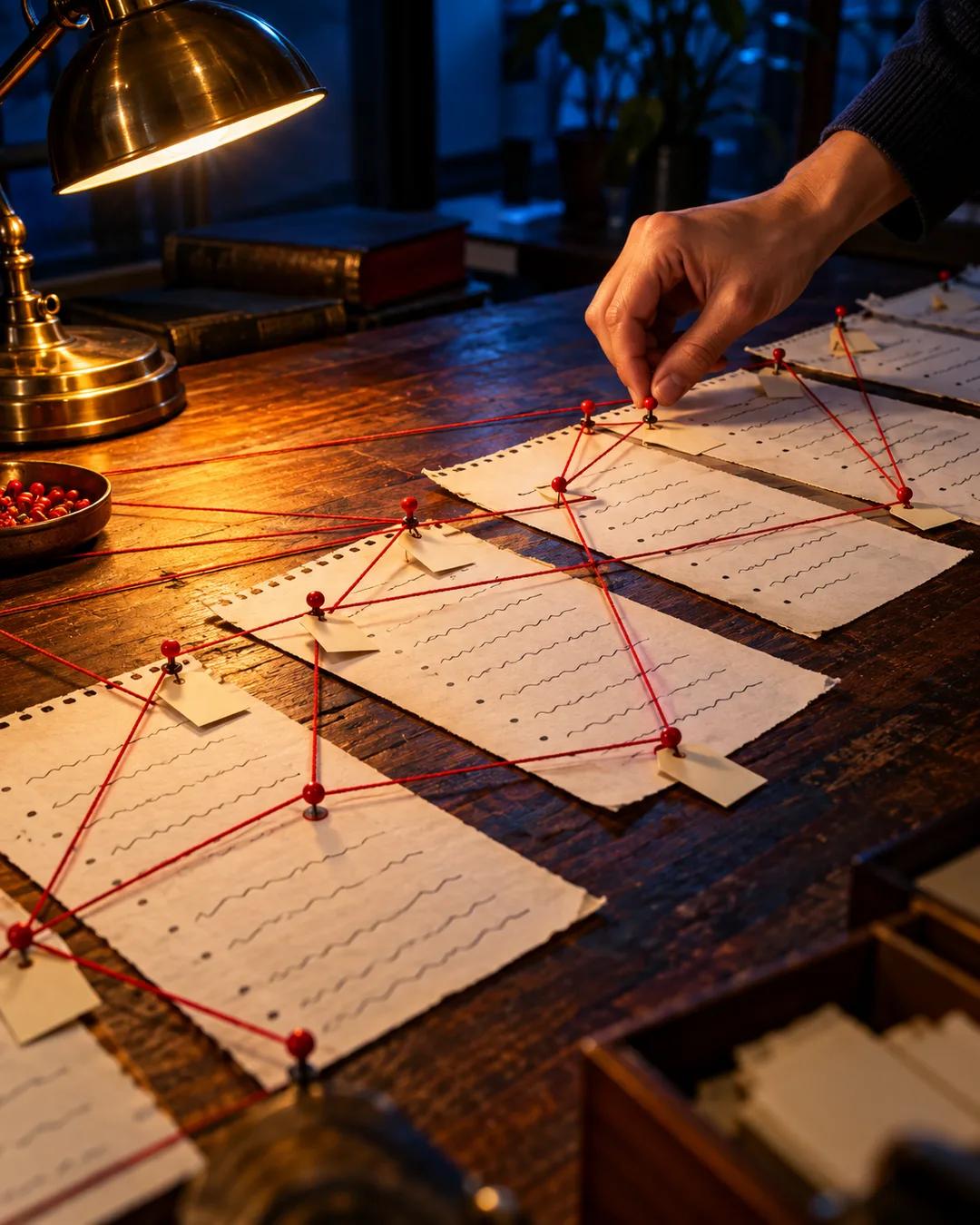
Obsidian is a node-based system, so any day can be reopened to see what was worked on, and the web of notes grows over time. The agent also draws connections across days. It can show that something tried a week ago hit a wall and was solved today, or that a creative type was tested on Meta ads in two places, which a person and the system would otherwise forget.
Value of saved output
What is saved from AI output may turn out to be the treasure trove of the next few years, the way social capital once was.
How does Obsidian connect notes?
Obsidian stores notes as plain Markdown files in a folder on the user's own computer. Typing a note's name inside double square brackets creates a link to it. The app uses those links to draw a graph view, with each note as a dot and each link as a line. Obsidian was released in 2020.
Why did a sociologist's card box inspire note apps?
German sociologist Niklas Luhmann kept a slip-box, or Zettelkasten, of about 90,000 index cards that referenced one another by number. He credited it with helping him publish roughly 70 books and several hundred articles. Each card held a single idea and pointed to related cards. Note-taking apps that link ideas today often cite his method as a model.
More from The Twenty Minute VC (20VC): Venture Capital | Startup Funding | The Pitch