Korva is a scroll of the internet’s best ideas.
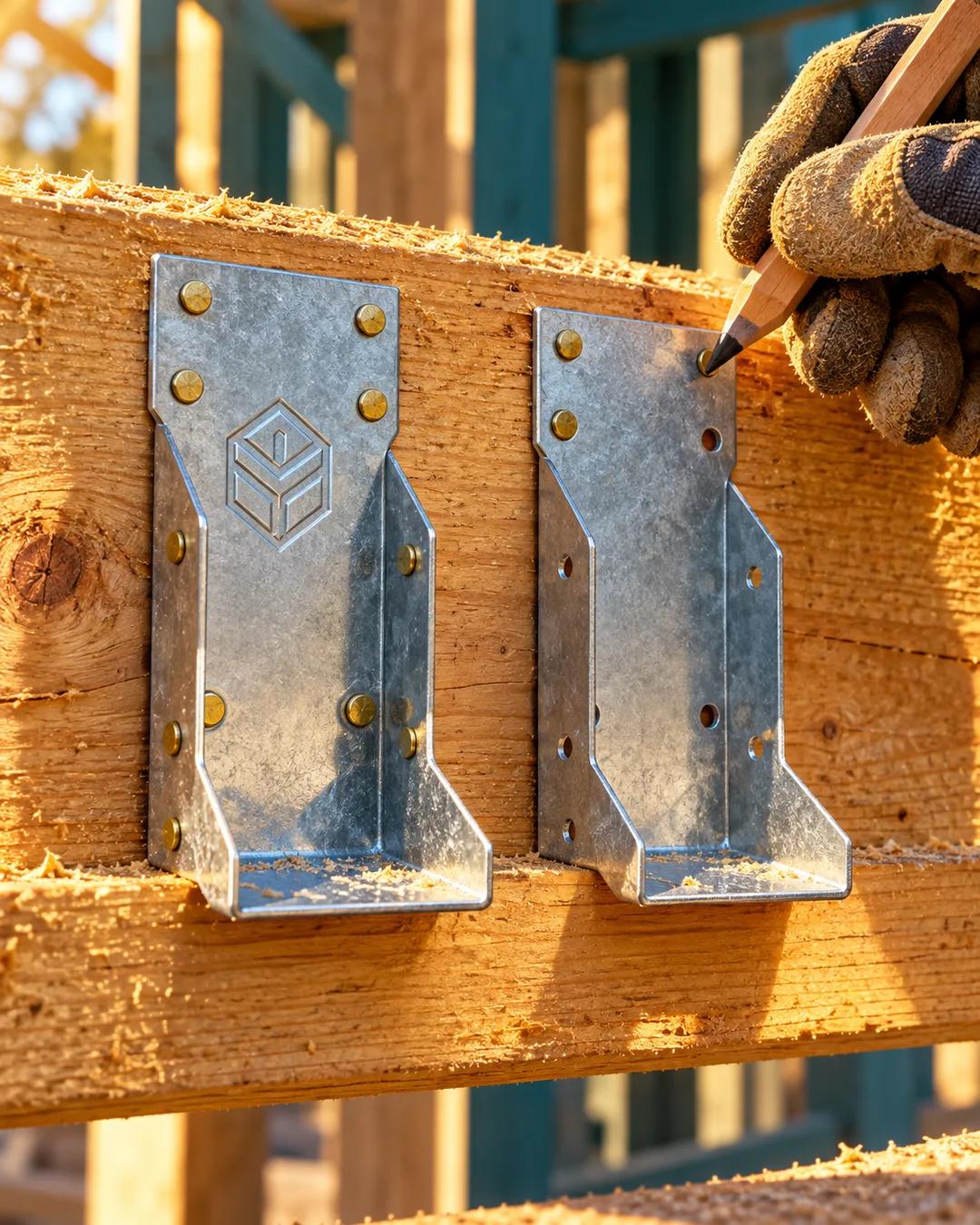
Engineers won't specify no-name connectors
Margins at building product makers
Many building product makers earn margins that look like room for lower prices. In 2025, James Hardie, which makes fiber cement siding, had a gross margin of nearly 36%, Owens Corning had 28%, Armstrong World Industries had 40%, and Simpson, which makes structural connectors, had 46%.
Testing and support
Competing with them is hard. Their products come with extensive third-party testing and warranties, and the companies give designers catalogs, free design software, and free engineering assistance. Simpson's connector catalog is so well put together that it was used as a textbook in a college course on wood design.
Why engineers stay cautious
Building professionals are risk-averse for good reason. Specifying a slightly cheaper product gains them little, while a product that doesn't work as advertised, as with polybutylene piping in the 1980s and EIFS cladding in the 1990s, draws engineers, architects, and builders into the resulting lawsuits. Most engineers are reluctant to specify a no-name connector over a Simpson one, when a connector failure could cause a catastrophic failure in an earthquake or hurricane.
What went wrong with polybutylene piping?
Polybutylene pipe was installed in many US homes from the late 1970s into the mid-1990s because it was cheap and easy to work with. Over time, chlorine and other oxidants in municipal water attacked the plastic from the inside, causing it to flake and crack. The resulting leaks led to class action settlements worth hundreds of millions of dollars. Production of the pipe for residential use ended in the mid-1990s.
How did EIFS cladding end up in lawsuits?
EIFS, or exterior insulation and finish system, is a synthetic stucco applied over foam insulation. In the 1990s it was installed on many wood-framed homes in humid climates with no way for water to drain out. Water that got in around windows and joints stayed trapped against the framing and caused rot. Drainage-type EIFS systems, which give water a path out, were developed in response.
Why do connectors matter so much in storms?
Connectors tie the roof to the walls and the walls to the foundation, creating a continuous path for loads to travel. Buildings often fail at their connections before the lumber itself breaks. In a hurricane, wind passing over a roof creates suction that pulls it upward. Hurricane clips and straps are designed to resist that uplift.
More from Brian Potter