Korva is a scroll of the internet’s best ideas.
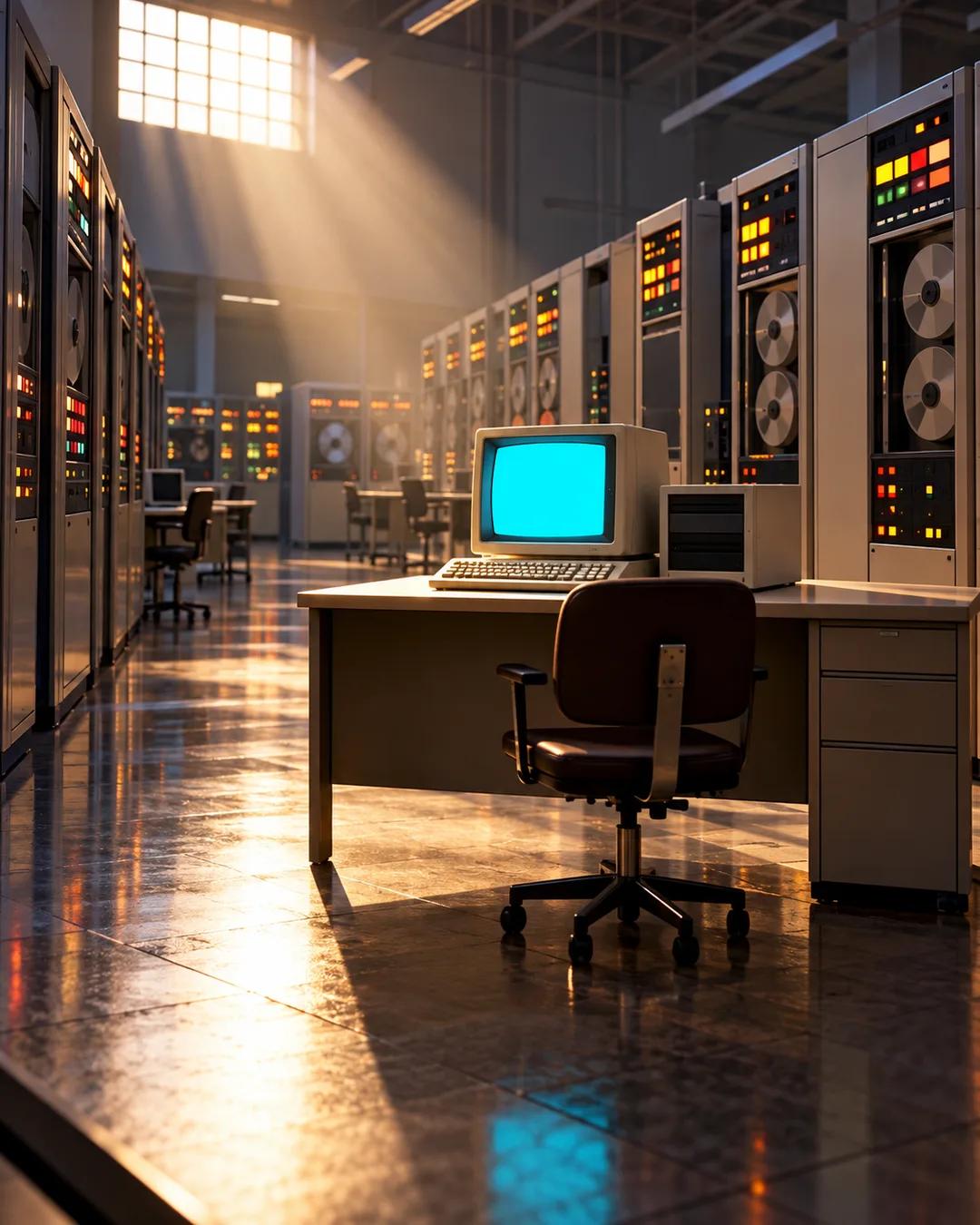
Every minicomputer maker fell together

The collapse
While Digital was successful, its success was credited to a brilliant management team. After the fall, the explanations blamed the ineptitude of the very same people. The idea that smart managers had become stupid did not fit, because Data General, Prime, Wang, Nixdorf, Hewlett-Packard, and Honeywell were all killed in unison. Colluding on pricing is believable, but colluding to collapse is a stretch.
The margin trap
A minicomputer was complicated. It was sold direct, with training, support, service, and software, and those costs forced Digital to earn gross margins of 45% on computers that sold for $250,000. New ideas kept arriving through the 1980s. Some were for better minicomputers that could reach into the tiers where customers had to buy mainframes, with 60% margins at twice the price.
The dilemma
Other people argued that everyone was buying personal computers. Management could see that, but Apple sold the Apple II as a toy to children, and for the first ten years none of Digital's customers could use a personal computer at all. The small machines earned gross margins of 40%, headed to 20%, on computers that sold for $2,000. Management had to choose between better products for its best customers at better profits and worse products that none of those customers would buy and that would ruin its margins. That choice is the innovator's dilemma.
How did minicomputers undercut the mainframe?
Mainframes in the 1960s cost millions of dollars and filled rooms. Digital Equipment's PDP-8, introduced in 1965, sold for roughly $18,000 and fit in a laboratory. Buyers such as universities and engineering teams who could never afford a mainframe could suddenly own a computer. Digital grew rapidly by serving them.
Why were early personal computers useless to big customers?
The Apple II of 1977 ran on an 8-bit MOS 6502 processor and shipped with a few kilobytes of memory in its base model. Minicomputers at the time served many users at once and ran large business and engineering software. An early personal computer could not run any of it. It was useful for games, hobby programming, and simple tasks.
What happened to Digital in the end?
Compaq, a personal computer maker founded in 1982, acquired Digital Equipment in 1998 for about 9 billion dollars. At the time it was the largest takeover in the computer industry's history. Hewlett-Packard then bought Compaq in 2002. The minicomputer company that once ranked second to IBM in computer sales ended up folded into a PC maker.
Why do high margins trap established companies?
Managers are judged on profit margins, and companies allocate their money and people to projects that raise or protect them. A product with lower margins looks like a step backward even when its market is growing. Clayton Christensen described this pattern in his 1997 book The Innovator's Dilemma, after studying the disk drive industry. In that industry, one generation of leading firms after another lost ground to entrants selling smaller, cheaper drives.
More from Talks at Google