Korva is a scroll of the internet’s best ideas.
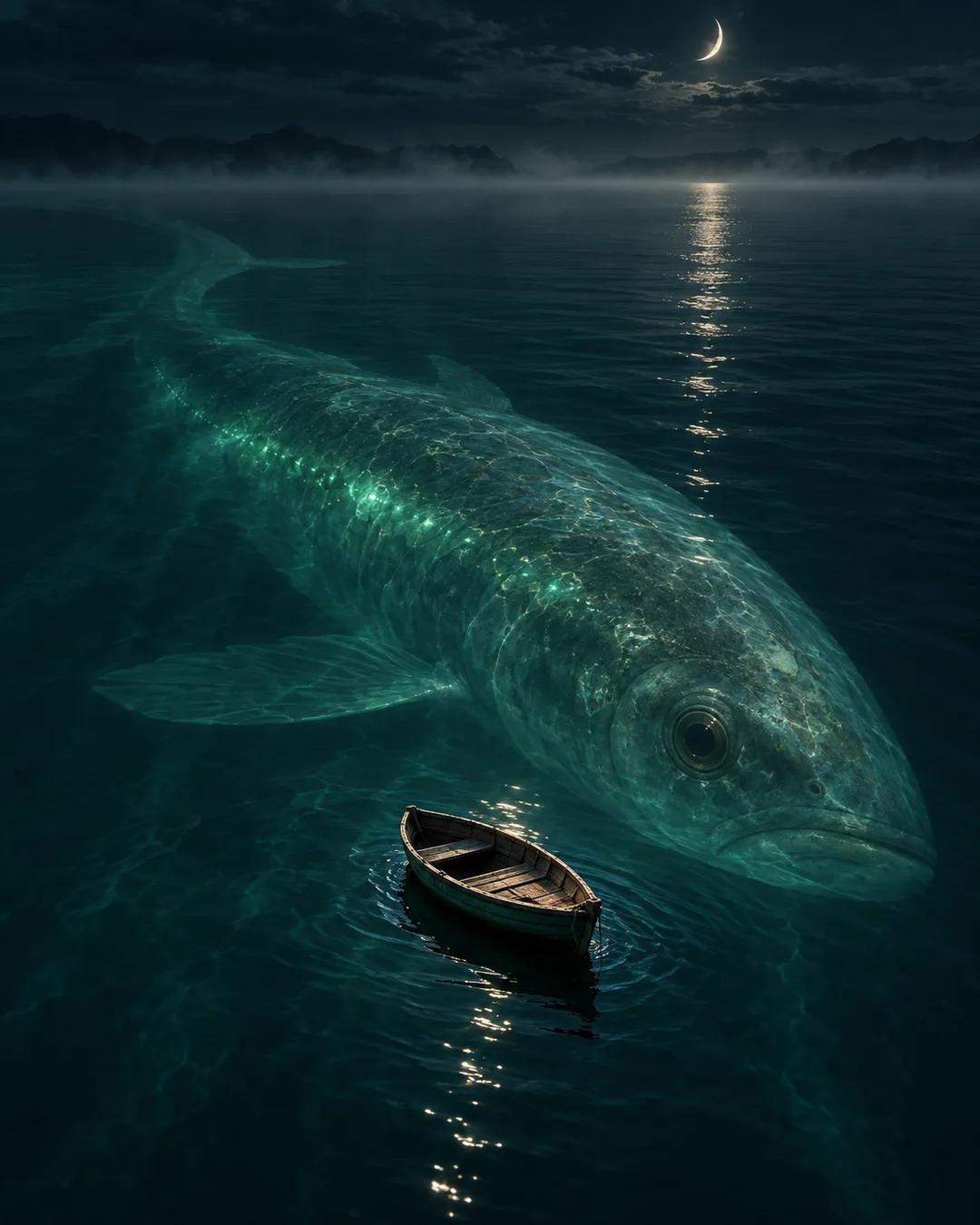
Everyone has a Big Horrible Fish
The Lovecraft fish
A value system grows past a few bullet points when someone looks at that assumption and goes insane, the way a character in an H.P. Lovecraft story does. Most of Lovecraft's short stories can be summarized as a guy looking at something so messed up that he goes totally bonkers. Dagon was among the first: a man gets marooned at sea, meets a really freaky fish, and is so upset that he throws himself out a window.
So the Big Horrible Fish is whatever unexamined assumption would cost you the most to face. Some people see it and refuse to look away.
People of integrity
People of uncommon integrity, willing to defy the incentives at any cost, almost always have seen the fish, and theirs tend to be big, hulking fish. They went through a moral reckoning that undid their illusion of philosophical depth and gave them the chance to forge their own values. They are the kind who could go to the gallows with a witticism on their lips.
Why does Lovecraft's horror come from knowledge?
The Call of Cthulhu opens by saying that the mind's greatest mercy is its inability to connect everything it knows. The narrator warns that piecing the facts together would reveal horrors so vast that the knowledge would drive a person mad or send them fleeing into a new dark age. That idea is the core of what is now called cosmic horror, in which the fear comes from learning humanity's true place in the universe. Lovecraft wrote the story in 1926, and Weird Tales published it in February 1928.
Why do people avoid examining their own assumptions?
Psychologist Leon Festinger proposed cognitive dissonance theory in 1957: holding two conflicting beliefs creates discomfort, and people usually relieve it by adjusting a belief rather than facing the conflict. In the 1959 Festinger and Carlsmith experiment, participants were paid either 1 dollar or 20 dollars to tell the next person a boring task was fun. Those paid only 1 dollar later rated the task as more enjoyable, apparently because they had no large payment to justify the lie. The discomfort was resolved by changing the belief.
How did Thomas More face his execution?
Thomas More was beheaded in 1535 after refusing to take an oath accepting Henry VIII as head of the Church of England. His son-in-law William Roper recorded that More joked on the scaffold, asking an officer to help him up and saying he would manage the coming down himself. Accounts also report that he moved his beard aside before the blow, saying it had committed no treason. The Catholic Church canonized More in 1935.
More from Adam Mastroianni