Korva is a scroll of the internet’s best ideas.
Face-looking is a stable trait

Webcam gaze tracking
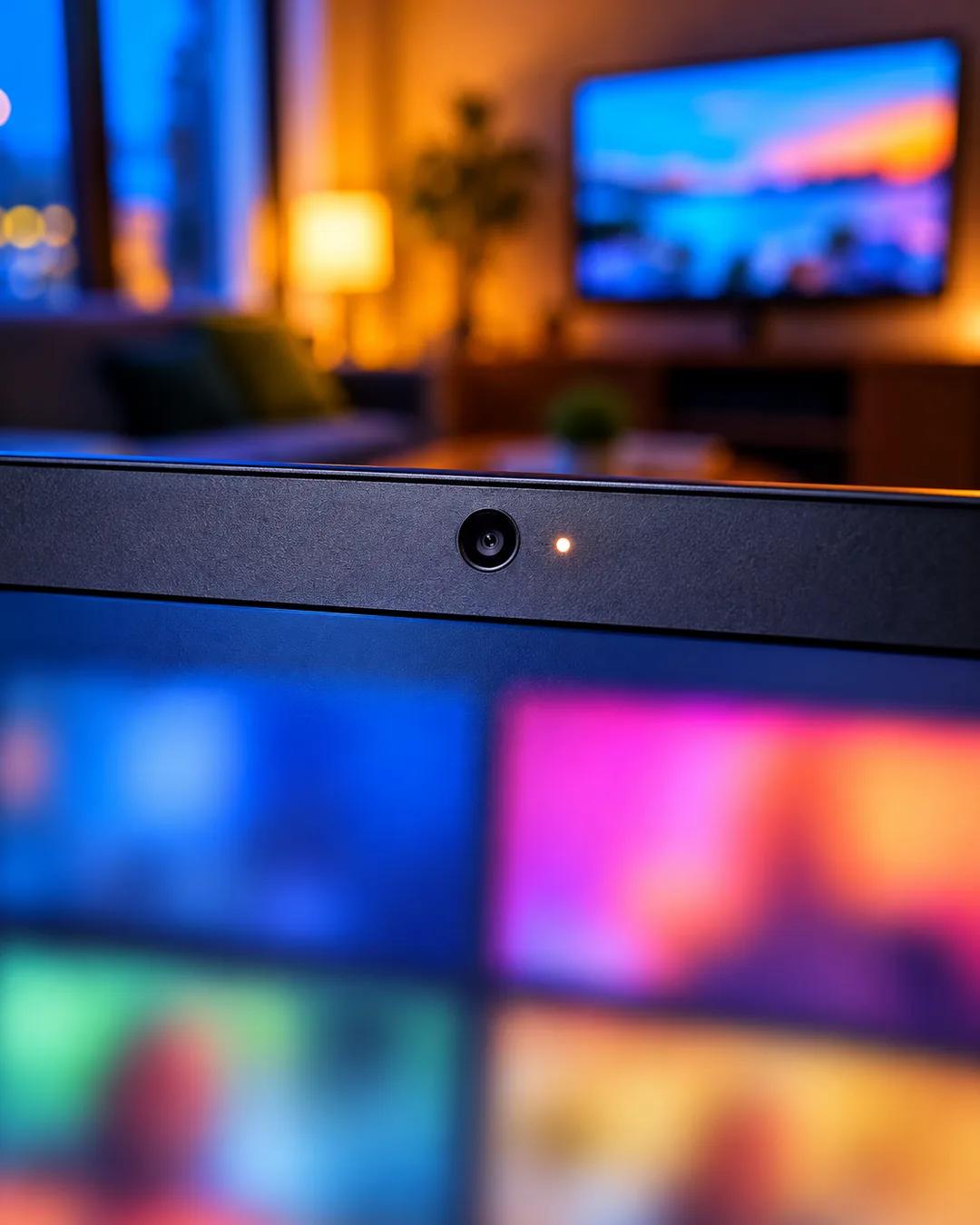
Researchers at Caltech track gaze with the webcam on people's laptops while they watch a Zoom video of others talking. Sometimes a TV plays in the background as a distractor. The data are easy to collect from hundreds or thousands of people.
Social features and attention
A model of what normally drives visual attention shows that social features, like the eyes and who is talking, carry less weight in where autistic people look. They are drawn more to the distractors. People who score higher on the social dimension of the autism spectrum, by questionnaire or diagnosis, make less eye contact.
A stable signature
Repeating the study every month for a year, the pattern held. Some people are real face lookers and some hardly look at faces at all, across the general population as well as among people with a diagnosis. Bad sleep and stress have some effect, but the measure is fairly stable over time, a kind of signature for each person.
Why do eyes hold so much attention?
Newborns only minutes old turn their heads and eyes farther toward face-like patterns than toward scrambled ones, as shown by Mark Johnson and colleagues in a 1991 study in the journal Cognition. Eyes carry cues such as gaze direction, so following them tells an observer what another person is attending to. Many primates share this sensitivity to gaze. Sensitivity to eyes appears in infancy, well before language.
How can a webcam track where people look?
Dedicated eye trackers use infrared light reflected off the cornea. A webcam tracker instead uses machine learning to estimate gaze from the position of the pupils and face in the video image. The browser-based WebGazer, developed by Alexandra Papoutsaki and colleagues at Brown University and published in 2016, runs entirely in the web page. Its accuracy is lower than a lab tracker, but it makes studies with thousands of participants possible.
What did early eye-tracking studies in autism find?
In a 2002 study in Archives of General Psychiatry, Ami Klin and colleagues at Yale tracked the gaze of adolescent and adult men with autism as they watched film clips of social scenes. The men with autism spent less time looking at the eyes and more time looking at mouths and objects than the comparison group. The pattern was one of the first quantitative eye-tracking demonstrations of reduced attention to faces in autism.