Korva is a scroll of the internet’s best ideas.
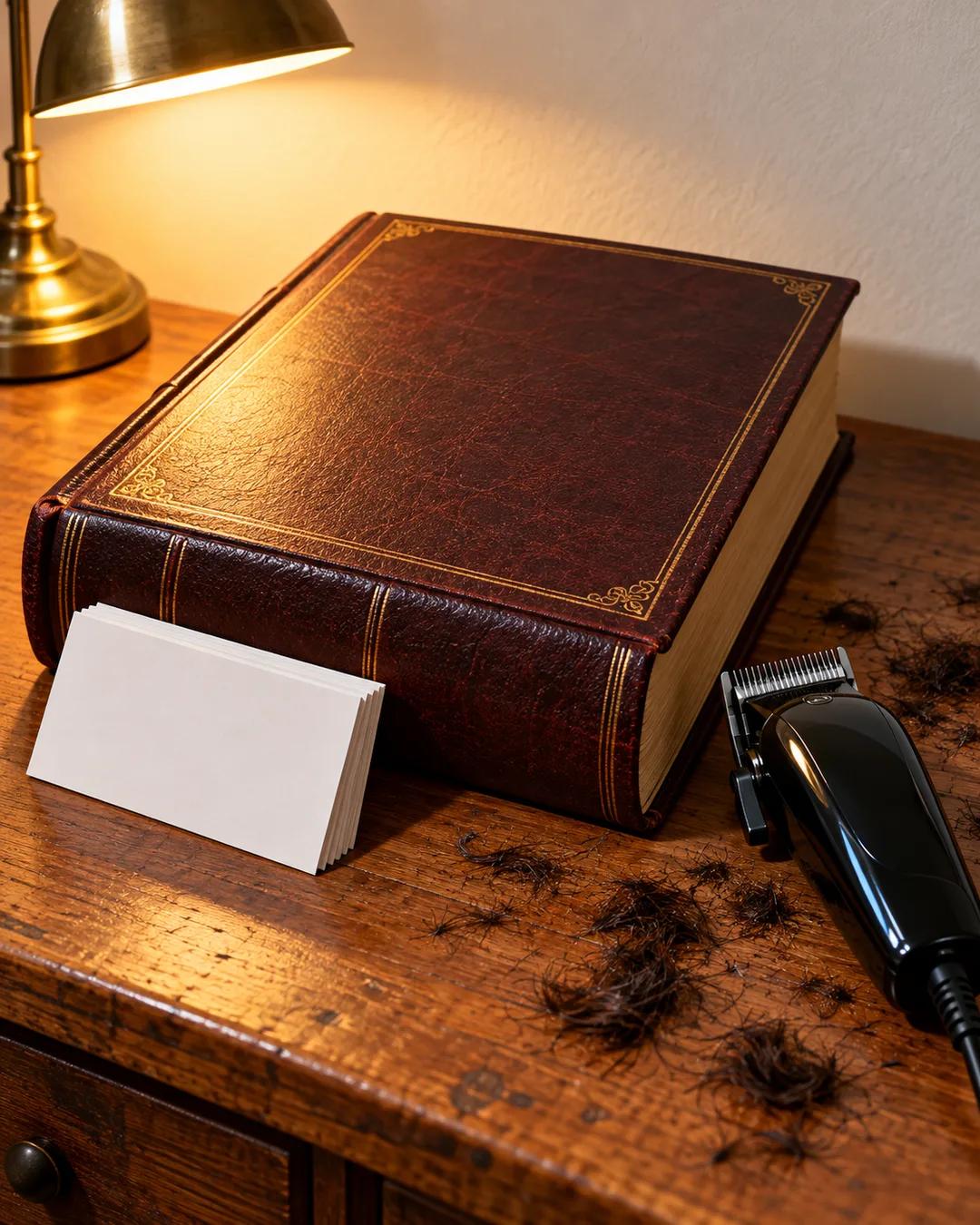
Fake lawyer with a shaved head
Avery Harrison
Released from a Texas prison in 2002, Skalnik did not register as a sex offender, as required, and left the state. In Boston he told people he was a lawyer named Avery Harrison and had business cards made to prove it. His clients paid him thousands of dollars before realizing he had done no work for them, and a little over a year after his release he was arrested for larceny and the unauthorized practice of law.
Testifying for Daly
In a Massachusetts prison, he was subpoenaed by Jim Daly's lawyers, who hoped he would testify that prosecutors had coached him and offered him a deal. He testified that he had never lied. That statement became part of the court record and came up every time Daly appealed on the basis of an unfair trial.
E. Paul Smith
After his release he never reported for probation and claimed to be a retired lawyer named E. Paul Smith, keeping a legal dictionary embossed with E. Paul Smith, Esquire, Attorney at Law. He claimed health problems from serving as a Marine Corps fighter pilot and treatment for brain cancer at the VA, and he shaved his head to look like a chemotherapy patient. He kept taking people's money for legal help until he was arrested again and sentenced to 50 months in federal prison.
Why can't clients judge a lawyer's work?
Economists Michael Darby and Edi Karni introduced the term credence goods in a 1973 paper for services whose quality a buyer cannot judge even after receiving them. Legal work is a classic example, because the buyer lacks the training to tell good advice from bad and the outcome depends on many factors. That gap is why a seller's credentials carry so much weight. Medical care and car repair are the other textbook examples.
Why does each state license its own lawyers?
In the American system, the state supreme court of each state holds the authority to regulate the practice of law within its borders, usually through a state bar. Lawyers must pass that state's bar exam and a character review before they are admitted. Many states also treat practicing without a license as a crime or as grounds for a court order. A lawyer admitted in one state has no automatic right to practice in another.
Why do sex offender registries exist?
Registries grew out of the 1989 abduction of Jacob Wetterling in Minnesota, which led Congress to pass the Jacob Wetterling Act in 1994, requiring states to track certain offenders. Megan's Law followed in 1996 and required public notification of offenders' locations. The Adam Walsh Act of 2006 set national standards for registration.
More from Criminal