Korva is a scroll of the internet’s best ideas.
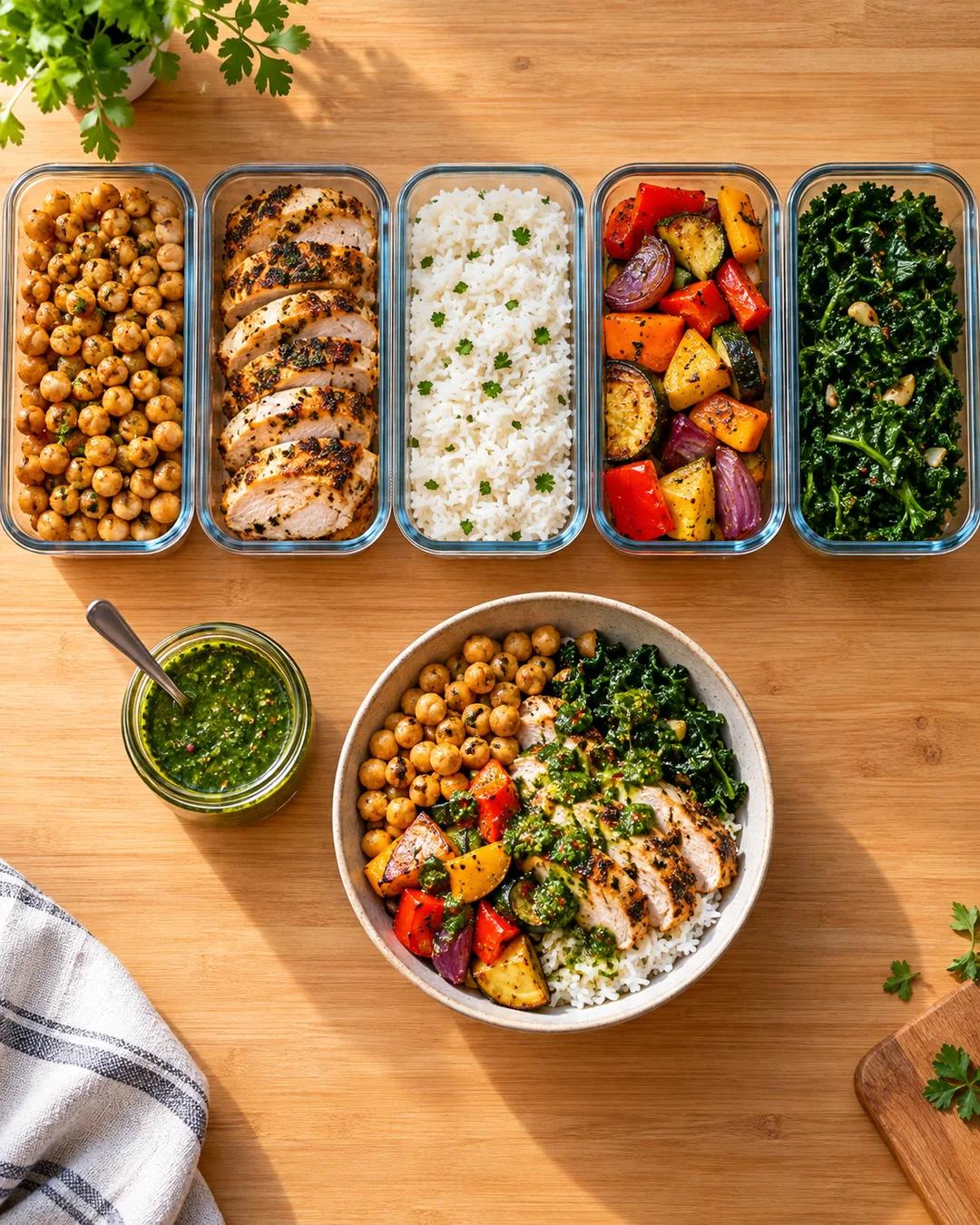
Five foods, ten lunches

Mixing the pieces
Chickpeas, chicken, jasmine rice, roasted vegetables, and sauteed greens make a typical set. Because the pieces are cooked separately, they recombine into new meals: chicken, rice, and greens on one day, then chickpeas, roasted vegetables, greens, and a little rice on another. Everything gets mixed together in the bowl.
One sauce for the week
A sauce made once for the week adds more variety. Something packed with flavor goes on grain bowls, sandwiches, and salads, and one batch covers all of them. A handful of fresh herbs, such as basil, dill, or parsley, blends into a sauce or dressing.
Replacing takeout
The habit replaces takeout, which has gotten expensive, often doesn't taste very good, and isn't healthy. Making a sandwich every morning takes time that plenty of people don't have, and cooking twice a week moves that effort into two sessions.
Why does one sauce change so many meals?
Plain rice, chicken, and chickpeas carry little flavor of their own, so a sauce supplies it all at once. Fat in a sauce dissolves aroma compounds and carries them across the tongue, while acid and salt sharpen what is already there. Herbs such as basil give off aromatic oils that an oil-based sauce holds well. Italian salsa verde and Argentine chimichurri both pair chopped herbs with olive oil and vinegar.
Why does roasting make vegetables taste sweeter?
High oven heat drives water off the surface of a vegetable and concentrates its natural sugars. It also sets off browning reactions, including the Maillard reaction, which French chemist Louis-Camille Maillard described in 1912. Those reactions speed up above roughly 140 degrees Celsius and build deeper, toastier flavors. Boiled vegetables stay near 100 degrees Celsius, the boiling point of water, and never reach that range.
Why is jasmine rice softer than basmati?
Rice starch comes in two forms, amylose and amylopectin. Amylose keeps cooked grains firm and separate, while amylopectin makes them soft and clingy. Jasmine rice has less amylose than basmati, so its grains cook up softer and stick together more. Its floral scent comes from a compound called 2-acetyl-1-pyrroline, which is also found in basmati and in popcorn.
More from Life Kit