Korva is a scroll of the internet’s best ideas.
Five ships a year starves suppliers

Thin supply chains
That thin supply chain is one of the core reasons ship output stays low, a problem the Navy has discussed extensively. Saronic builds its ships end to end, so it works directly with those manufacturers, does non-recurring engineering work with them, and invests in digitizing components that have historically been analog.
Automating engine rooms
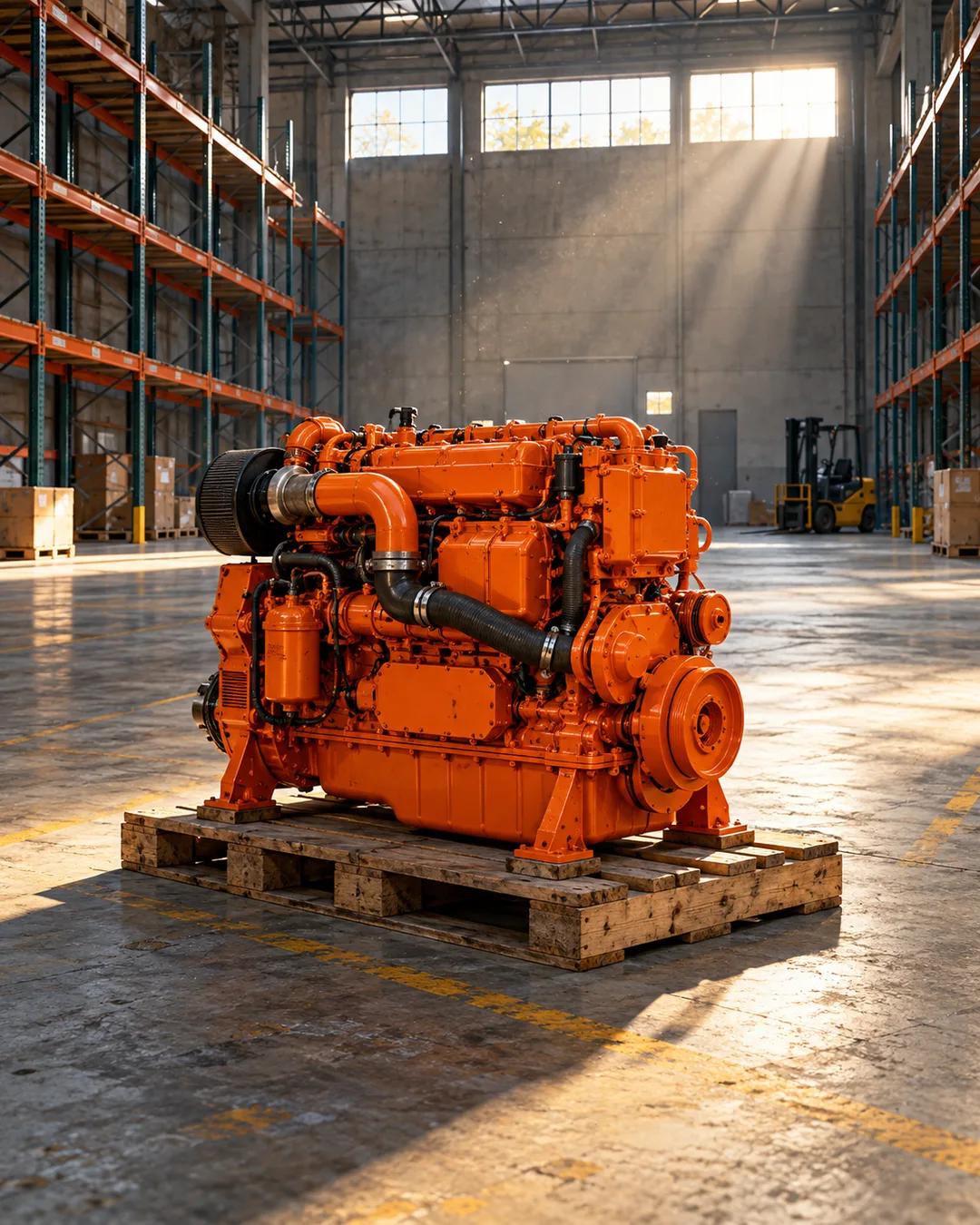
A ship built 30 years ago needed people doing extremely manual work in the engine room, and software can absorb much of it today. Components get software APIs, so a software stack elsewhere can control them and reach them remotely. With the engine room automated, more sailors decide what a larger mass of vessels at sea is doing, instead of watching coolant pressure in an engine.
Building in-house
Where the marine industry has gone a long time without investment, such as the electronics around sensors and compute, Saronic builds in-house. Early Tesla had to invest in ASICs because the available compute could not run large models within the power budgets it wanted. In 2026, that is a totally different game.
Why do low volumes keep suppliers small?
In 1936, aeronautical engineer T. P. Wright reported that each time cumulative aircraft production doubled, the labor needed per airplane fell by a roughly constant percentage. The pattern is now called the learning curve or Wright's law, and it has been found in many manufactured goods. Low volume means suppliers never climb that curve, so unit costs stay high. Solar panels and semiconductors are well-known examples of products whose costs fell along such curves.
How long have engine rooms run unattended?
Since the 1960s, many commercial ships have been built with periodically unattended machinery spaces, where alarms and automatic controls watch the engines while the crew sleeps. Classification societies award a notation for these ships, often written UMS for unmanned machinery space. The change was driven by the cost of keeping watchstanders in hot, loud engine rooms.
Why do specialized chips use less power?
An application-specific integrated circuit, or ASIC, hardwires one computation into silicon, so no energy goes to the general-purpose instruction handling that a standard processor performs. That yields far more computation per watt for the one job it was built for. Bitcoin mining moved from ordinary processors to graphics chips and then to ASICs for the same reason.
More from All-In with Chamath, Jason, Sacks & Friedberg