Korva is a scroll of the internet’s best ideas.
Fluids that flow forever

Euler's perfect fluids
Euler's equations work perfectly for perfect fluids, ones with no viscosity, a sort of intrinsic stickiness, so a current can flow forever because nothing slows it down.
Navier and Stokes add friction
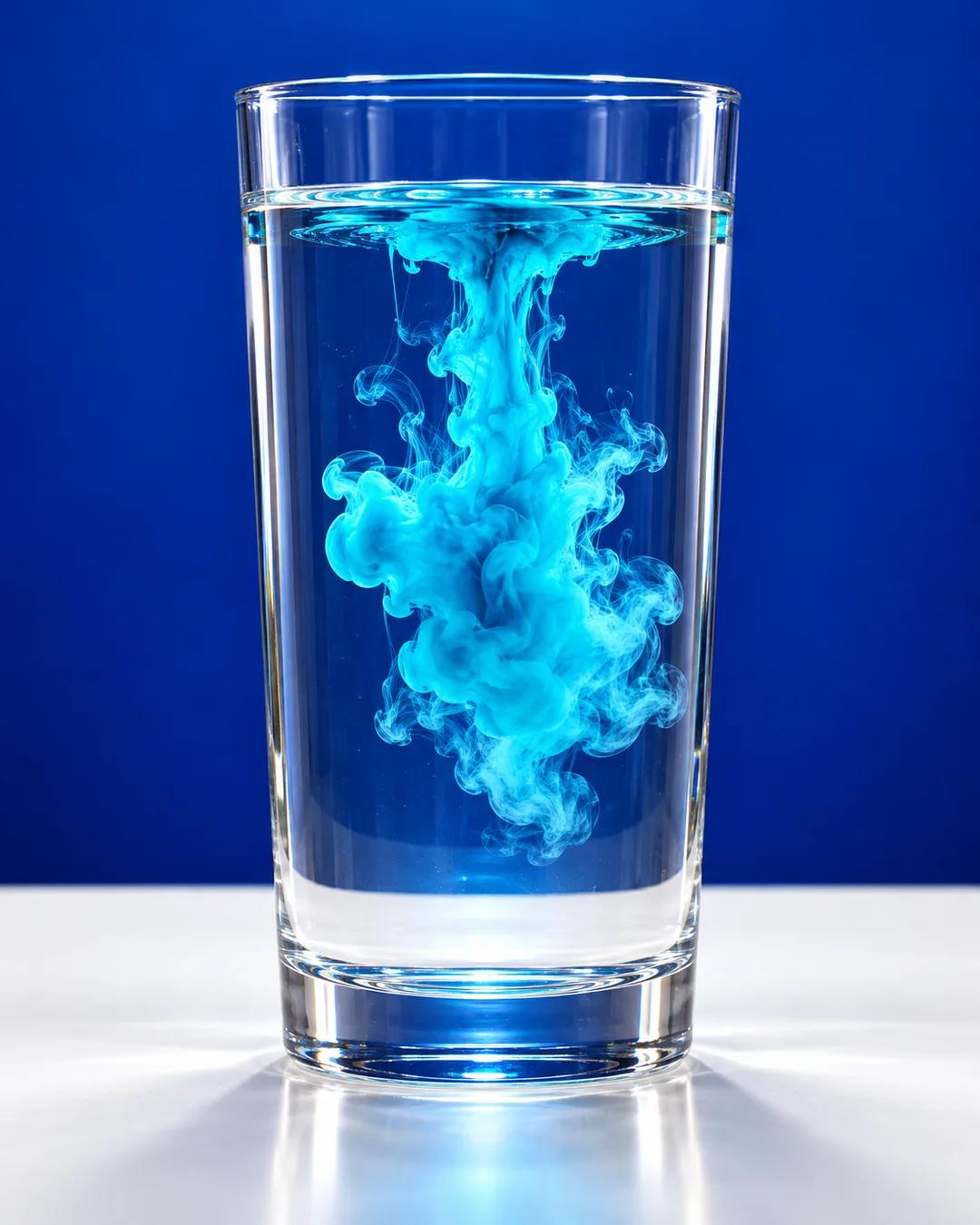
In the early 1800s, Claude-Louis Navier and George Gabriel Stokes upgraded the equations so they could handle any fluid, perfect or not. The new Navier-Stokes equations cover the way one fluid dissipates in another, like an ink drop spreading out to fill a glass of water, and the way fluids experience friction. Air counts, since it is technically a fluid.
What the equations do today
Today physicists and engineers use them to shape aircraft wings and yacht propellers, to forecast where a hurricane will make landfall, and to model how climate change will increase the risk of drought. They also predict the behavior of lava flows, clouds of ash, and the interiors of stars.
Why did Euler's equations fail for real fluids?
In 1752, Jean le Rond d'Alembert showed that Euler-style equations predict zero drag on an object moving steadily through a perfect fluid. Anyone who has held a hand out of a moving car window knows real fluids push back. The missing ingredient was viscosity, which turns the energy of motion into heat inside the fluid. This gap between theory and experience is known as d'Alembert's paradox.
How did Navier and Stokes add friction?
Navier derived a friction term in 1822 by picturing forces between molecules. Stokes reached a similar result in 1845 by treating the fluid as a continuous substance and asking how its layers drag on one another. The added term makes the force depend on how quickly velocity changes from one layer to the next. Water at room temperature has a viscosity of about one millipascal-second, and honey is thousands of times higher.
How do weather forecasts use fluid equations?
Atmospheric models divide the air into a three-dimensional grid and use equations descended from Navier-Stokes to step the wind, pressure, and temperature of each cell forward in time. Real forecasts add physics for moisture, radiation, and heat. Operational global models today use grid cells on the order of ten kilometers wide. Lewis Fry Richardson attempted the first numerical forecast by hand in 1922, and it took him weeks to compute a single six-hour change.