Korva is a scroll of the internet’s best ideas.
Fort Worth grows by annexing

Growth by annexing
The I-820 loop was conceived in the mid-century and built out in the 1980s as a beltway around Fort Worth that would connect the city's suburbs. The city limits now spill out in just about every direction beyond it.
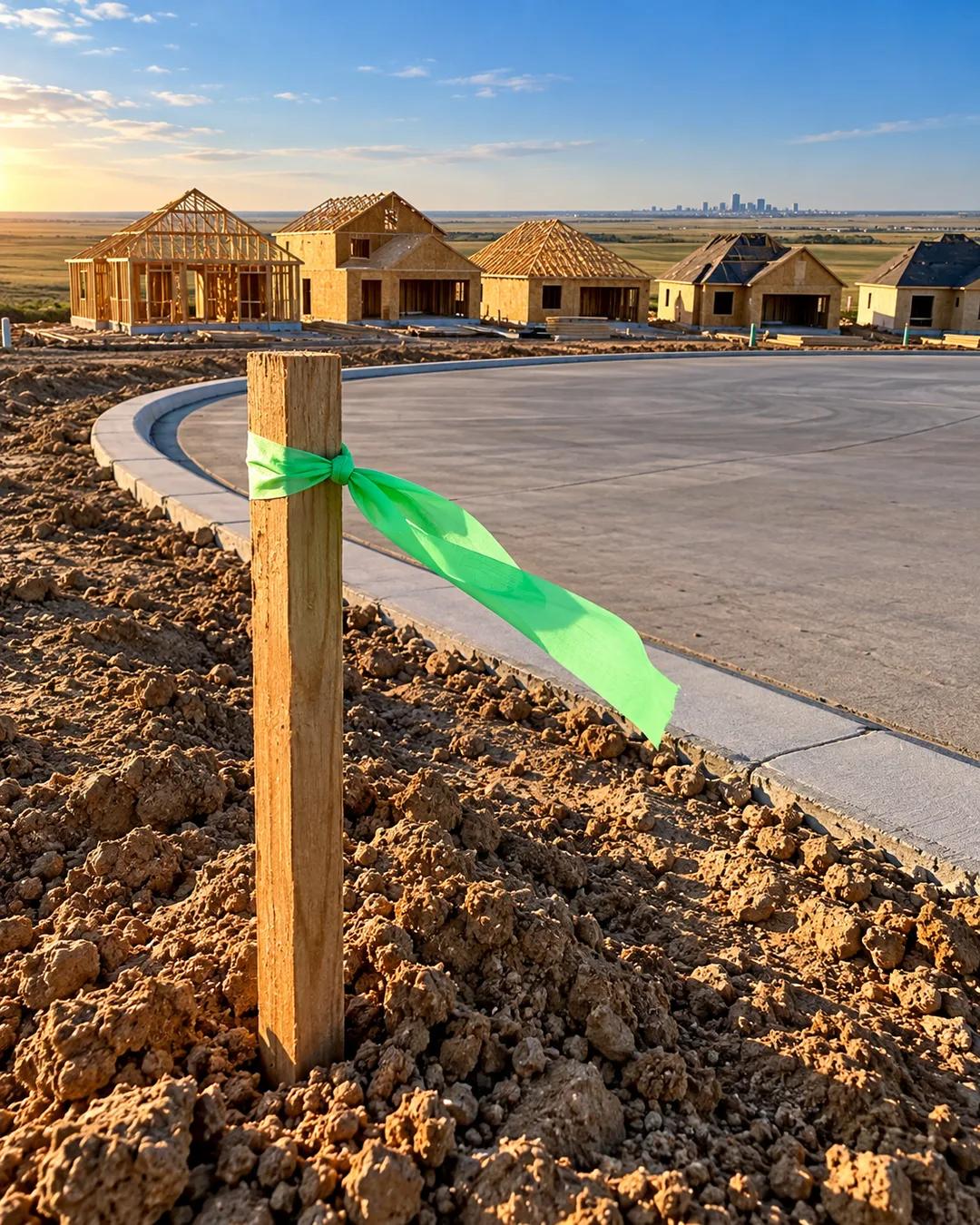
The Terrabella development is under construction 20 miles out from downtown, planned as the most generic of single-family suburban developments. It now counts as Fort Worth, and a five-bedroom house there goes for under $400,000 with a Fort Worth address attached.
Who pays, who gains
Providing utilities and municipal services like police and fire falls on the city. The trade-off is worthwhile because the development adds to the tax base through property tax and adds to the city's housing stock to help keep up with demand.
Fort Worth has been an especially popular destination since COVID, and rents and housing prices have gone upward, but by national averages they are still low, and they are still lower than Dallas's. The city recently passed Austin in population and ranks high among the nation's fastest growing cities.
How do highways push cities outward?
A beltway makes land at the edge of a metro area quick to reach, which raises its value for homes and businesses. Economist Nathaniel Baum-Snow studied US metro areas in a 2007 paper in the Quarterly Journal of Economics. He found that each new highway passing through a central city reduced its population by about 18 percent.
Why does new suburban housing help city budgets?
Texas levies no personal income tax, so cities lean on property and sales taxes. A new subdivision adds houses to the tax roll, and each one is taxed every year on its assessed value. Extending water, sewer, police, and fire service costs money at the start. The payoff arrives gradually, as years of tax payments accumulate.
How did Fort Worth become Cowtown?
Cattle herds driven north along the Chisholm Trail passed through Fort Worth in the 1860s and 1870s, and the town became a place to rest and resupply. When the railroad arrived in 1876, cattle could be shipped from there. Stockyards opened in 1887, and Swift and Armour built meatpacking plants beside them in 1902. The stockyards area is now a historic district.
More from Wendover Productions