Korva is a scroll of the internet’s best ideas.
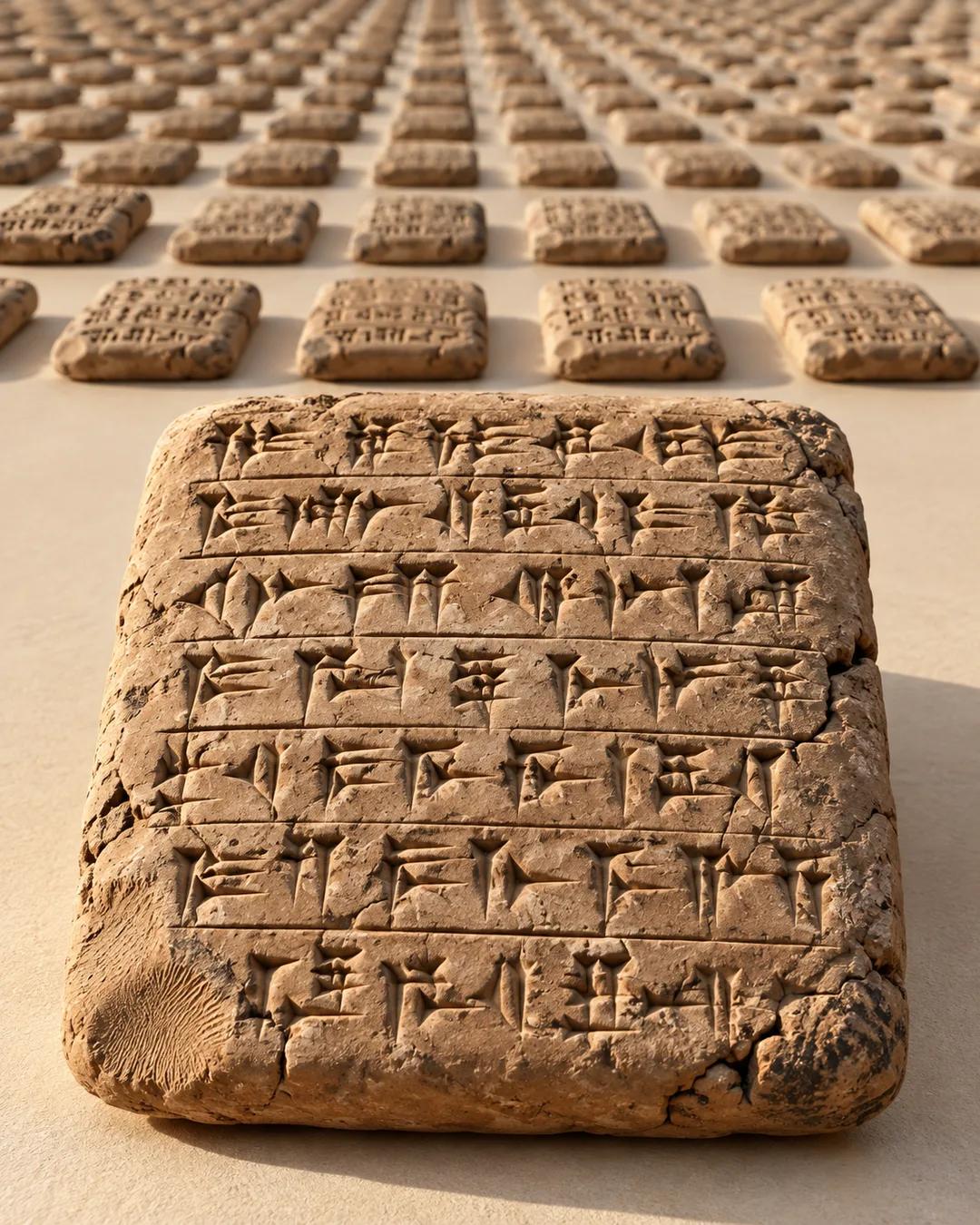
Four thousand years in 88 hours

Scale of the swarm
OpenAI pointed that swarm at one of the Millennium Prize problems, Navier-Stokes, and it solved it. A single person thinking eight hours a day on a normal work week would need roughly four thousand years to produce that many tokens, which starts the clock in ancient Sumeria.
Where the credit goes
The agents deserve little of the credit. Multi-agent systems are flashy and new, so they pick up the glory, but the core reason is a very strong general-purpose model that can work over long horizons and think in parallel. Even the people who built the swarm give it less than ten percent of the credit.
Nobody knows how much the ten thousand agents added. Measuring it would mean rerunning the problem with a thousand agents, or with one, and experiments at that scale are too expensive. OpenAI's published scaling tests stop at around sixteen agents.
Why is Navier-Stokes so hard to prove?
The Navier-Stokes equations describe how fluids like water and air move, and they date to the 1800s work of Claude-Louis Navier and George Gabriel Stokes. Engineers use them every day to simulate weather and airflow, yet a proof that their solutions stay well behaved in three dimensions had never been found. The trouble is turbulence: the equations feed back on themselves, so small swirls can in principle pile up into unbounded speeds. The Clay Mathematics Institute lists the question among its seven Millennium Prize Problems.
How were the Millennium Prize problems chosen?
The Clay Mathematics Institute announced the seven problems in Paris in May 2000. The list was modeled on the 23 problems David Hilbert presented in 1900, which steered much of twentieth-century mathematics. Each problem was picked because it was famous, had resisted experts for decades, and could be stated precisely. The institute attached a prize of one million dollars to each.
Why does thinking longer make models better?
Reasoning models are trained with reinforcement learning to write out long chains of intermediate steps before answering. Each step gives the model a chance to check a result, try another approach, or back up from a mistake. OpenAI reported with its o1 model in September 2024 that accuracy on hard math and coding problems rose as the model was given more time to think. Researchers call this scaling compute at test time, separate from the compute spent in training.
More from Dwarkesh Podcast