Korva is a scroll of the internet’s best ideas.
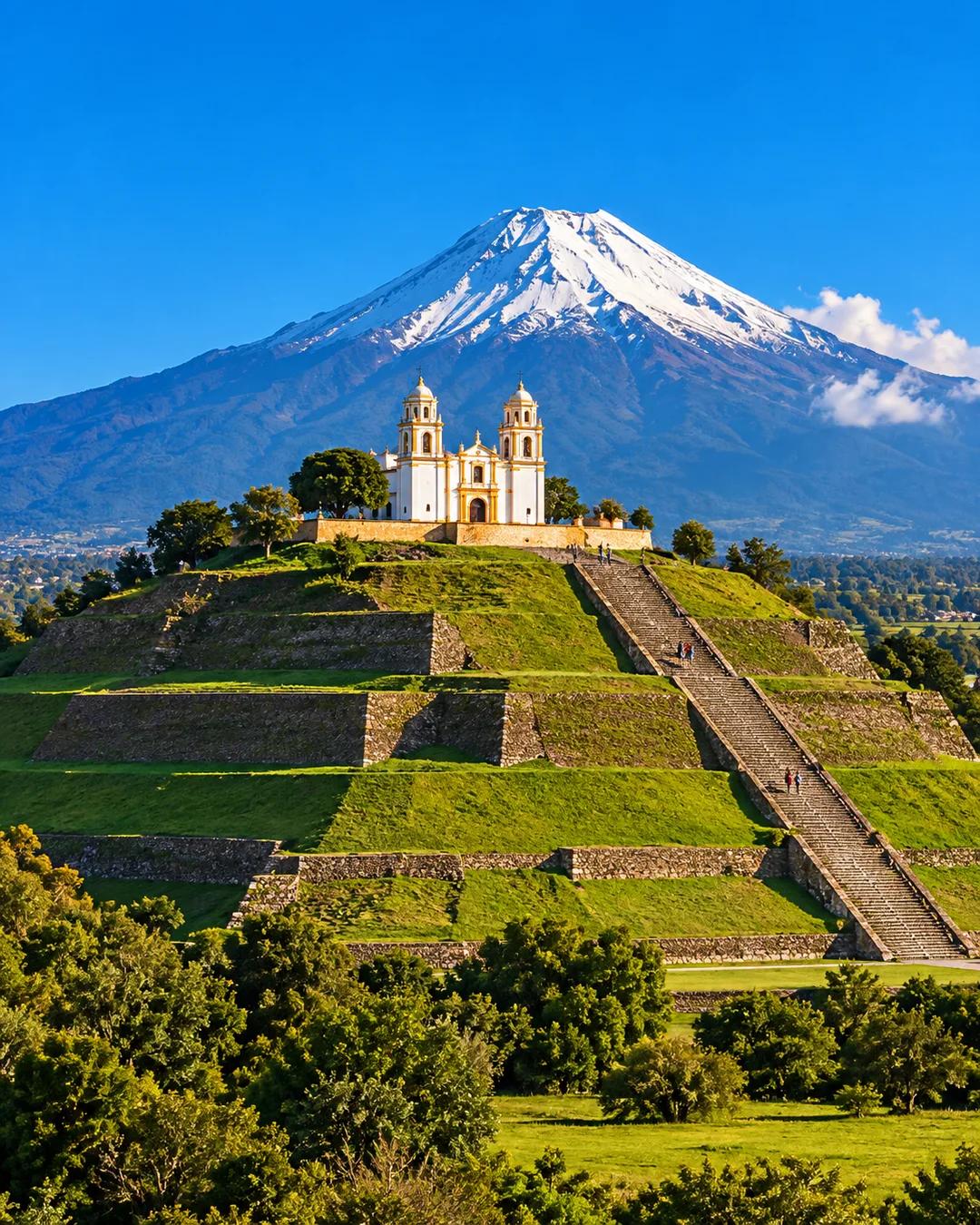
Giza isn't the biggest pyramid

Cholula versus Giza
Cholula is not as tall as Giza, but it is far wider, and Giza is steep. Two of the three largest pyramids in the world are in Mexico, and neither is Maya. The tallest Maya building is 70 meters, half the height of Giza. The El Mirador complex, a Maya site from the BC period, ranks around fifth.
How they were built
Most Mesoamerican pyramids were built by hand from blocks a single person could carry. Egypt used massive blocks hauled down a river with no stone source nearby, then dragged across a desert and up the structure. In architectural scale, Egypt outclasses every other civilization.
Angkor's scale
The second place goes to the Khmer in Cambodia. The Angkor compound called Angkor Tom is large enough for the entire city of Tikal to fit inside, and that is just one section. Around 1200 AD, Angkor had a population of just under a million.
How large is Cholula's pyramid?
The Great Pyramid of Cholula, in the Mexican state of Puebla, has a base about 450 meters on a side. Guinness World Records lists it as the largest pyramid by volume. Over the centuries, builders covered earlier pyramids with new layers. A Spanish colonial church now sits on top of the mound.
How did Egyptians move massive blocks?
A wall painting in the tomb of Djehutihotep shows men dragging a statue on a sled while a man pours water in front of it. In 2014, physicists at the University of Amsterdam, led by Daniel Bonn, tested this in the lab. They found that wetting the sand to the right amount cut the pull force roughly in half. Egyptians likely used the method on desert tracks.
Why was Angkor Wat built?
Angkor Wat was built in the early twelfth century under King Suryavarman II as a Hindu temple to Vishnu. It later became a Buddhist site. The temple complex covers about 162 hectares. It is surrounded by a moat and is often called the largest religious monument in the world.
More from Shawn Ryan Show