Korva is a scroll of the internet’s best ideas.
Golf buyers average 59

Ads aim young
Marketing is eager to show a product in the hands of young people, because an ad aimed explicitly at older people would put younger buyers off. Older people end up badly served by marketing, and plenty of tech that would suit them never reaches them.
Bone-conducting headphones
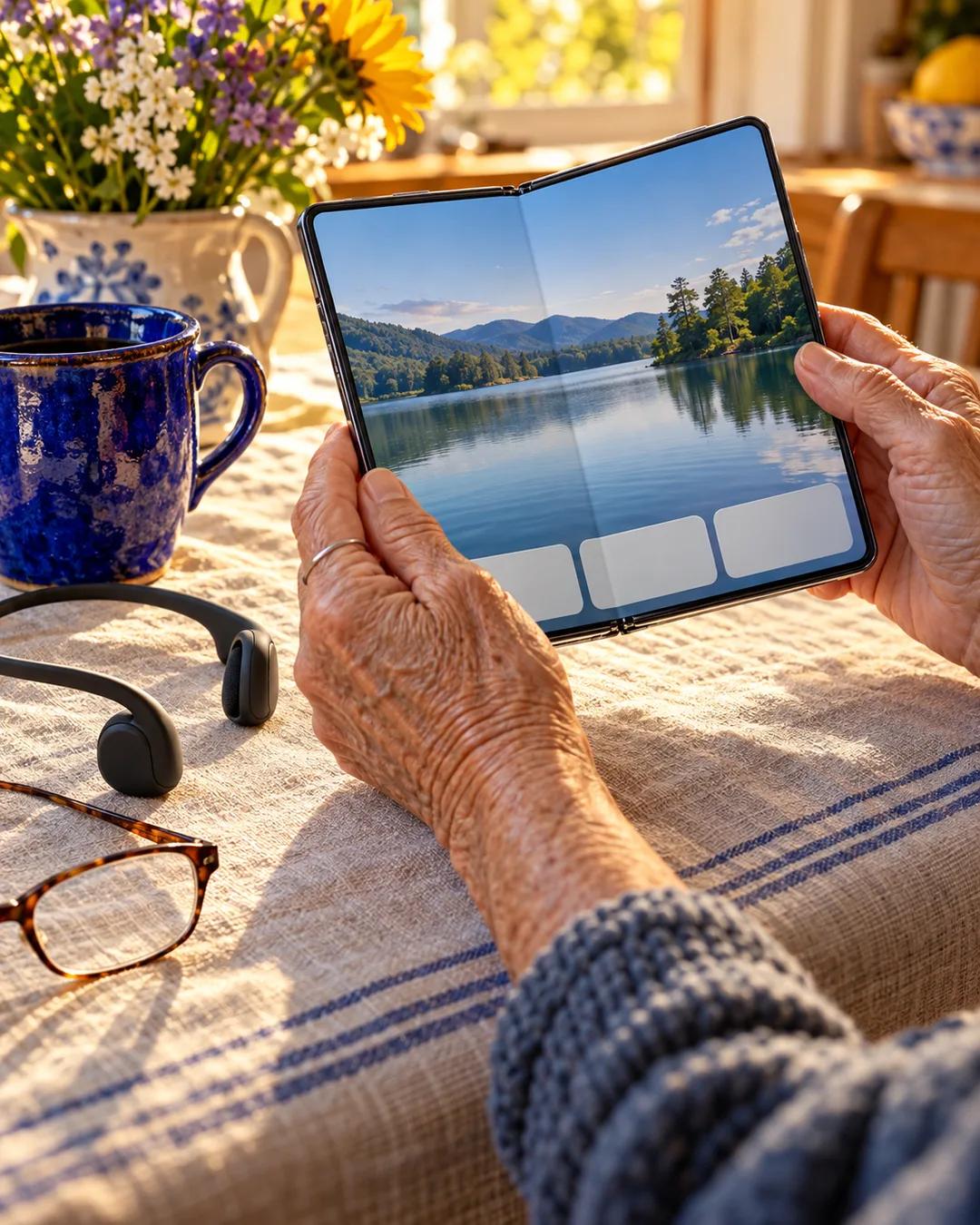
Bone-conducting headphones are marketed to joggers and swimmers, so they keep their ears open and do not lose spatial awareness and run in front of a bus. The sound travels through the bones of the inner ear and bypasses the parts of the ear that deteriorate with age, which makes them brilliant for people with hearing loss. Few older people know about them.
Folding phones
Samsung's folding phone has a secondary market in anyone over 60, because the standard handset is too small once eyesight goes. After a cataract operation, a standard phone handset can be pretty much unusable.
How do bone-conducting headphones deliver sound?
They press small transducers against the bones of the face near the ears, which vibrate the skull. The vibrations travel through bone to the cochlea, bypassing the eardrum and the small bones of the middle ear. Because the ear canal stays open, wearers also hear their surroundings. Bone conduction has been used in hearing devices for decades.
Why do ads favor models younger than buyers?
In a 1981 paper, Benny Barak and Leon Schiffman described cognitive age, the age a person feels. They found that older adults commonly report a cognitive age well below their actual age. Marketers who show a product with a young user are trading on that aspirational self-image.
How do foldable phones bend?
A foldable phone uses a flexible OLED display on a thin plastic or glass layer, paired with a hinge that lets the panel curve at the fold. Royole's FlexPai reached the market in late 2018, and Samsung's Galaxy Fold followed in 2019. Engineers had to redesign the cover layer, since ordinary glass cracks when bent that far.
More from My First Million