Korva is a scroll of the internet’s best ideas.
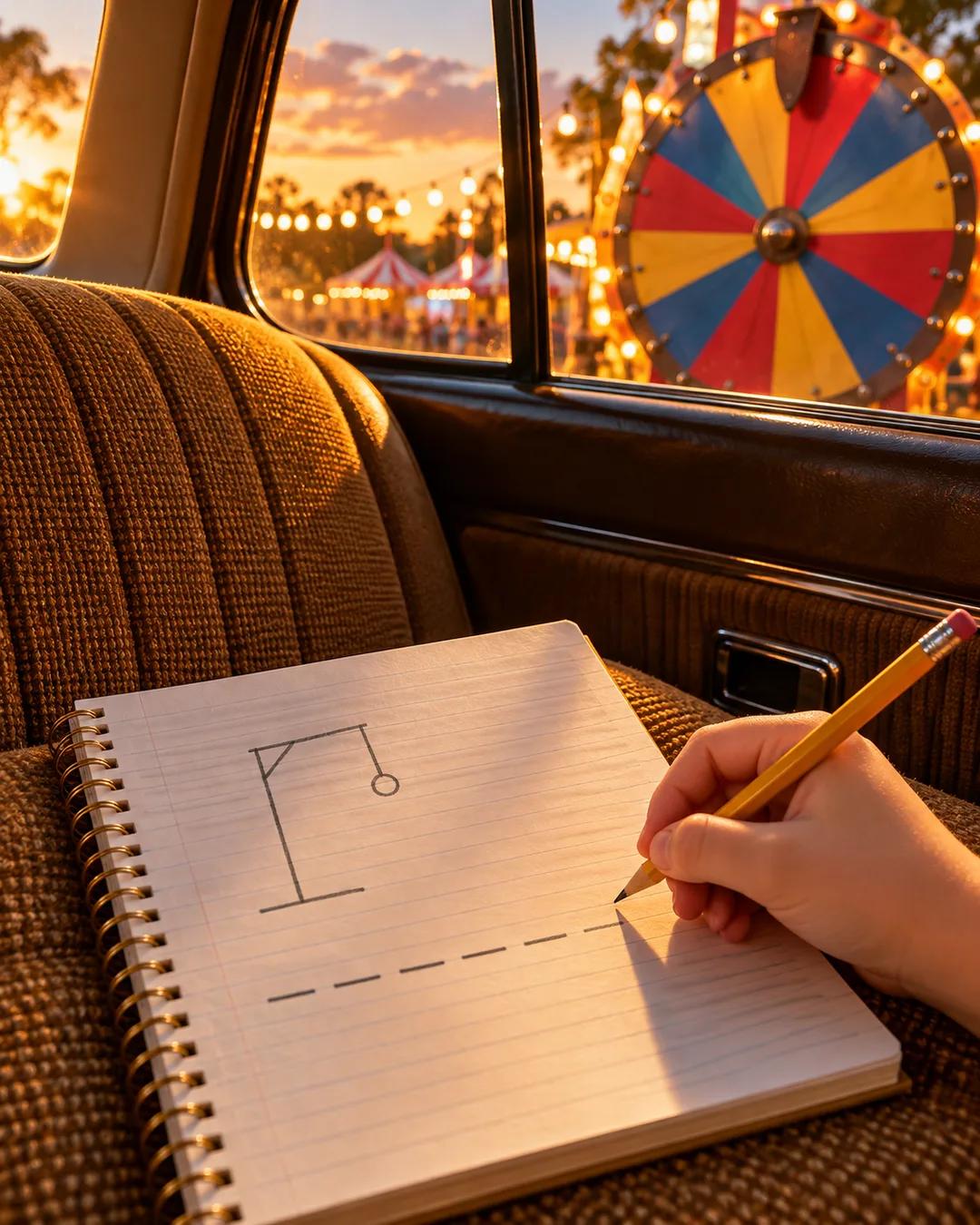
Hangman plus a carnival wheel

Hangman meets a wheel
Griffin and his sister played Hangman with pencil and paper to pass the time on summer road trips. He also once went to a carnival and was taken with the big wheel people spun for prizes. His idea combined them: you play Hangman, but you spin the wheel before every letter you call, and where it lands decides what the letters are worth.
Shopper's Bazaar
An NBC executive wanted the show to appeal to a female audience and insisted on a shopping format, with prizes all over the stage and contestants spending their money on them every time they solved a puzzle. Griffin didn't love the change, but he wanted the show on the air. The pilot, called Shopper's Bazaar, was confusing. Contestants had to pre-select prizes, an accounting department tracked who was in profit and who was in debt, and the contestants didn't even spin the wheel. They shouted, "Stop the wheel," often before it had started spinning.
So they tried again, swapping the upright carnival wheel for a giant horizontal roulette-style wheel big enough to fill much of the studio floor. It was so big that it became the centerpiece of the whole show. Wheel of Fortune debuted on NBC in 1975, and the shopping stayed.
The 1983 surge
The ratings were fine for the first eight and a half years. Then, in early 1983, CBS ended MASH, which had aired at 8:00 PM, and NBC launched a nighttime version of Wheel of Fortune at 7:30, right before prime time. All of a sudden, everyone was watching.
Why has Hangman lasted so long?
Hangman needs only paper and a pencil, so it spreads without any equipment. Every wrong guess moves the guesser closer to losing, which keeps each round tense even when it is short. The earliest known written description appears in Alice Bertha Gomme's 1894 collection Traditional Games, under the name Birds, Beasts and Fishes.
How did Griffin turn games into a fortune?
Griffin also created Jeopardy!, which debuted on NBC in 1964, alongside Wheel of Fortune. In 1986, he sold his production company, Merv Griffin Enterprises, to the Coca-Cola Company for a reported $250 million. The sale included both game shows.
Why did NBC want a female audience?
Daytime television in the 1970s was built around homemakers, who made most household purchases. Advertisers of groceries, cleaning products, and household goods paid for access to them. Soap operas and game shows filled the daytime schedule for that reason. Nielsen ratings reported viewers by age and sex, which let networks sell audiences to advertisers by demographic.
More from 99% Invisible