Korva is a scroll of the internet’s best ideas.

Her oxygen dropped at Hagrid's voice
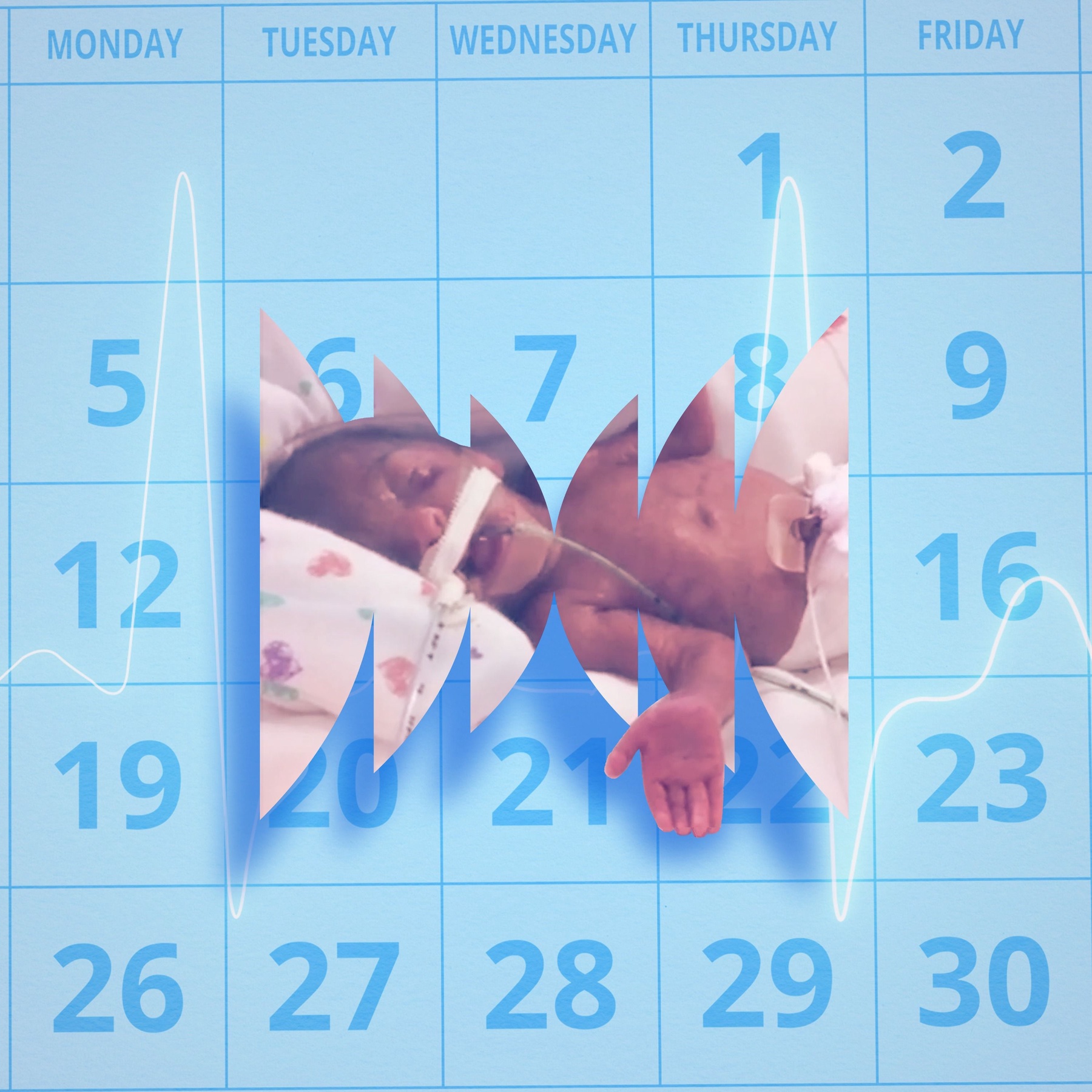
Reading by the incubator
Juniper French was born at 23 weeks and 6 days to Tom French and Kelly Benham. After five or six days that went pretty well, her intestines failed and the real problems began. Drains went into her belly, and her blood pressure would not hold. Tom wanted something to do, because feeling powerless is the worst part of a situation like that. In quiet moments he stood over her incubator and read her the first chapter of Harry Potter.
What the monitor showed
Her eyes were still closed and she often lay still, so the oxygen saturation number on her monitor was one of the few ways to know how she was doing. A higher number is better. When Tom read, the number went up right away.
Deeper into the story, he read Hagrid's lines in Hagrid's voice, and her oxygen dropped at once. The alarms went off again and again, and Kelly hit him on the arm and told him he was scaring the baby.
Waiting for the next chapter
Juniper had no idea what a chapter was. To Tom, she seemed to be eagerly waiting for the next one, even before her eyes opened.
How does a pulse oximeter read oxygen?
A pulse oximeter shines red and infrared light through the skin and measures how much of each passes through. Hemoglobin carrying oxygen absorbs those two kinds of light differently from hemoglobin without oxygen, and the ratio gives the saturation percentage. Because the device reads only the pulsing part of the signal, it ignores skin, bone, and other tissue. Takuo Aoyagi, an engineer at the Japanese company Nihon Kohden, worked out this principle in 1972.
How early can babies hear sounds?
The cochlea, the inner-ear organ that turns sound into nerve signals, is structurally formed by about the middle of pregnancy. The womb is a noisy place, full of the mother's heartbeat, blood flow, digestion, and muffled voice. Low-pitched sounds pass through tissue and fluid far better than high-pitched ones, so what reaches a fetus is mostly deep, rhythmic sound.
Why do NICU monitors alarm so often?
Premature babies breathe irregularly, with pauses called apnea and slowdowns in heart rate called bradycardia, and monitors are set to catch these within seconds. Movement and loose sensors also trigger false alarms, so units can sound off dozens of times a shift. The Joint Commission made clinical alarm safety a National Patient Safety Goal in 2014 after alarm fatigue was linked to patient harm.
More from Radiolab