Korva is a scroll of the internet’s best ideas.
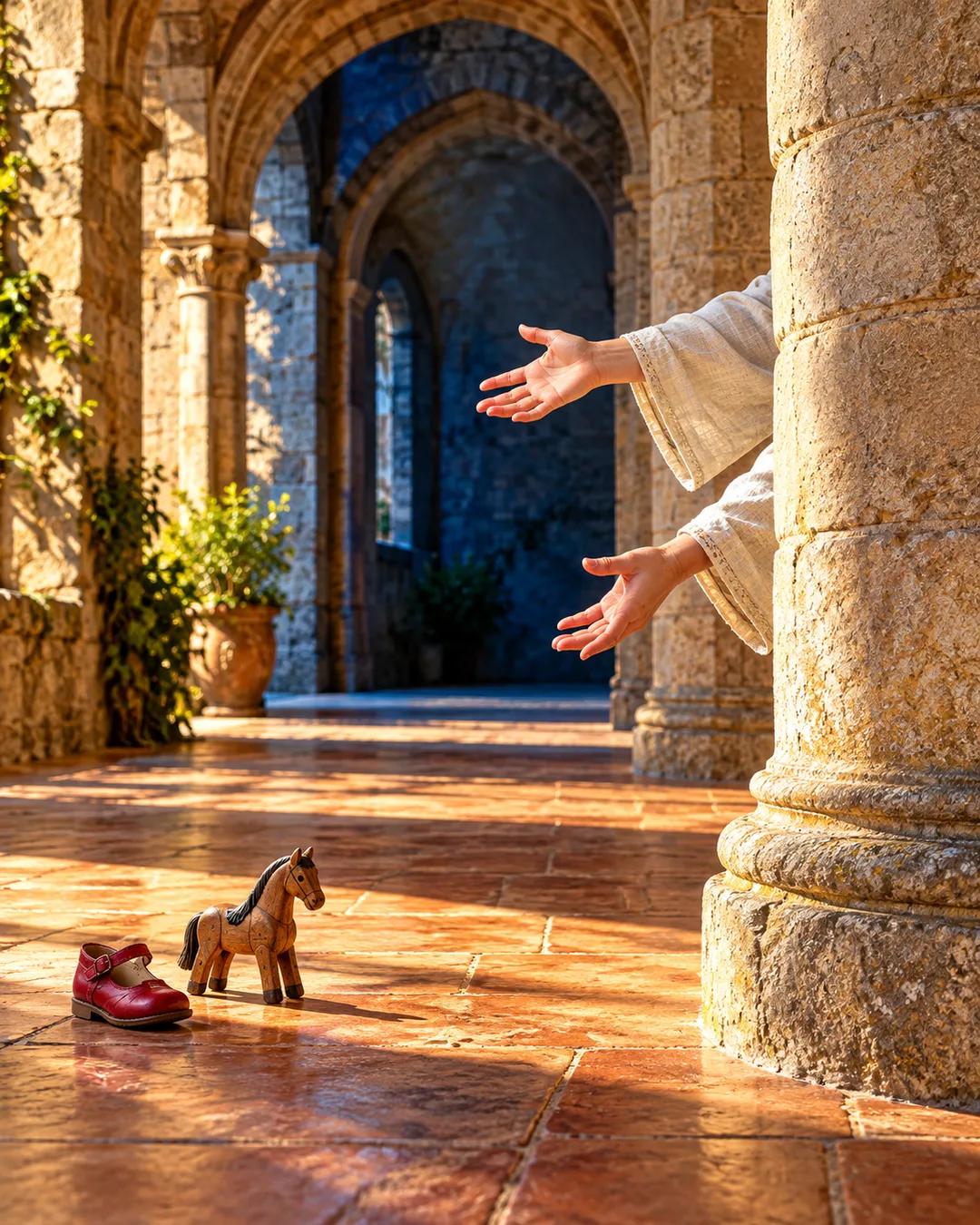
Hide-and-seek with Jesus

A mother's game
The treatise is the Ancrene Wisse, and it draws the scene in detail. The mother runs away from her child and hides, and lets him sit alone, looking anxiously around and calling out for her. He weeps for a while.
Then she jumps out laughing with outstretched arms, embraces and kisses him, and wipes his eyes.
Joy at the holidays
The joy ran in both directions. An Oxford schoolbook of the 1490s describes a schoolboy coming home for the holidays. When he met his parents, they wept for joy, each to the other.
Why compare Jesus to a mother?
Maternal imagery for Christ appears in several medieval religious writers, including Anselm of Canterbury, and in the late 1300s Julian of Norwich wrote of Christ as a mother. Cistercian writers of the twelfth century used it too. The Ancrene Wisse was written for anchoresses, women who lived enclosed in small cells attached to churches. The scene of the hiding mother illustrates how God's comfort could seem to disappear for a while from a person at prayer.
Why did anchoresses need a written guide?
Anchoresses lived enclosed for life in cells attached to church walls, usually with a small window for receiving food and visitors. The Ancrene Wisse was written in English in the early 1200s and first made for three sisters who had chosen this life. It set out guidance for their prayers, daily routines, and temptations. It survives in several manuscripts, as well as in French and Latin versions.
Why did schoolbooks include sentences about families?
Collections called vulgaria gave pupils English sentences to translate into Latin, which was how grammar was taught. The sentences were often drawn from daily life, such as school, meals, home, and holidays. Latin was the language of the church, the law, and the universities.