Korva is a scroll of the internet’s best ideas.
Hire 65-year-olds as software engineers
Veterans on the software team
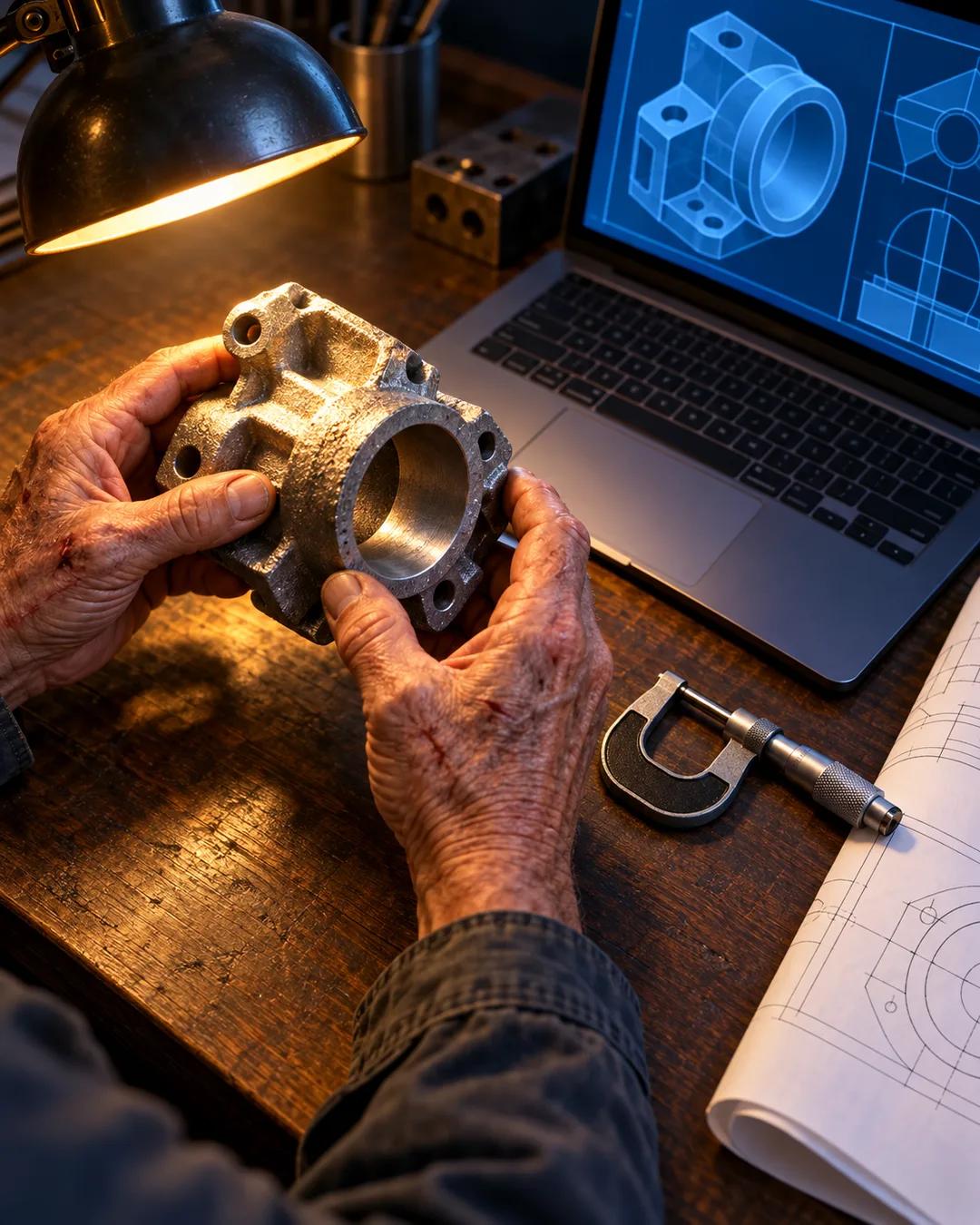
Those veterans have seen every problem a foundry ever produced. The value they create is teaching the company what went wrong over the last 40 years and plugging their brains into the software.
Three groups working together
They work alongside two other groups: software and robotics controls engineers who automate every process they can, and technicians, almost all of whom have never set foot in a factory.
Manufacturing as a service
Together the three make up the platform, which is manufacturing as a service. The company takes a customer's design, creates a digital twin, and builds and operates a factory at automotive levels of efficiency, for high mix, low volume work. Technicians get equity too, along with the same healthcare that software engineers get.
How does a digital twin work in a factory?
A digital twin is a software model of a part, machine, or whole factory that is fed real measurements. Engineers run the model to test a design or a schedule before any metal is cut. Michael Grieves of the University of Michigan presented the concept in 2002, and NASA's John Vickers gave it the name digital twin in a 2010 technology roadmap.
Why can veterans see problems software misses?
Much of what experts know is tacit, which means they can act on it without being able to write it down. Capturing that judgment in software requires pairing the expert with engineers who can turn it into rules. A machinist may hear a cut go wrong or see a chip change color before any sensor flags it. Philosopher Michael Polanyi summarized the idea in his 1966 book The Tacit Dimension with the line that we can know more than we can tell.
Why is high mix, low volume work so hard?
Every new part needs its own fixtures, tool setups, and program, and the time spent switching between them is lost production. Automakers avoid the problem by running the same part for hundreds of thousands of units. Toyota engineer Shigeo Shingo developed the single-minute exchange of die method in the 1950s and 1960s to cut changeover times to minutes.
More from The Way I Heard It with Mike Rowe