Korva is a scroll of the internet’s best ideas.
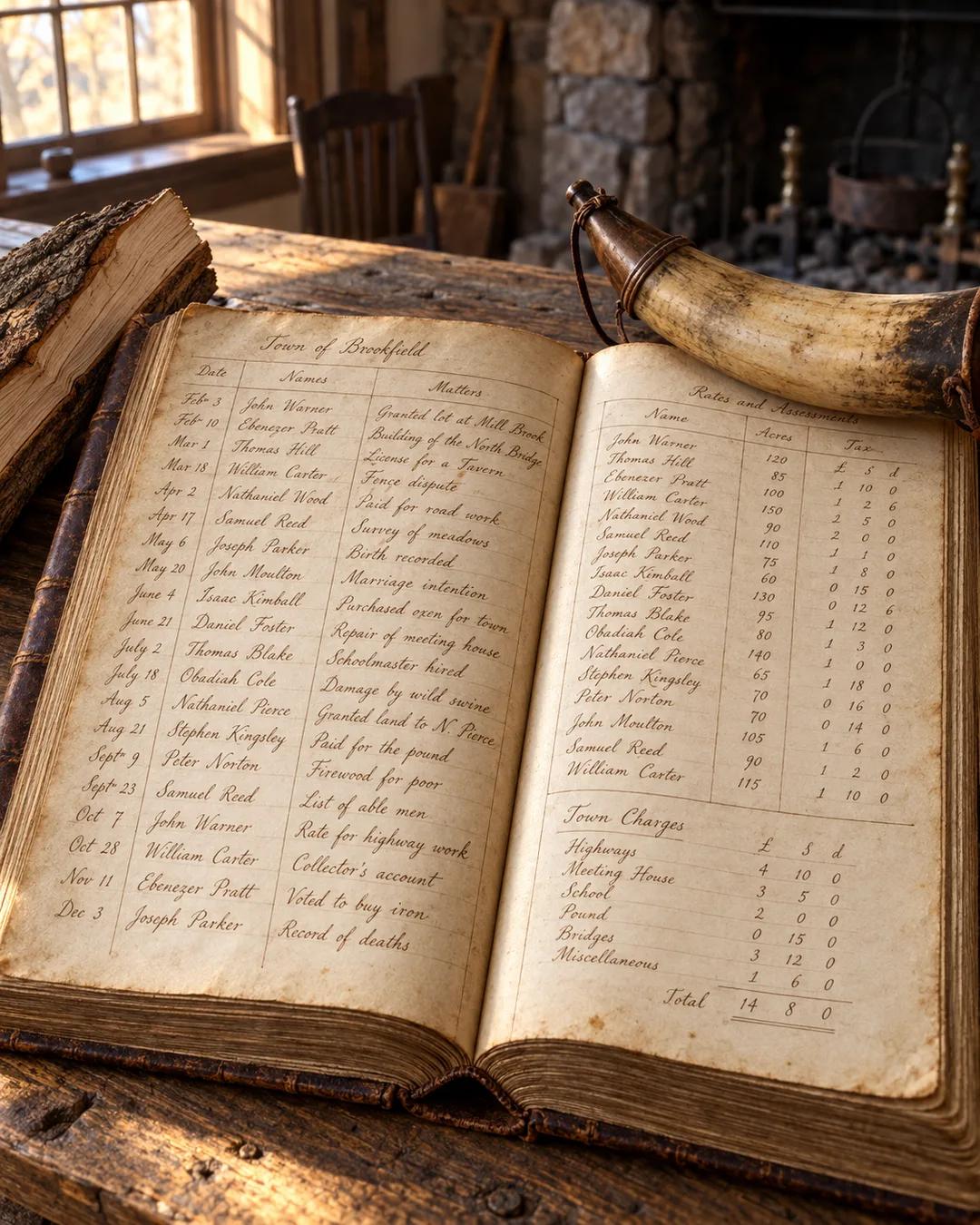
Hogs and firewood to gunpowder

From hogs to powder
The old town records are full of ordinary problems: a good wife's hog got loose and destroyed the crops, and somebody had to supply the minister's firewood. In 1774 the tone flips. Small towns write to the Boston Committee of Correspondence and Safety, a committee structure that appears that year, asking where to get gunpowder and more weapons and how to manufacture gunpowder.
They begin training their militias more seriously. Nobody asks for guns and powder unless they think a serious problem is coming, and the towns clearly did.
Still no revolution
Even so, most people in 1774 did not use the words independence or revolution. The most common term was civil war within the empire itself. Through early 1775, up to Lexington and Concord in April, most still expected a path out of the trouble.
How did committees of correspondence spread news?
Committees of correspondence were standing groups that exchanged letters between towns and colonies, carrying news, resolutions, and warnings faster than official channels. Virginia's House of Burgesses proposed intercolonial committees in March 1773. Riders carried the letters between towns, and printers reprinted them in newspapers. By 1774, the letters were a main way towns learned how neighbors were answering British measures.
Why was gunpowder so hard to get?
Colonies imported most of their gunpowder, and little was made locally. In late 1774, an order in council banned exports of arms and gunpowder from Britain to America. On September 1, 1774, British troops removed powder from a provincial powder house in Charlestown, Massachusetts, in what became known as the Powder Alarm. Thousands of militiamen turned out in response to rumors that blood had been shed.
How did minutemen differ from ordinary militia?
In October 1774, the Massachusetts Provincial Congress told towns to form companies of minutemen, who would be ready to march on short notice. Ordinary militia drilled periodically, while minutemen were chosen from among them, were often younger, and drilled more often. Towns elected the officers. Minutemen from several towns turned out at Concord on April 19, 1775.
More from Joys of Compounding