Korva is a scroll of the internet’s best ideas.
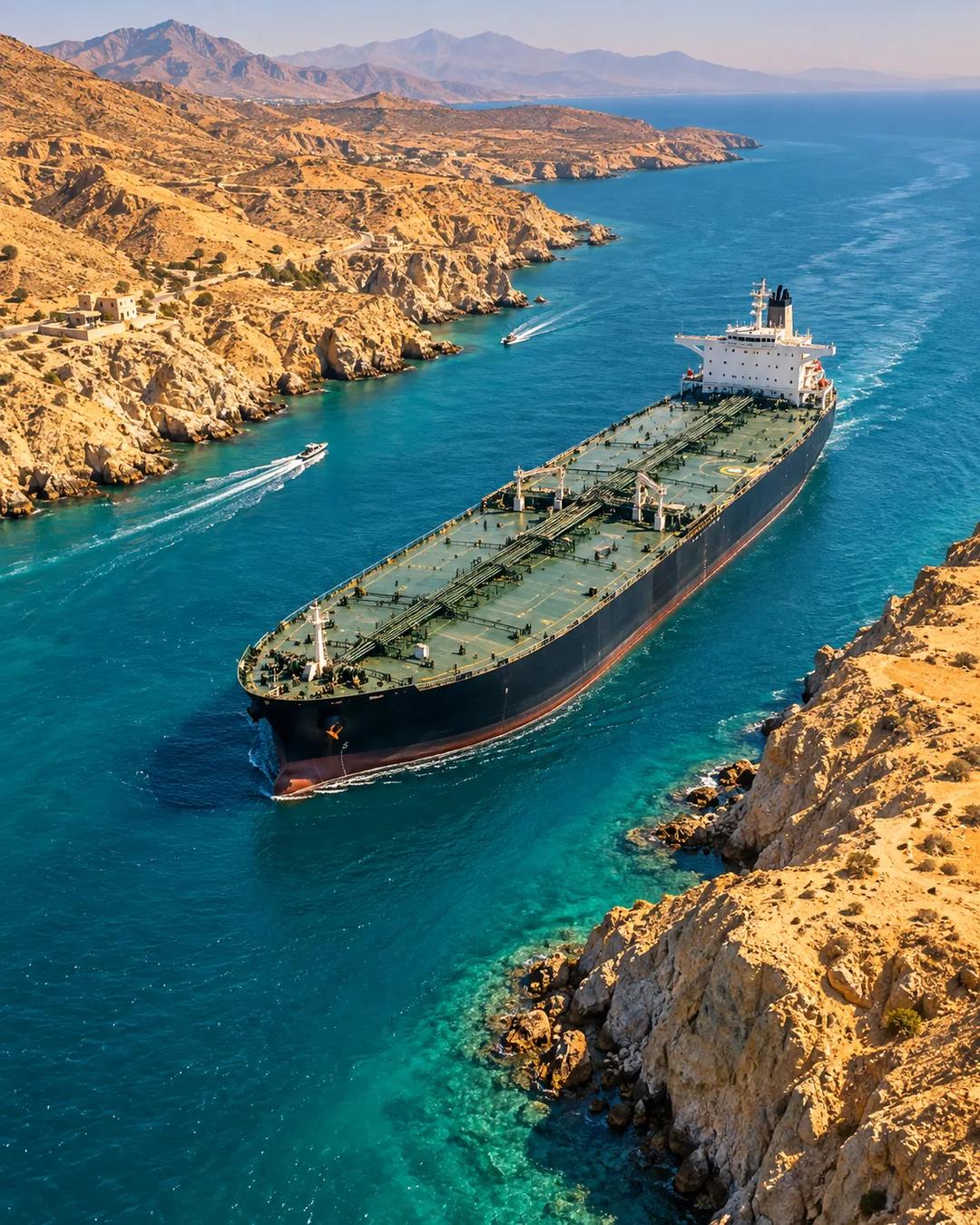
Hormuz is only 20 miles wide

A narrow chokepoint
The Persian Gulf is 200 miles wide and narrows into the Strait of Hormuz, which opens onto the Indian Ocean and connects large oil-producing countries to global markets. Iraq, Kuwait, Saudi Arabia, the UAE, Qatar, and Oman sit on one side. The entire north side is controlled by Iran.
Cheap weapons
With so little distance to cover, Iran can use missiles, fast attack vessels, naval mines, and cheap drones launched from anywhere along the shore. Fast attack vessels are speedboats that zip in with no regard for their own safety. Mines are floated into the strait with no regard for what they set off. Sending in naval destroyers or getting commercial ships past becomes extremely dangerous.
Autonomous answers
Large numbers of autonomous vessels offer scale, persistence, and risk reduction that crewed ships alone cannot, and they have to carry counter-drone capability along with everything else. Saronic's Austin facility could build 2,000 Corsairs a year right now.
Why does so much oil pass through Hormuz?
The oil-producing countries around the Persian Gulf have their export terminals inside it, so tankers must leave through the strait to reach the Indian Ocean. The US Energy Information Administration has estimated that roughly a fifth of world petroleum consumption passed through it in recent years, along with a large share of Qatar's liquefied natural gas. Saudi Arabia's East-West pipeline to the Red Sea and the UAE's pipeline to Fujairah on the Gulf of Oman offer partial bypass routes.
Why are sea mines so effective?
A contact mine explodes when a ship strikes it, and an influence mine senses the magnetic, acoustic, or pressure signature of a passing hull. Mines cost far less than the warships they threaten, and clearing them is slow because minesweepers must find each one first. In 1988 the frigate USS Samuel B. Roberts struck a mine in the Persian Gulf and nearly sank. US Navy records put the repair bill at about $96 million.
Why is the shipping lane narrower than the strait?
Under the traffic separation scheme set by the International Maritime Organization, ships use an inbound lane and an outbound lane, each two miles wide. A two-mile buffer zone separates them, which leaves the whole corridor at about six miles. The lanes run through the waters of Oman, near the Musandam peninsula.
Why are small fast boats hard for destroyers to stop?
A swarm of small boats closes the distance quickly, which compresses the time a warship has to track and engage each one. In the 2002 Millennium Challenge war game, a red team led by retired Marine Lieutenant General Paul Van Riper used small boats and missiles to sink a large part of a simulated US fleet in the Persian Gulf. Reports on the exercise say 16 ships were lost on the first day.
More from All-In with Chamath, Jason, Sacks & Friedberg