Korva is a scroll of the internet’s best ideas.
Horsepower is a marketing unit

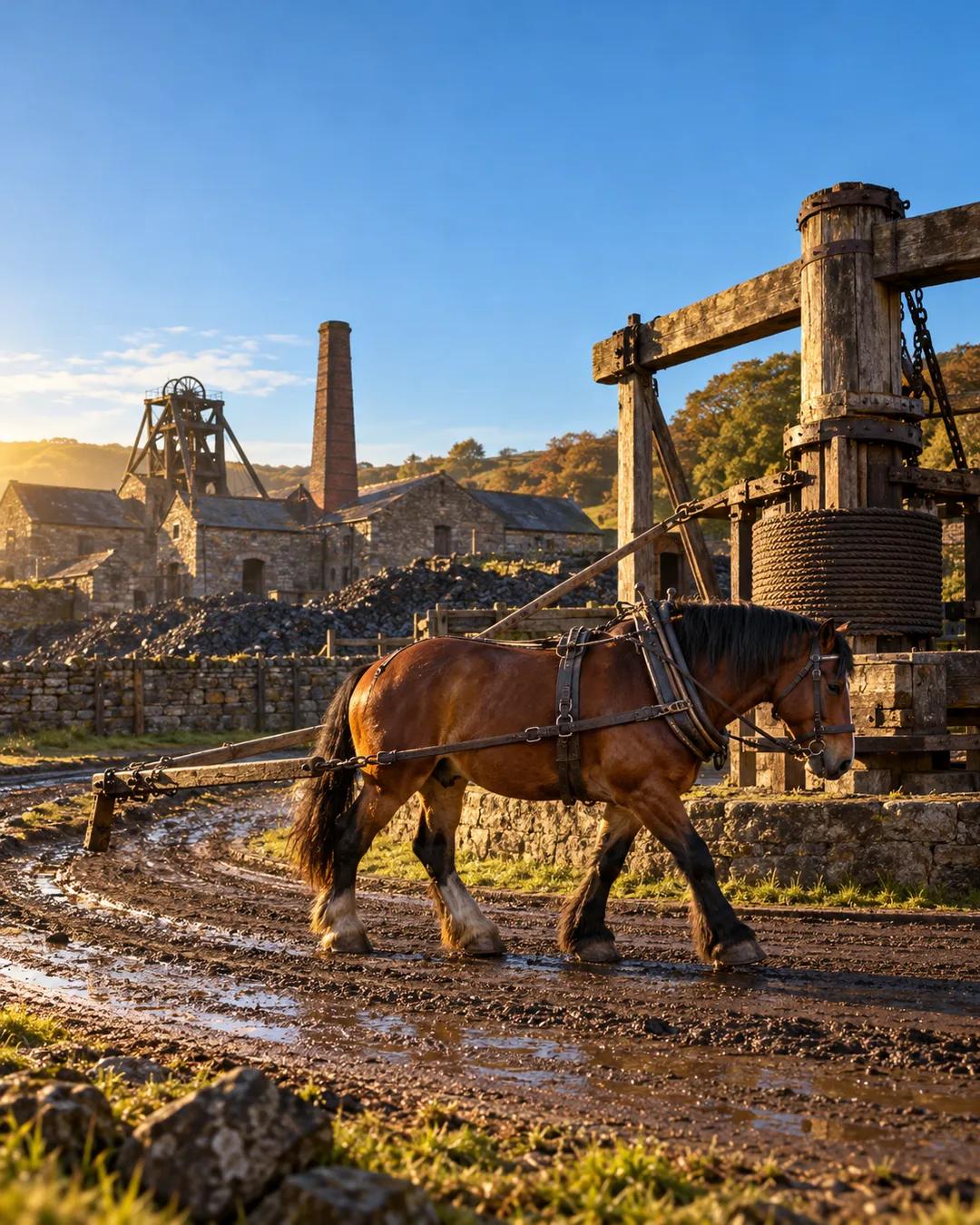
Mine owners used horses walking round and round in circles to drain their mines, so miners could dig coal and slate without drowning. Watt and Boulton were selling steam engines to replace those horses. Talk of boiler capacity or piston stroke length got them nowhere with these buyers.
So the two asked what buyers really wanted to know before paying for an engine, and the answer was how many horses they could stop feeding. Watt invented a unit to answer it, the horsepower. It carries no scientist's name like the ohm or the newton, because it was a marketing unit.
With it, Watt could tell an owner that a 25 horsepower engine would let him get rid of 75 horses, since the horses probably worked in shifts and the engine ran 24 hours a day. The buyers would scribble the cost of the horses, their feed, and their care on the back of an envelope, and then say they would take two.
How did Watt arrive at the horsepower figure?
Watt based the unit on how much work a strong horse could do turning a mill, and he settled on 33,000 pounds lifted one foot in one minute. That gave buyers a yardstick they could set directly against the horses on their payroll. One mechanical horsepower works out to about 746 watts.
Why is the unit of power named after Watt?
The British Association for the Advancement of Science adopted the watt as a unit of power in 1882, naming it in honor of James Watt's work on the steam engine. The International System of Units made it the standard in 1960. Horsepower stayed in everyday use for engines, especially in cars. One kilowatt equals about 1.34 horsepower.
How did horses drain mines?
Mines used a horse gin, in which a horse walked a circular track and turned a large drum. The drum wound a rope that hauled buckets of water up the shaft or drove pumping rods. Horses needed rest, so mines kept several and worked them in shifts. The first Newcomen steam engine was installed in 1712 at a colliery near Dudley Castle in Staffordshire.
More from My First Million