Korva is a scroll of the internet’s best ideas.
Houston voted against zoning twice

Two votes
The first vote came a century after Texas joined the Union, as most major US cities were adopting municipal laws that outline what type of buildings get built where. Houston went the other way, doubled in size over the next decade, and nearly reached a million inhabitants.
Sprawl and parking
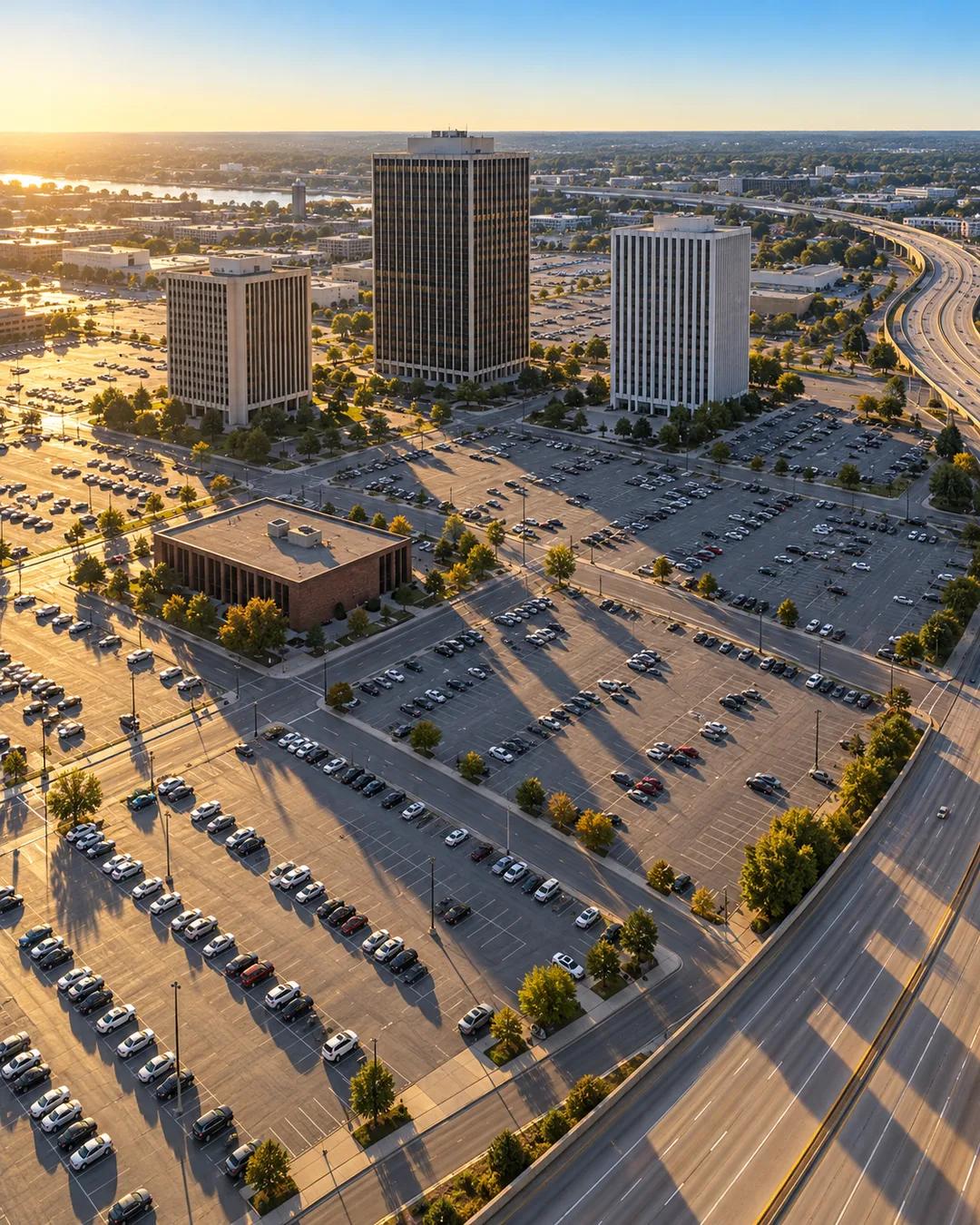
With limited rules outside of lot minimums, the energy sector boomed and the city sprawled to a size larger than the entire London metro area. The lack of zoning also made room for never-ending parking lots, and a shot of downtown from the 1970s, blocks from where the Republic of Texas capitol once stood, became synonymous with Houston's car obsession. It left Huckleberry Circle too, where expensive single-family homes abut massive apartment towers.
A growth machine
That same stretch of downtown has fundamentally transformed over the last 50 years. Skipping zoning came from simply not wanting ordinances, and it unintentionally opened the lane for Houston to become an unrelenting growth machine.
How did zoning spread across American cities?
New York City adopted the first comprehensive zoning ordinance in 1916, partly in response to tall buildings that blocked light from the streets. Courts at first questioned whether cities could limit what owners built on their own land. In 1926, the US Supreme Court upheld zoning in Village of Euclid v. Ambler Realty. After that decision, zoning ordinances spread quickly across American cities.
How did oil build modern Houston?
The Spindletop gusher near Beaumont in 1901 started the Texas oil boom, and Houston became a base for the companies that serviced it. The Houston Ship Channel, which opened in 1914, linked the city to the Gulf of Mexico and drew refineries and chemical plants to its banks. Oil and chemical firms then brought machinery makers, engineers, and banks. NASA chose Houston for its Manned Spacecraft Center in 1961, now the Johnson Space Center.
Why did parking lots replace downtown buildings?
After World War II, more workers drove to downtown jobs, and employers and shoppers wanted parking nearby. A cleared lot is taxed on a lower value than a building, so an owner could hold land cheaply while waiting for a better offer. Many American cities also demolished older blocks in the urban renewal era of the 1950s and 1960s. Surface parking took up large parts of many American downtowns as a result.
More from Wendover Productions