Korva is a scroll of the internet’s best ideas.
Human groups settle near 150

Hunter-gatherer group sizes
Pre-industrial hunter-gatherers lived in three group sizes. Temporary night camps held 30 to 50 people and were unstable, with people constantly coming and going. Large tribes of about 500 to 2,500 were held together mostly by language and cultural identity. In the middle were clans, groups with ritual significance, such as the group present at a coming-of-age ceremony. One interpretation is that clans were essentially a person's social group.
Clans and old villages
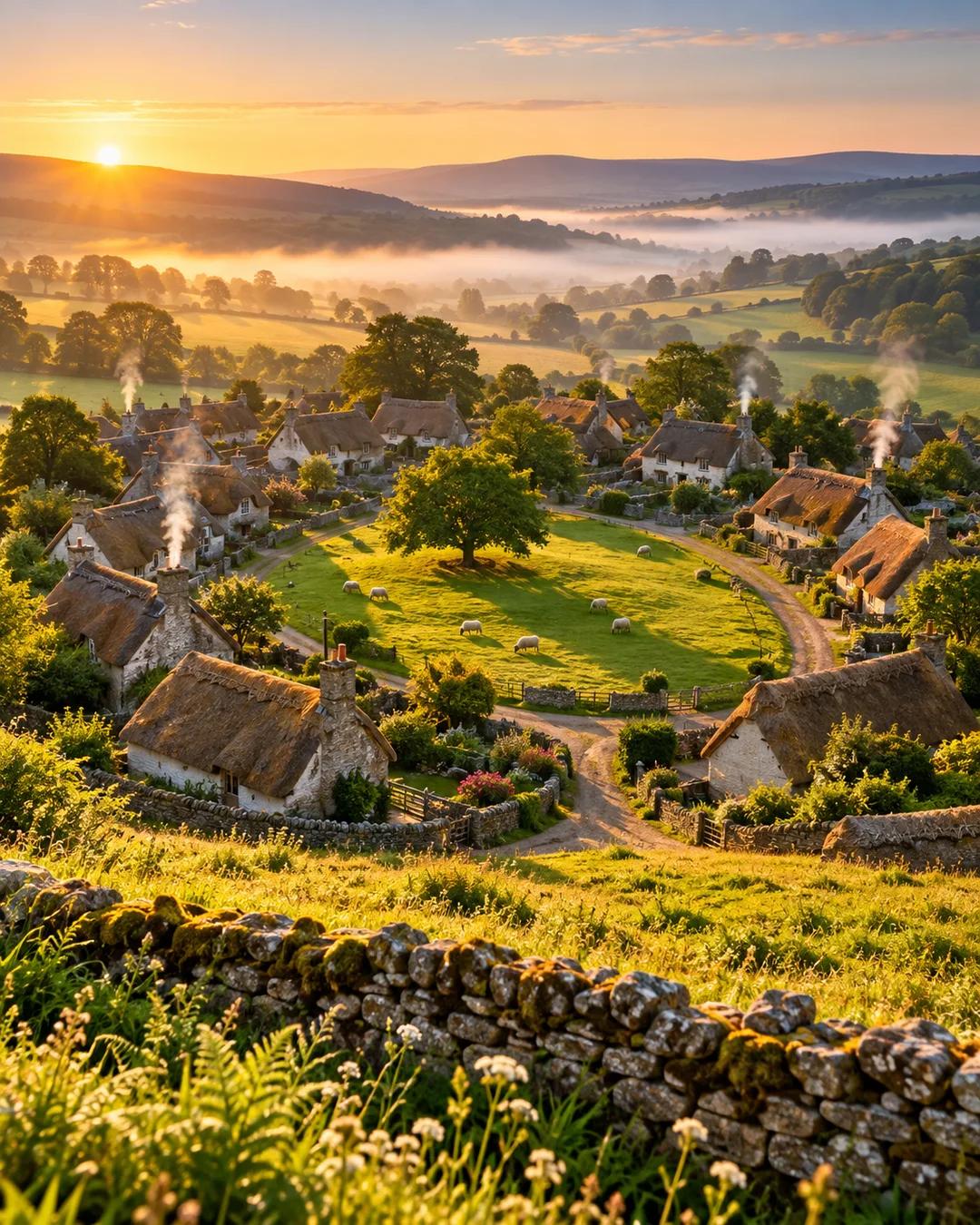
Across the 20-ish tribal societies with census data, clan size has a mean of 153 people. Neolithic villages around 6000 BCE had about 150 people, and the Domesday Book of 1086 shows 11th century English villages averaging around 150.
Modern groups near 150
The number holds in modern groups too. Religious communities such as the Hutterites and Amish tend to sit at around 110 people and split once they pass 150. The company, the smallest independent modern military unit, is three platoons of 30 to 40 fighters plus command staff and support units, about 150 in all. Gore-Tex factories were famously kept to 150, because Mr Gore found that larger ones required inefficient hierarchies. One experiment found that people send Christmas cards to roughly 68 households, which comes to about 150 people.
Why would communities split near 150?
Malcolm Gladwell's book The Tipping Point describes Hutterite colonies that divide when they near 150 members. The reasoning he reports is that beyond that size, peer pressure stops being enough to keep order, because members no longer know one another well. Dunbar makes a similar argument: a group that large needs formal rules and enforcers, since personal familiarity can no longer hold it together. Hutterites call the new colony that results a daughter colony.
How do historians read village sizes from Domesday?
William the Conqueror ordered the survey in 1085, and its records were completed in 1086. It listed landholders, tenants, and heads of households rather than counting every person. Historians therefore multiply the recorded households by an estimated family size to reach a population. The survey covered more than 13,000 places across England.
How did Gore run such small factories?
Bill Gore founded W. L. Gore and Associates in 1958, and the company is best known for Gore-Tex fabric. It became known for a flat structure it calls a lattice, where staff are called associates and there are no traditional chains of command. Gore reasoned that in a small unit people could rely on knowing one another rather than on layers of managers. The stretched PTFE membrane behind Gore-Tex was developed in 1969 by his son Bob Gore.
More from Half as Interesting