Korva is a scroll of the internet’s best ideas.
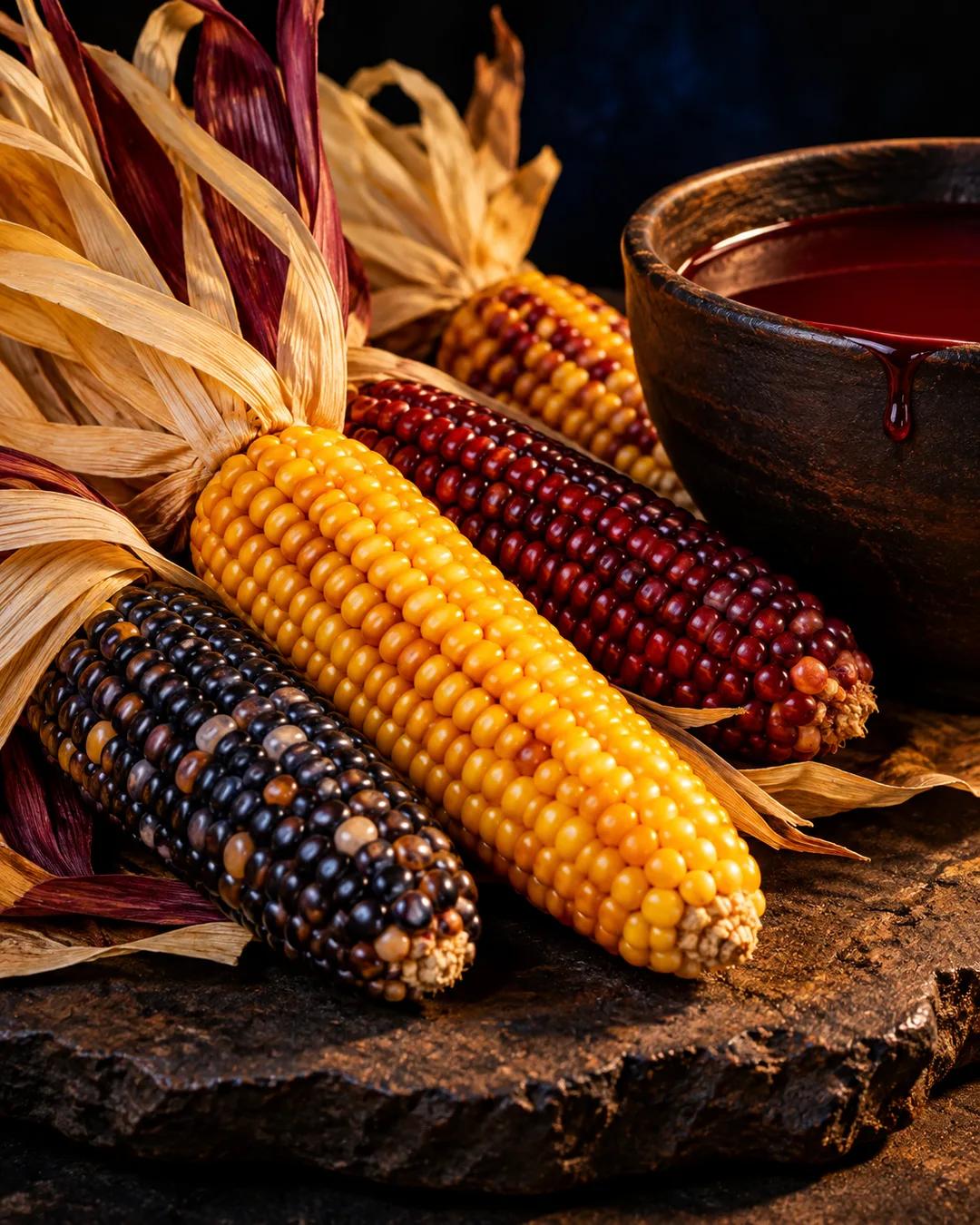
Humans made of corn and blood

The hero twins
The Popol Vuh centers on the end of the third creation. A set of hero twins fight the Lords of Death in a Maya ball game, defeat them, and protect the world for humans. The lords have ugly names like Pestilence, Starvation, and Pus.
The maize god
The twins also bring back their father, whom the Lords of Death had killed, and send him up into the sky. He becomes the maize god, and corn is created. Their grandmother raised them and tried to hide that they were ball players, because that is how their father died.
Made of corn
Humans, the story goes, are made from corn and drops of divine blood, which makes them more perfect than the creations made of mud or wood.
How did the Popol Vuh survive?
K'iche' Maya nobles wrote it down in Latin letters in the 1550s, after the Spanish conquest. The original manuscript is lost. The Dominican friar Francisco Ximenez copied it and translated it into Spanish in the early 1700s. His copy is held at the Newberry Library in Chicago.
Why is corn so central to Maya myth?
Maize was the staple food of the Maya, and their art shows the maize god with a head shaped like an ear. Genetic and archaeological studies trace corn to southern Mexico, where it was bred from a wild grass called teosinte about nine thousand years ago. Maya farmers grew many varieties in different colors. Those colors appear in the Popol Vuh, which describes yellow and white corn used to make the first humans.
What happened to the mud and wood people?
In the Popol Vuh, the gods first made animals, who could not speak the names of their makers. The first humans, made of mud, dissolved in water. The next, carved from wood, had no minds or hearts, and a flood and their own household objects destroyed them. The gods then made people from maize dough.
More from Shawn Ryan Show