Korva is a scroll of the internet’s best ideas.
Hunting for answers has value

The value of the hunt
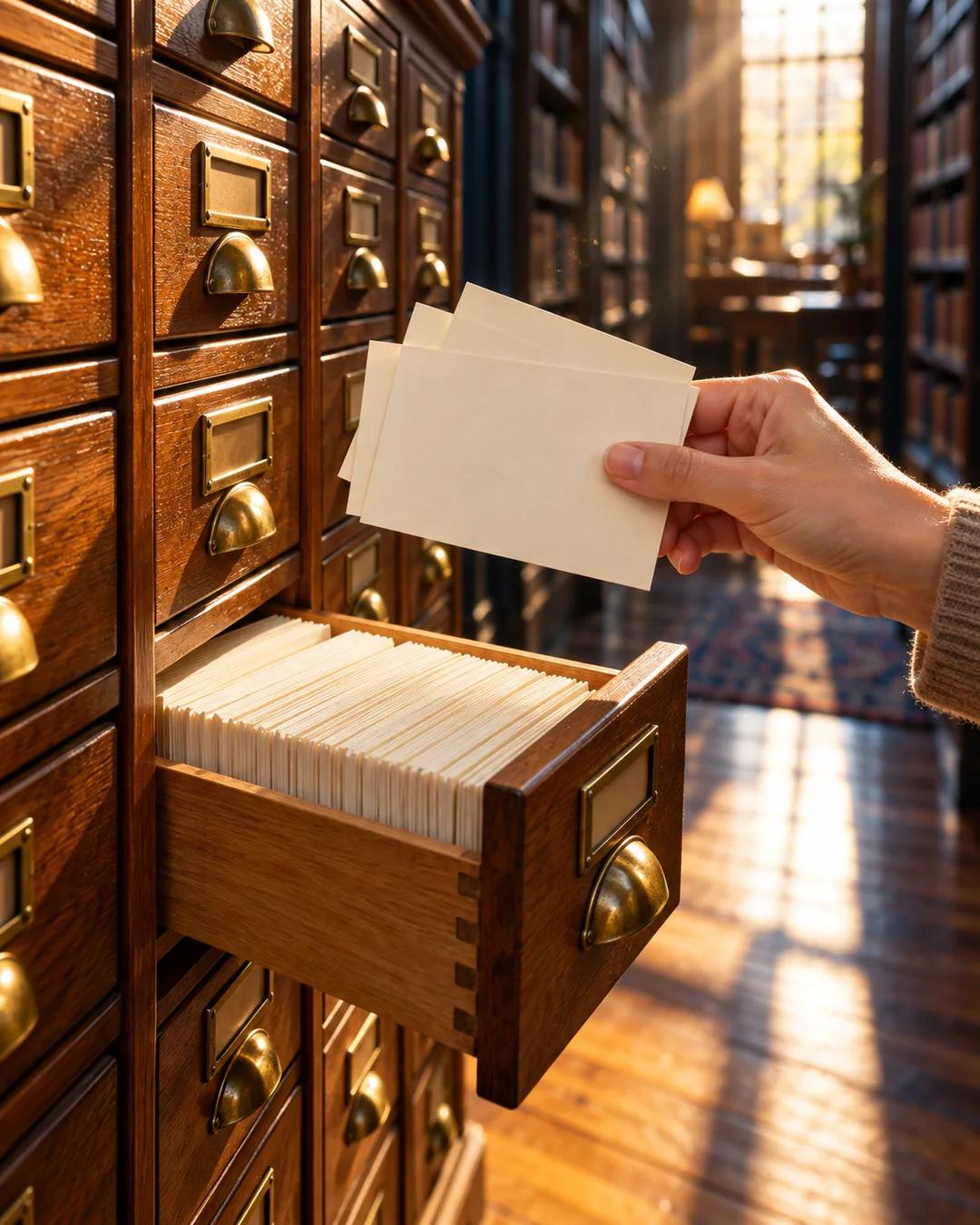
Christopher Nolan's kids can look something up on Google and get it immediately. At their age he had to work through the Dewey decimal system at the library and hunt for the information, and the labor of it was valuable in and of itself.
Getting lost on purpose
Relying on particular technologies, or on corporations that manage our information and track our movements, encourages dependency. When the family visits a new city, Nolan wanders around until he is lost, then shows his kids how he finds his way back without a phone or a map.
He sees the same thing in filmmaking, where reading the plan of a set means constantly reconciling two-dimensional imagery with three-dimensional space.
Why does searching for answers help memory?
Psychologists Norman Slamecka and Peter Graf reported in 1978 that people remember information better when they produce it themselves than when they simply read it. The finding is known as the generation effect. Hunting through a library catalog and the shelves involves producing the answer step by step. Psychologist Robert Bjork calls learning that takes effort a desirable difficulty.
How does GPS use affect spatial memory?
A 2020 study in Scientific Reports by McGill researchers Louisa Dahmani and Veronique Bohbot linked heavier GPS use to worse spatial memory. Over three years, drivers who relied on GPS more showed a steeper decline in their ability to navigate from memory. The hippocampus, a brain region tied to spatial memory, handles mapping places. A 2000 study by Eleanor Maguire found that London taxi drivers had larger posterior hippocampi than other drivers.
More from Founders