Korva is a scroll of the internet’s best ideas.
Imagining the future is a recent habit

Future talk today
Today the future frames nearly every public debate, from the future of automation to the future of AI to the future of democracy. That habit is new.
It started with machines
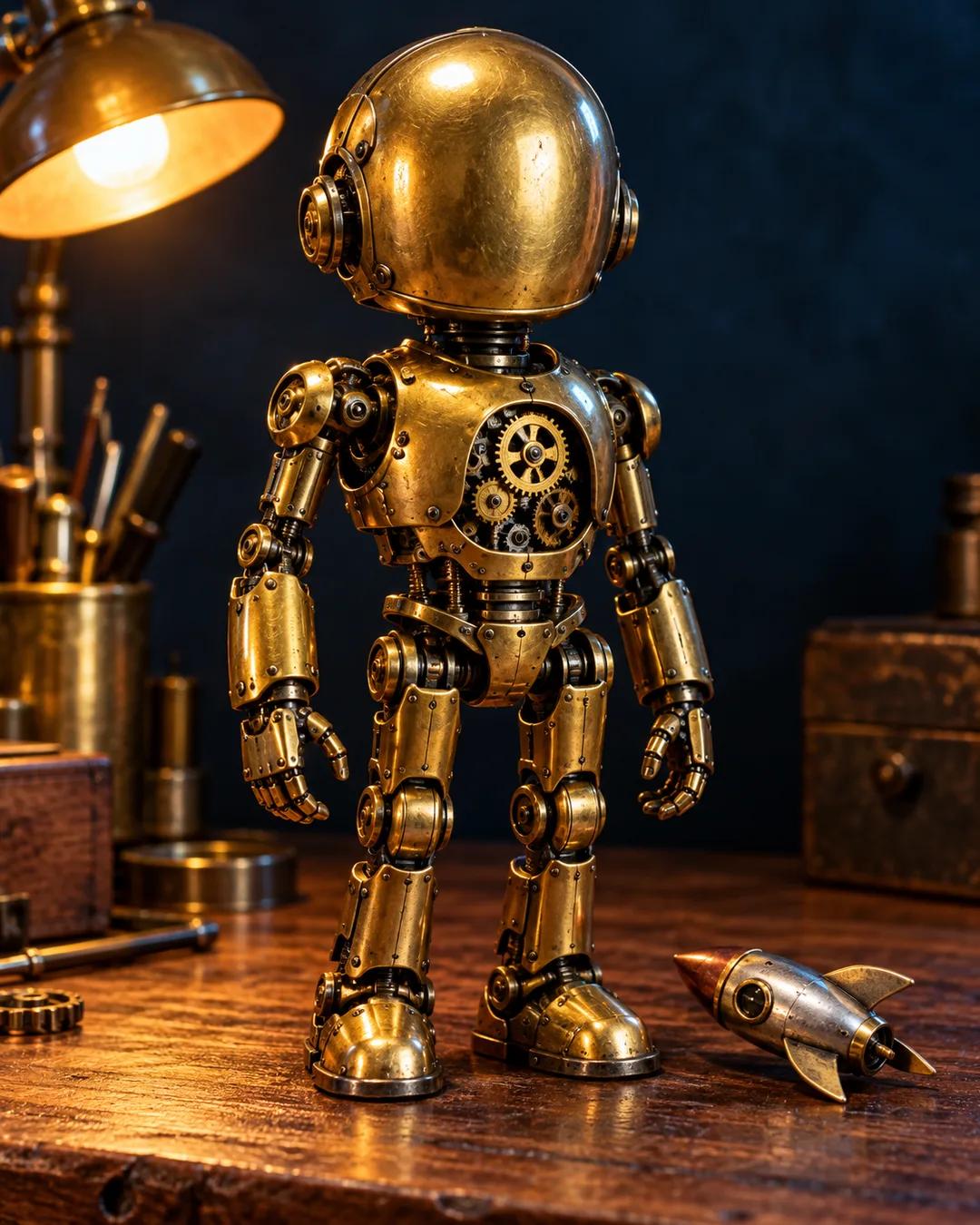
It started with machines. In the 19th century, people watching machines get better, faster, bigger, and stronger began to ask what the future would look like if that continued. They could picture rockets and trips to the moon. The word robot did not exist until the 1920s, but there was already a lot of talk about mechanical men.
The fair's role
The 1876 World's Fair came in the middle of that curiosity. One in five Americans went to see the inventions for themselves, and life was changing so fast that they were becoming fascinated with the future for the first time.
Why did machines make people imagine the future?
When machines visibly improve within a single lifetime, people start extending the trend forward. The railroad, the telegraph, and the steam engine made change something a person could watch happen within decades. Writers took up the habit: Jules Verne published From the Earth to the Moon in 1865, and H. G. Wells published The Time Machine in 1895. Science fiction as a genre grew out of that period.
Where did the word robot come from?
Czech writer Karel Čapek introduced the word in his 1920 play R.U.R., short for Rossum's Universal Robots. It comes from the Czech word robota, meaning forced labor. Čapek credited his brother Josef, a painter, with suggesting it. The play premiered in Prague in January 1921 and was staged in New York in 1922.
How did world's fairs spread ideas about progress?
Fairs put new machines in front of ordinary people rather than only engineers. London's Great Exhibition of 1851, housed in the glass Crystal Palace, drew more than six million visits. Later fairs in Paris, Vienna, and Philadelphia followed the model with bigger halls of machinery.
More from 99% Invisible