Korva is a scroll of the internet’s best ideas.
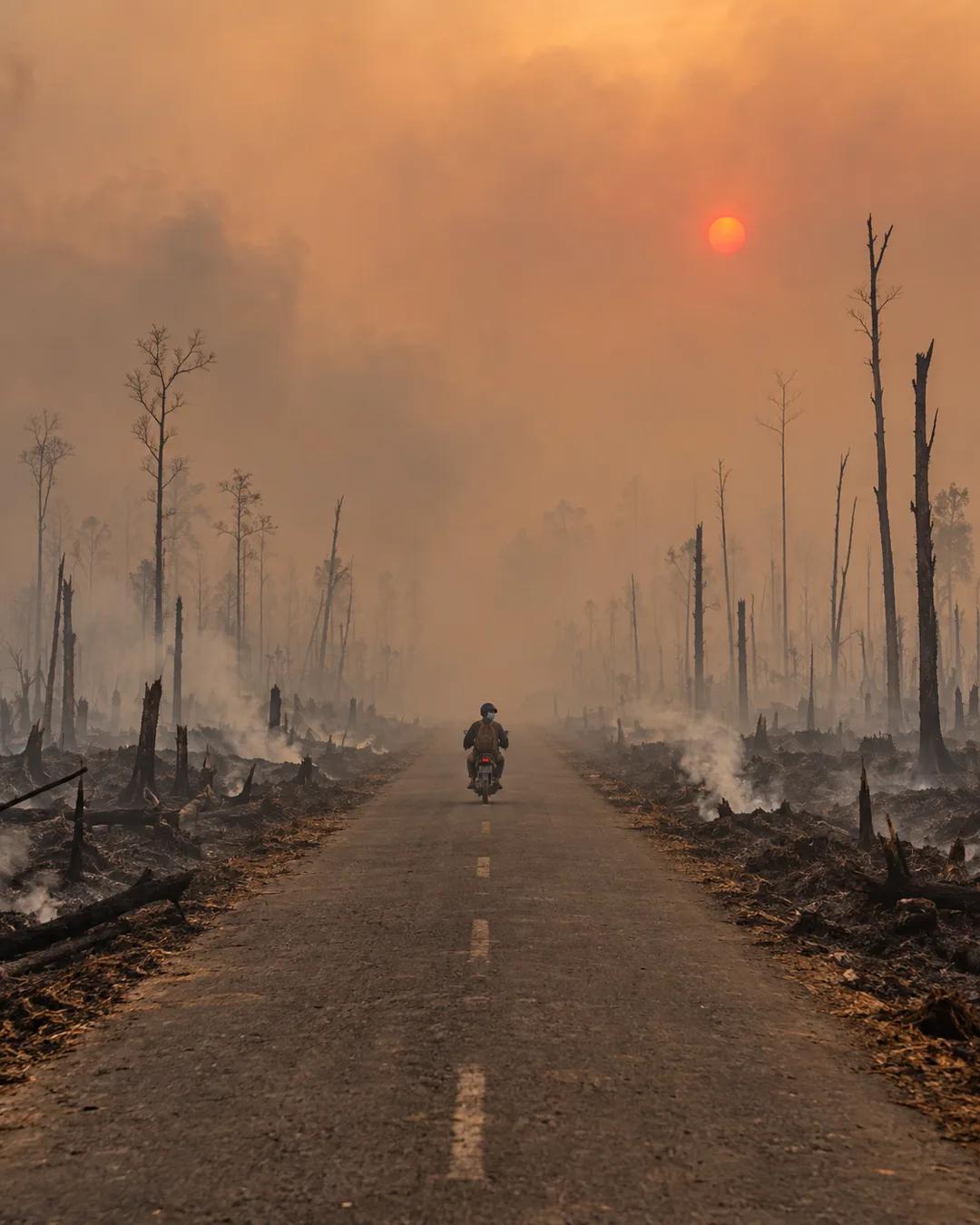
Indonesia's worst wildfires in a decade

Millions of hectares have burned. The smoke has been linked to hundreds of thousands of respiratory illnesses in Indonesia and has drifted to neighboring Singapore and Malaysia. In Palangkaraya, in Central Kalimantan, air pollution has reached hazardous levels, and people are visiting a health center with difficulty breathing, eye irritation, and headaches.
Firefighters there said underground peat fires take months to put out, and even then may reignite into open flames. Environmental groups blame deforestation, land clearing by large-scale plantation owners, and a lack of legal action. The government has vowed stricter action against those suspected of contributing to the fires.
Jim McQuaid, an atmospheric scientist from the University of Leeds who traveled to measure the fires' impact, warned that the tiniest haze particles have a long-term effect on the population, especially younger children, that stays hidden for a long time. Singaporeans and Malaysians are demanding more action from Indonesia to end the annual haze, and on Tuesday Indonesians protested in the capital, asking the government to hold corporations linked to the fires accountable.
Why do peat fires burn underground for months?
Peat is partly decayed plant matter packed with carbon, and dried peat burns like fuel. The fire spreads by smoldering without flames, creeping through pockets of air inside the soil. Because peat layers can be several meters deep, the fire can follow the fuel downward where rain and surface water barely reach. Peatlands in Indonesia store enormous amounts of carbon, so these fires release it as greenhouse gas.
How does draining peatland lead to fires?
Wet peat resists burning, but drainage canals dry it out and turn it into fuel. In 1995, Indonesia launched the Mega Rice Project in Central Kalimantan, which cut canals through roughly a million hectares of peat swamp. The project was abandoned, but the canals kept draining the land for years. Central Kalimantan, where Palangkaraya sits, has been among the regions hit hardest by peat fires since then.
Why are the smallest haze particles most dangerous?
Particles under 2.5 micrometers across, known as PM2.5, are roughly a thirtieth of the width of a human hair. They travel deep into the lungs, and the smallest can pass into the bloodstream. The World Health Organization sets its air quality guidelines specifically for PM2.5 because of the evidence linking it to heart and lung disease. Wildfire smoke is rich in these particles.
Why does the haze reach Singapore and Malaysia?
During the dry season, prevailing winds over Sumatra and Borneo often blow smoke north and west toward the Malay Peninsula. The haze can travel hundreds of kilometers. The 2015 haze season became one of the worst on record for the region. The Association of Southeast Asian Nations adopted an Agreement on Transboundary Haze Pollution in 2002, and Indonesia ratified it in 2014.
More from Global News Podcast