Korva is a scroll of the internet’s best ideas.
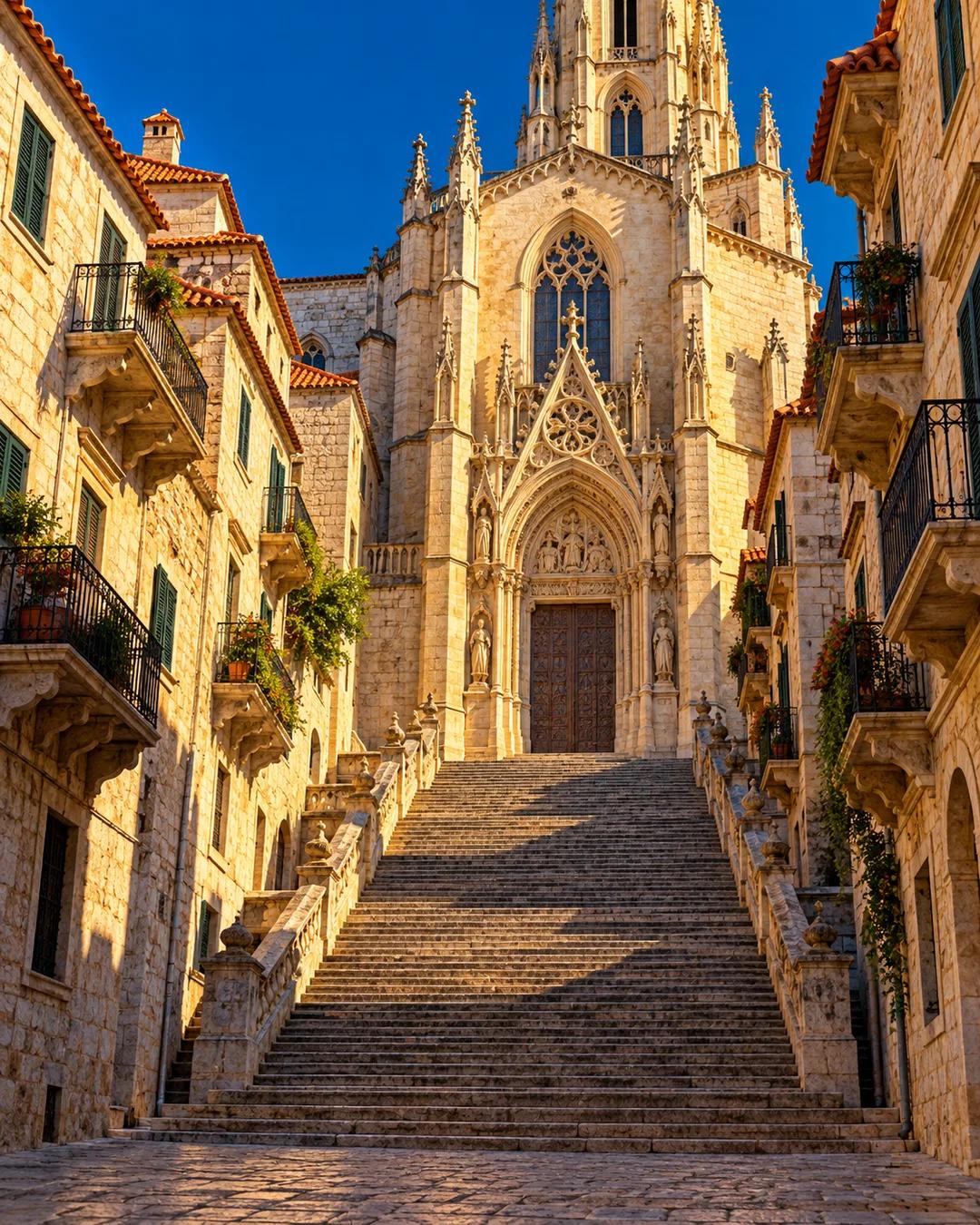
Its main door sits 10 m up

Completion and growth
The cross went onto the Tower of Jesus Christ in June 2026, marking the completion of the main build after 144 years. When Gaudí designed the church, it sat among open fields. The city grew far faster than the building could rise, and where sheep once grazed there are now dense Catalan neighborhoods.
The missing avenue
Gaudí's original plans called for a grand avenue leading up to the church. That land was built over in the 1970s as Barcelona expanded, and planning permission for the final design now sits in legal limbo.
A housing dilemma
Barcelona, like many cities, faces a housing crisis. Finishing the design could mean demolishing homes in one of the densest cities in Europe, or the space could instead become open green space in an overcrowded city.
How did a church end up inside Barcelona's grid?
Barcelona's Eixample district follows Ildefons Cerdà's grid plan, which was approved in 1859. The Sagrada Família's site was a block within that plan when work began in 1882. The grid spread over former farmland as the city's population climbed. Cerdà's blocks measure about 113 m on a side, with corners cut at 45 degrees.
Why would the tallest tower stop at 172 m?
Accounts of Gaudí's design often say he held the tallest tower just below Montjuïc, so that a human work would not surpass what God had made. The tower's 172 m puts it about a meter under the hill. Montjuïc, which rises above Barcelona's port, stands about 173 m high.
More from Real Engineering