Korva is a scroll of the internet’s best ideas.
Keep the first factory manual
Why stay manual
Automation is inflexible. When a product launches with a mildly or radically different architecture than the one planned for, a line built around the old design has to scramble to recover. The way to avoid it is to limit the one-way doors in the line for as long as possible. Automation comes last in Elon Musk's five-step algorithm for the same reason.
Base Factory 1
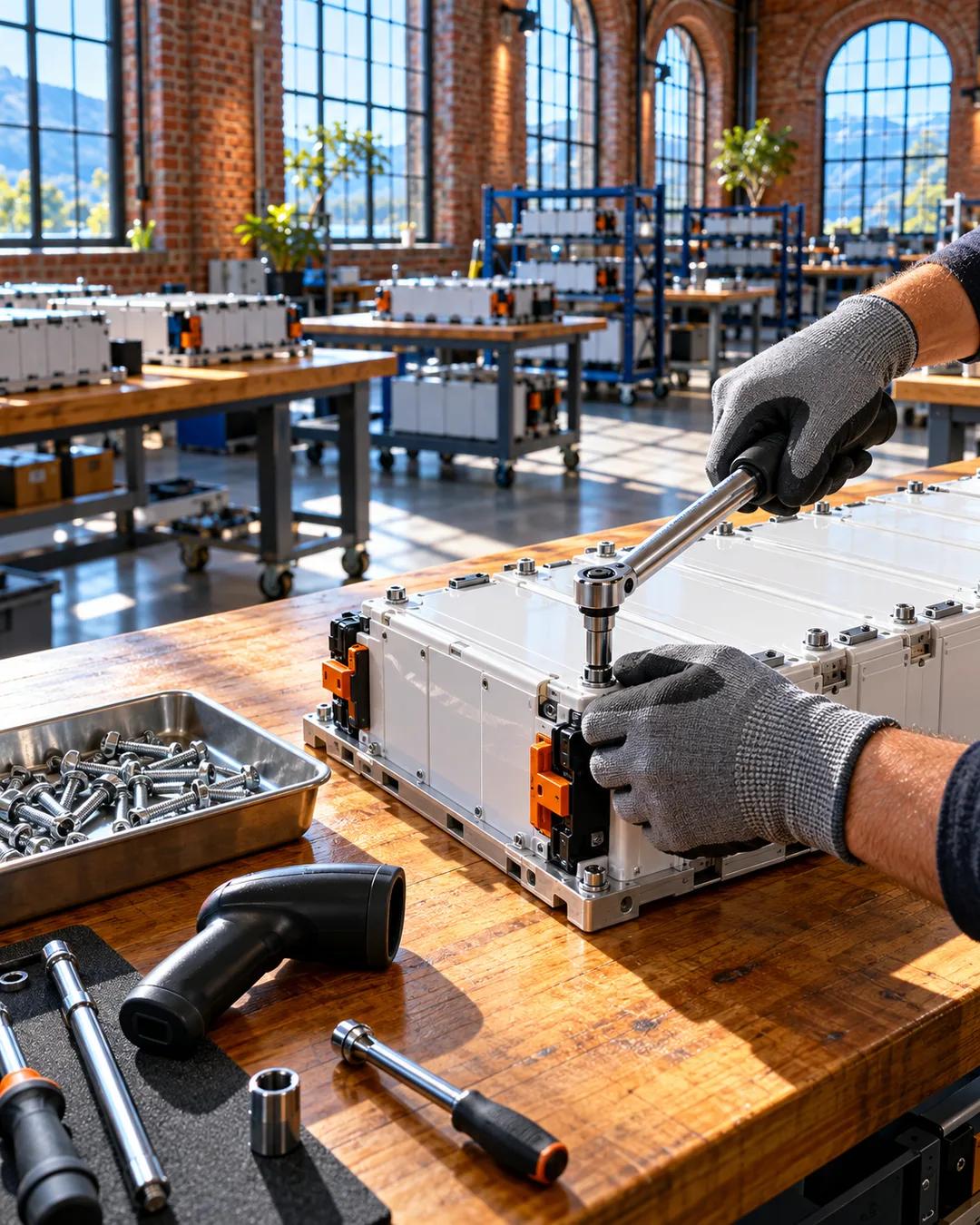
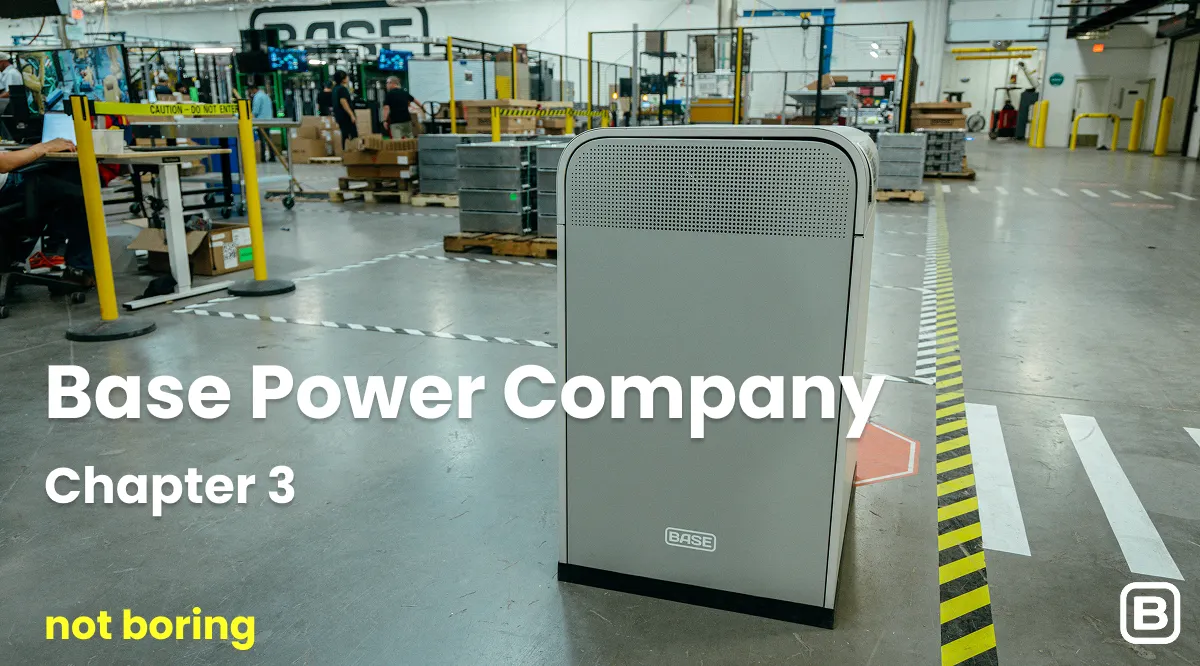
Base's first factory, BF1 in the old Austin American-Statesman building, stayed manual so the Hardware and Deployments teams could get the first batteries onto houses, see where they broke, and change the design. In a few months it landed two battery module lines and one inverter line, with four battery modules per inverter. By January, the pilot module line was running.
The ramp plan
The plan from there is steep. By year-end, production needs to reach about 1,300 Base Core systems a week, each made of four 10-kWh modules, roughly 5x today, through a night shift and fixes to uptime, cycle time, and workflows. After that comes 3x, then 2x, which puts 2028 at 30x today's daily output from the larger, more automated Base Factory 2.
Why are one-way doors costly in manufacturing?
Jeff Bezos popularized the phrase one-way door for decisions that are hard or impossible to reverse. In a factory, hard tooling, fixed conveyors, and automated stations are all one-way doors, since changing the product means rebuilding the equipment. Manual stations can be rearranged over a weekend with little cost. In April 2018, Elon Musk wrote that excessive automation at Tesla had been a mistake and added that humans are underrated.
Why does Musk put automation last?
Musk has described a five-step process: question the requirements, delete parts and steps, simplify and optimize, speed up the cycle, and only then automate. The order matters because automating a step that should have been deleted locks in waste at great cost. Each earlier step shrinks the process so the automation has less to do. Musk laid the steps out in interviews about SpaceX and Tesla production.
How do manual lines teach a team faster?
People adapt on the spot, so a manual station can change with each design revision and still turn out units. Workers report problems in real time, and engineers see exactly where parts misfit. Toyota's production system has long favored stabilizing a process by hand before automating it. Automation then encodes a process that has already been proven.
More from Packy McCormick