Korva is a scroll of the internet’s best ideas.
Knowing you're apathetic doesn't fix it

David looks back
A patient named David, whose motivation vanished after two small strokes, recovered with treatment and looked back on his months in a chair with disbelief. He could not understand how he hadn't managed to connect a few cables for his stereo. He remembered being a highly productive, socially engaged man. At the time, he had no such insight.
Carly Simon
Carly Simon has spoken about developing Parkinson's disease and named apathy as one of her biggest problems. She can't believe she has become apathetic. She sees the problem clearly and still cannot simply change it.
The magnetic coil
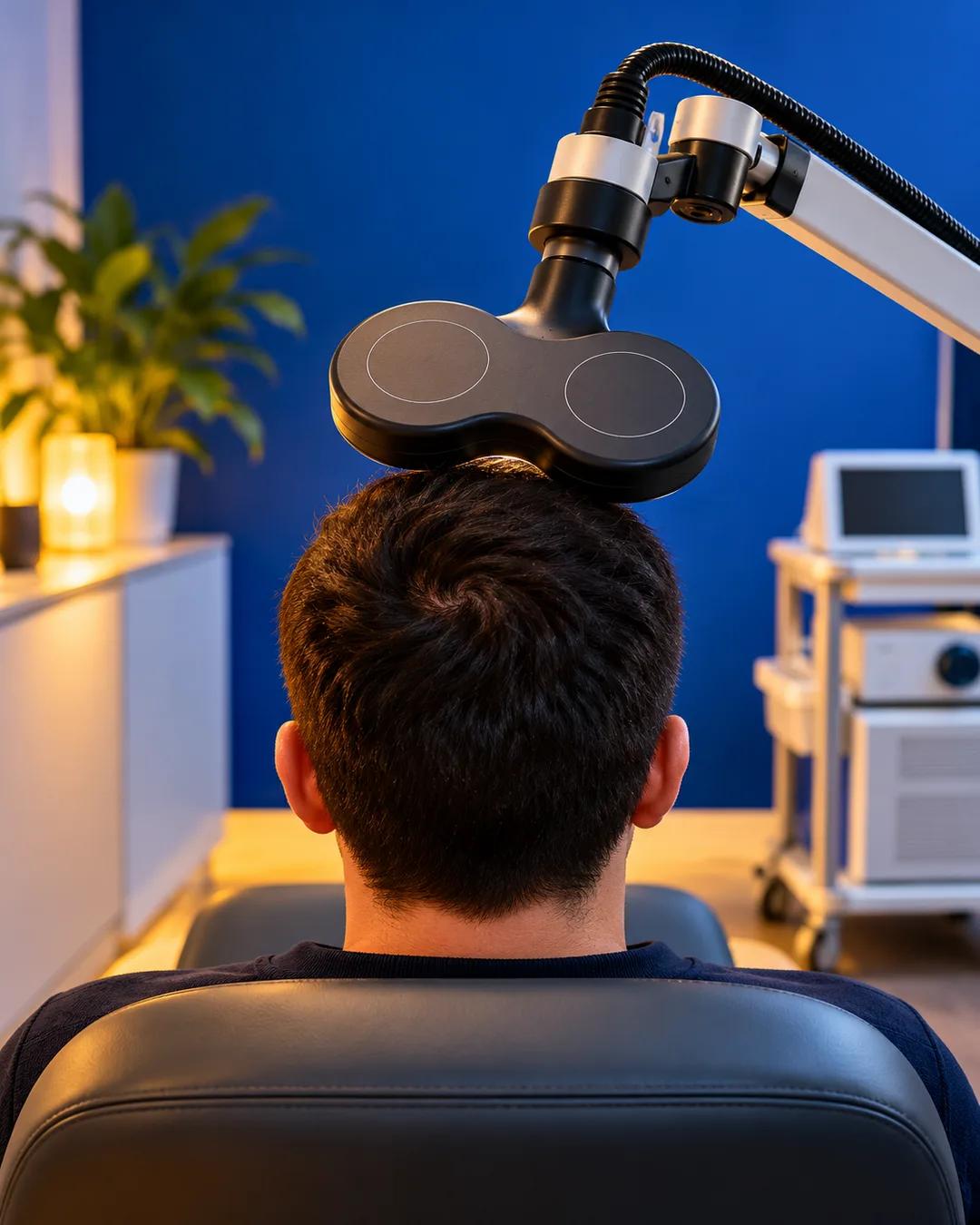
Transcranial magnetic stimulation gives a taste of this. A coil on the head can block a person's ability to move a finger, and willing it with everything they've got does nothing. Once the coil comes off, the finger taps freely.
Why can people fail to see their own deficits?
Lack of awareness of a deficit caused by brain damage is called anosognosia, a term coined by Joseph Babinski in 1914. He described it in patients who did not know that one side of their body was paralyzed. The unawareness comes from damage to the systems that monitor the self, so the patient has no signal that anything is wrong.
How does a magnetic coil block a finger?
Transcranial magnetic stimulation was introduced by Anthony Barker and colleagues in Sheffield in 1985. A coil held against the scalp creates a brief magnetic pulse that induces current in the cortex beneath it. Over the motor cortex, a single pulse makes a muscle twitch, and repeated pulses can temporarily disrupt the area's normal activity. Researchers sometimes call the effect a virtual lesion.
How common is apathy in Parkinson's disease?
A 2015 meta-analysis by Gilles den Brok and colleagues in Movement Disorders pooled studies of patients with Parkinson's disease. It found apathy in about 40 percent of them. Apathy was reported in patients with and without depression or dementia.
More from Huberman Lab