Korva is a scroll of the internet’s best ideas.

Kubrick wanted Carl Sagan gone
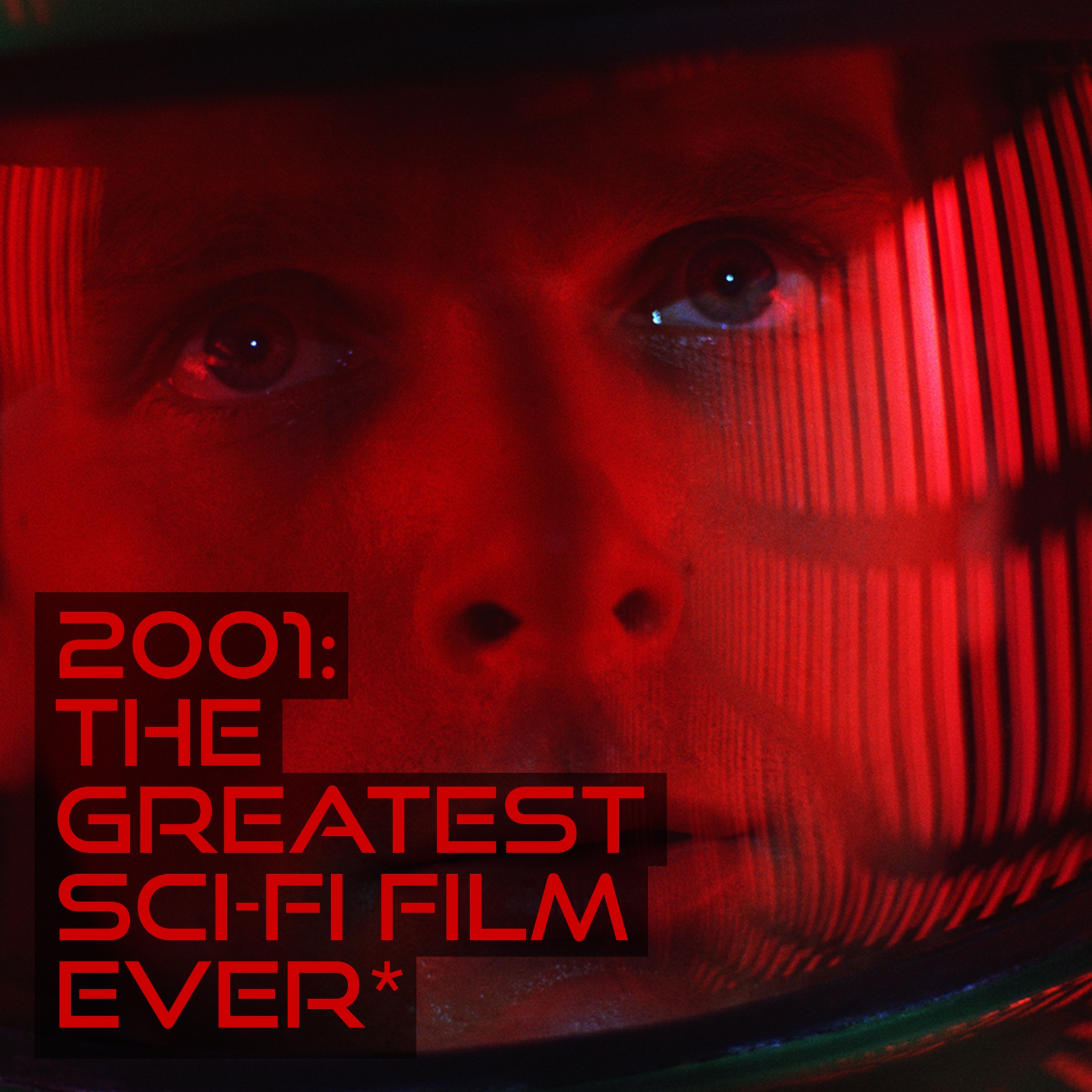
Sagan's Advice
Sagan was in his 20s and at Harvard when he came down to discuss with Clarke and Kubrick how the film would show aliens. His advice was to never show them, because that would take all the magic out of it.
Kubrick's Reaction
Soon after Sagan and Clarke left the apartment, Kubrick called Clarke at the Chelsea Hotel and told him to do whatever it took, even take Sagan to the New York World's Fair, because he wanted nothing more to do with him. Kubrick was self-educated, and a man had arrived from Harvard with a PhD and a certain attitude of knowing best.
What Happened Later
Years later, after seeing the film, Sagan wrote with some self-satisfaction that he was glad his advice had been taken. He wrote it without knowing about the phone call, and without knowing that the filmmakers had made several attempts to show aliens anyway.
Kubrick was fascinated by the skinny forms of Giacometti sculptures, and when he tried aliens, they were spindly creatures from a planet with lower gravity. Spielberg later used that look. None of the attempts came close to satisfying Kubrick.
Why would low gravity make creatures spindly?
Galileo argued in Two New Sciences, published in 1638, that larger animals need disproportionately thicker bones, because weight grows faster than the strength of a limb. The same reasoning runs the other way on a world with weaker gravity, where each limb carries less load and can be thinner. Astronauts show the effect in miniature: NASA research has found that bone density in weight-bearing areas drops by roughly one percent a month in orbit.
How did Giacometti arrive at his thin figures?
Alberto Giacometti, born in Switzerland in 1901, made Surrealist sculpture in Paris in the 1930s before turning to figures drawn from direct observation. During the Second World War he lived in Geneva and worked on extremely small figures. After returning to Paris in 1945, he began making tall, narrow figures with rough, scraped surfaces. His bronze Walking Man I, cast in 1960, stands about six feet tall.
How did Sagan handle aliens in his own fiction?
Sagan's novel Contact, published in 1985, has its aliens communicate through a radio signal that carries blueprints for a machine. The film version, directed by Robert Zemeckis, shows the alien taking the form of the heroine's late father, drawn from her own memory. Sagan died in December 1996, before the film's release in 1997.
More from Every Single Sci-Fi Film Ever*