Korva is a scroll of the internet’s best ideas.
Lab in Okinawa, deals in Tokyo

An institute for fundamental research
The Okinawa Institute of Science and Technology answers directly to the Prime Minister's Office by status, and its working language is English. Half of its people are Japanese and half are foreign, all of them PhD graduates, and it is a center of excellence for fundamental research.
The lab and the deals
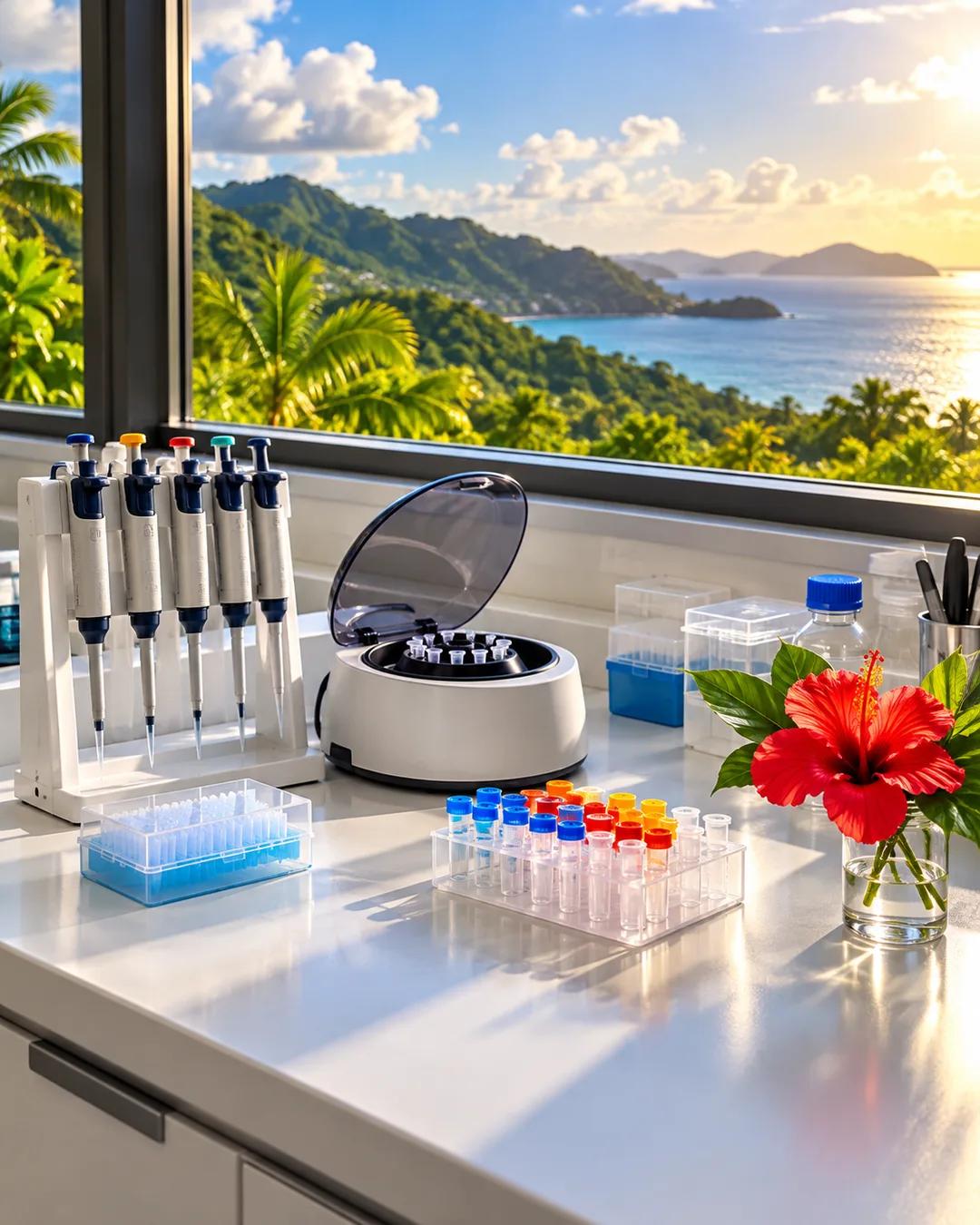
The startup's whole R&D operation sits in Okinawa, with its own lab bench. Samples from clients, from a large life science conglomerate to early-stage biotech startups, arrive directly in that lab, and graduates of the institute now move over to work with the company.
Funnily enough, Okinawa is also one of the blue zones, places where life expectancy is really high. Tokyo handles the business side, where the company benefits from Japan's aging society and a legal framework that fast-tracks regenerative medicine.
Why did Japan build a science university in Okinawa?
Japan's government created the Okinawa Institute of Science and Technology as a graduate university built around research units instead of traditional departments, so scientists from different fields share labs. Its first doctoral students arrived in 2012. Teaching and research run in English, which let it recruit scientists from around the world. The campus sits in Onna village on the island's northwest coast.
How did blue zones get their name?
Demographers Gianni Pes and Michel Poulain were studying the province of Nuoro in Sardinia, where they found villages with unusually many people past 100. They circled those villages on a map with a blue pen, and the label stuck. Writer Dan Buettner popularized the term in a 2005 National Geographic article and later extended it to other regions. Okinawa was among the places he added.
More from This Week in Startups