Korva is a scroll of the internet’s best ideas.
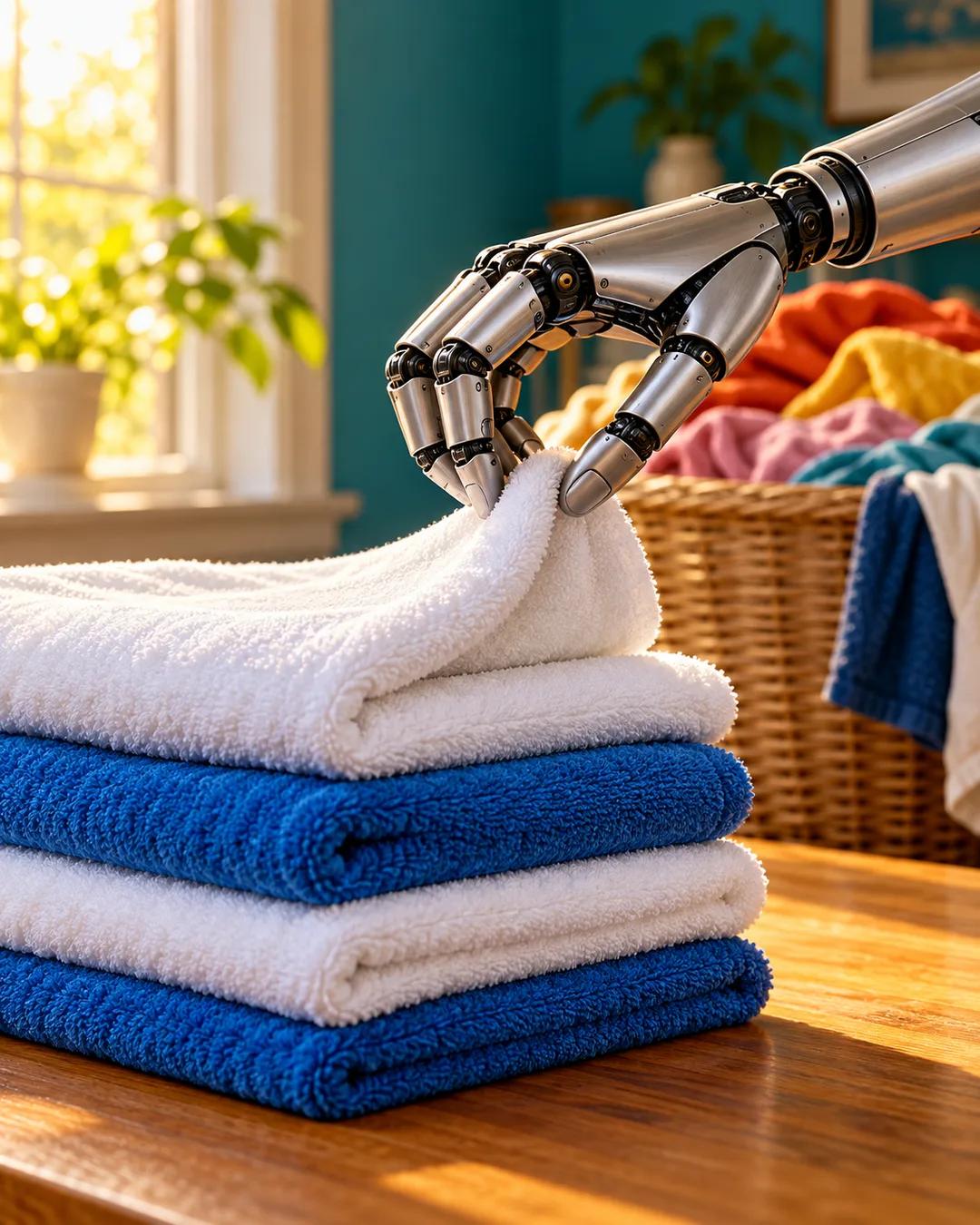
Laundry works because nobody's waiting

Why laundry
The task isn't time sensitive, so a robot can run all day and nobody notices its speed. Combined with the complexity and the dexterity it demands, that makes it a workable first job for a robot that has to learn.
Starting the flywheel
Which job comes first matters much less than the model behind it. Pre-training an amazing model and then post-training on top of it starts a flywheel, and once the flywheel turns, the range of tasks the robot can do keeps multiplying.
The language model parallel
Language models went this way. Their first uses were all language: essay writing, editing, and marketing copy. Jasper, an early application that took off, wrote marketing copy, and the uses spread from there.
Why is cloth so hard for robots?
A shirt can take almost endless shapes, and its shape changes with every touch. A robot cannot rely on a fixed model of the object the way it can with a rigid part. It also has to perceive folds and layers it can barely see. A 2010 UC Berkeley demonstration of a PR2 robot folding towels was noted for how long it took per towel.
How does a robotics flywheel keep spinning?
Robots doing real jobs collect data on what works and what fails. That data improves the model, which lets the robot handle more tasks, which puts more robots to work and gathers more data. Amazon also used a flywheel diagram to describe its marketplace growth. Business writer Jim Collins popularized the flywheel image in his 2001 book Good to Great.
Why did marketing copy come first for chatbots?
Text is the natural output of a language model, and a human can review a draft in seconds. Mistakes in copy cost little because someone edits them before publishing. Jasper launched in 2021 under the name Jarvis, built on OpenAI's GPT-3. It was among the first widely used businesses built on that model.
More from Invest Like the Best with Patrick O'Shaughnessy