Korva is a scroll of the internet’s best ideas.

The leafless pea
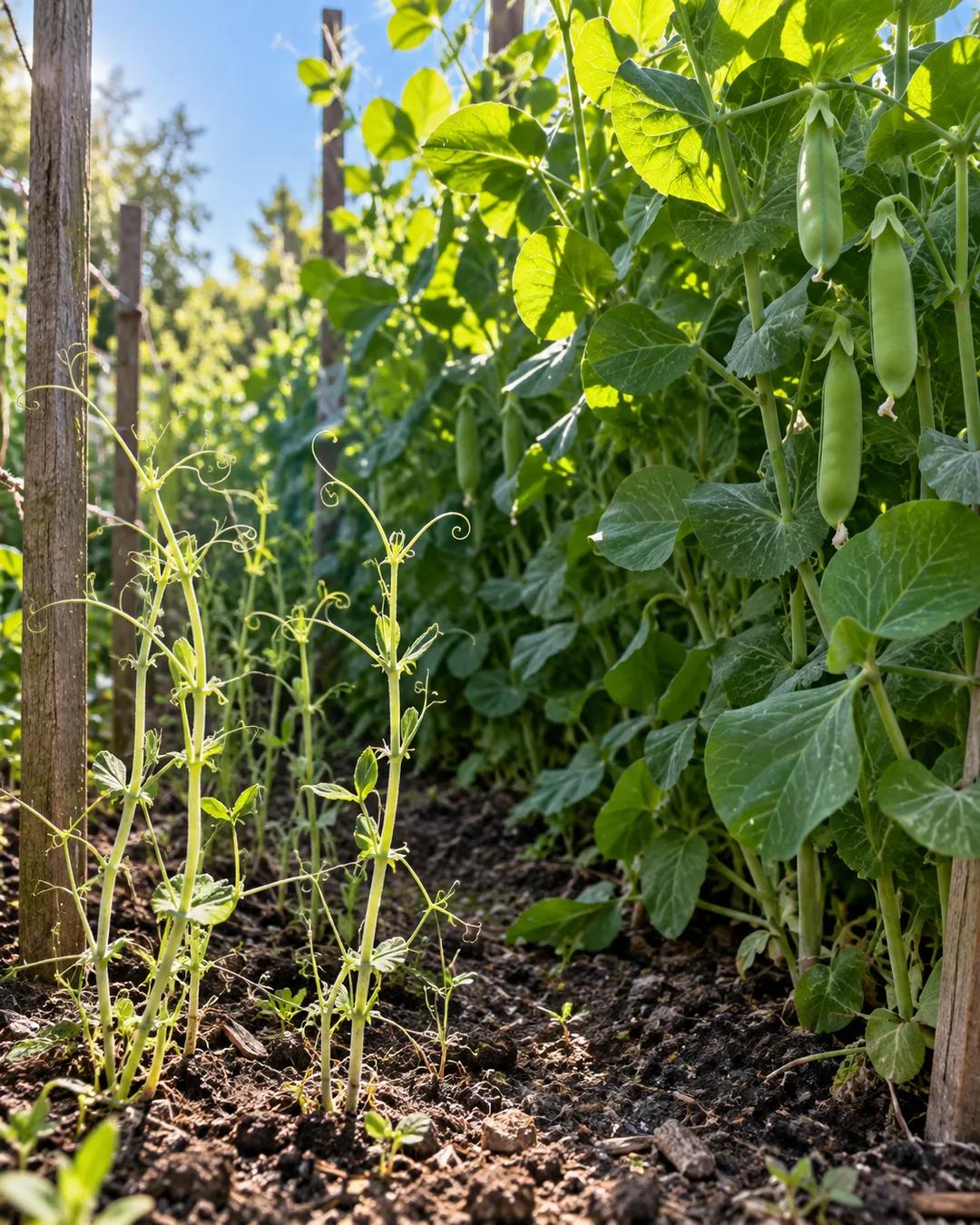
Someone had the mad idea of breeding peas with no leaves. They still photosynthesize, because they have green stems and stipules, little leaf-like things that are only an excuse for leaves.
Grown with other leafless peas and given everything they need, they do just fine and make pods and peas. Grown mixed in with leafy peas, they are hopeless. The leafy peas catch all the light, and the pathetic little appendages of the leafless ones cannot compete.
Why plants carry so many leaves
The result fits an idea about why plants carry so much foliage. Leaves are poor at capturing light, and most plants probably have more of them than they need, so the surplus works by denying light to rivals.
The evolutionary biologist John Maynard Smith once looked up at a tree on a walk and asked why trees have so many leaves, then answered it himself: to deny light to the competition.
Why do leafy plants win the fight for light?
Light is a resource that one plant can take from another, because a leaf absorbs the light that would have reached the leaves below it. Chlorophyll absorbs red light strongly and lets far-red light pass, so shaded plants receive a light mix that is low in red. A pigment called phytochrome senses that red to far-red ratio, and many plants respond by stretching toward the light. This shade avoidance response is why crowded seedlings grow tall and spindly.
How do leafless peas still make food?
Green stems and stipules contain chlorophyll, so they photosynthesize on a smaller scale. Semi-leafless pea varieties carry a mutation called afila that turns leaflets into tendrils. The tendrils interlock with those of neighboring plants, which holds the crop upright and lets air move through it. Cacti rely on a similar arrangement, with green stems doing the work after the leaves shrank into spines.
Why does crowding push trees to grow taller?
In a dense stand, a plant that overtops its neighbors takes the light and leaves them in shade, so height becomes a contest. Each tree pays for taller wood, yet the payoff depends on how tall the others grow. John Maynard Smith helped build evolutionary game theory for exactly this kind of problem, where the best strategy depends on what everyone else is doing. He and George Price introduced the idea of an evolutionarily stable strategy in a 1973 paper in Nature.
More from The joe gardener Show - Organic Gardening - Vegetable Gardening - Expert Garden Advice From Joe Lamp'l