Korva is a scroll of the internet’s best ideas.
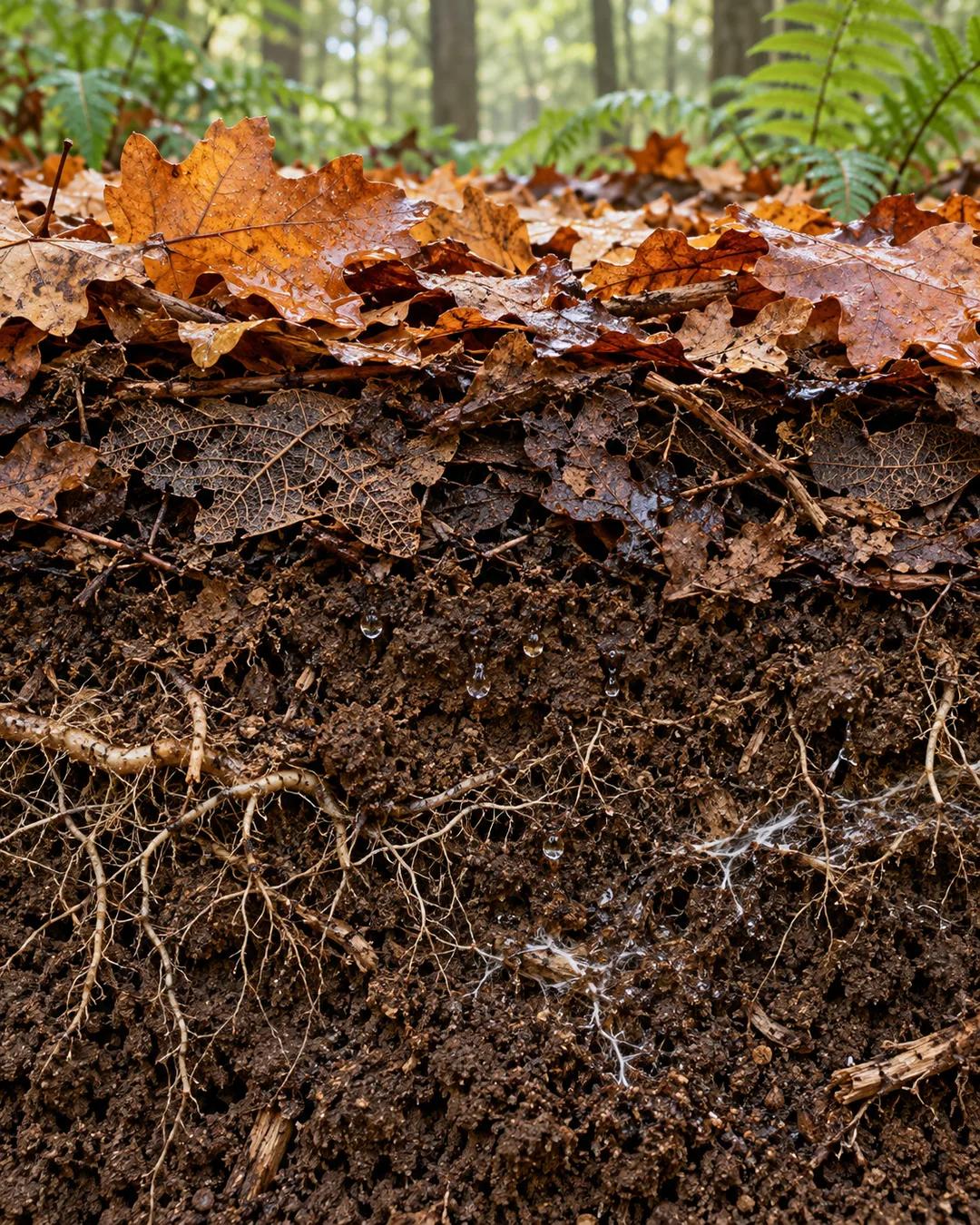
Most of the carbon in land-based ecosystems is in the soil, and wood holds less of it. Dead leaves add fiber, carbon, and organic matter, and organic matter helps soil hold more water, which counts for a lot wherever drought is a problem.
Healthy plants lose leaves all the time, and a yellow leaf can simply be a leaf that is dying.
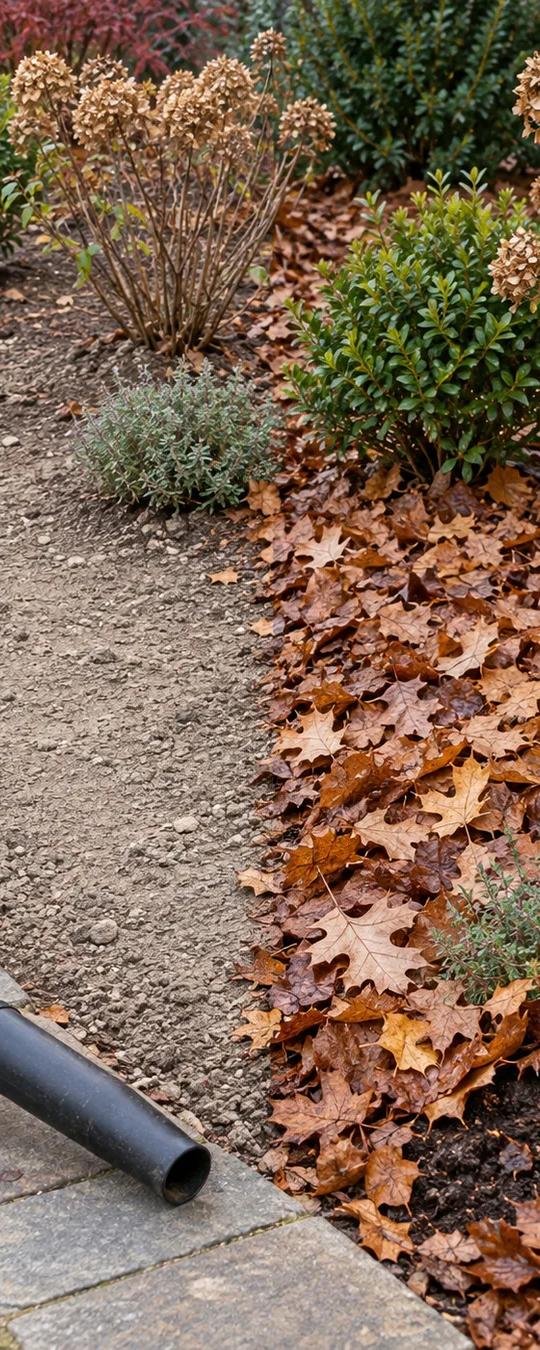
In lawns, where leaves are least welcome, running a mower over them chops them up and they disappear into the soil. The soil still gets the fiber, carbon, and organic matter, and the lawn stays clear.
Why does organic matter help soil hold water?
Organic matter such as humus has a huge surface area and binds water tightly. It also glues mineral grains into crumbs, and the spaces between the crumbs store water and let air and roots move through. A soil without it packs tight and sheds water or drains quickly. Soil structure built this way can take years to form and a single bad season to lose.
How do dead leaves become soil carbon?
Microbes eat the sugars and soft tissue of a dead leaf first, breathing out part of the carbon as carbon dioxide. What remains is tougher material such as lignin, which fungi break down more slowly. Some of the carbon ends up in microbial bodies and waste, which cling to mineral particles and can stay in the soil for decades. Lignin, which gives wood and leaf veins their stiffness, is broken down mainly by white-rot fungi.
Why does soil store more carbon than forests?
Trees hold carbon for as long as they live, but soil collects carbon from roots, leaves, and dead organisms over thousands of years. Reports from the Intergovernmental Panel on Climate Change estimate that the top meter of the world's soils holds more carbon than the atmosphere and all vegetation combined. Cold, waterlogged, and frozen soils store the most because decomposition runs slowly there. Peat bogs are an extreme case, holding dead plant material that has accumulated for thousands of years.
More from The joe gardener Show - Organic Gardening - Vegetable Gardening - Expert Garden Advice From Joe Lamp'l