Korva is a scroll of the internet’s best ideas.
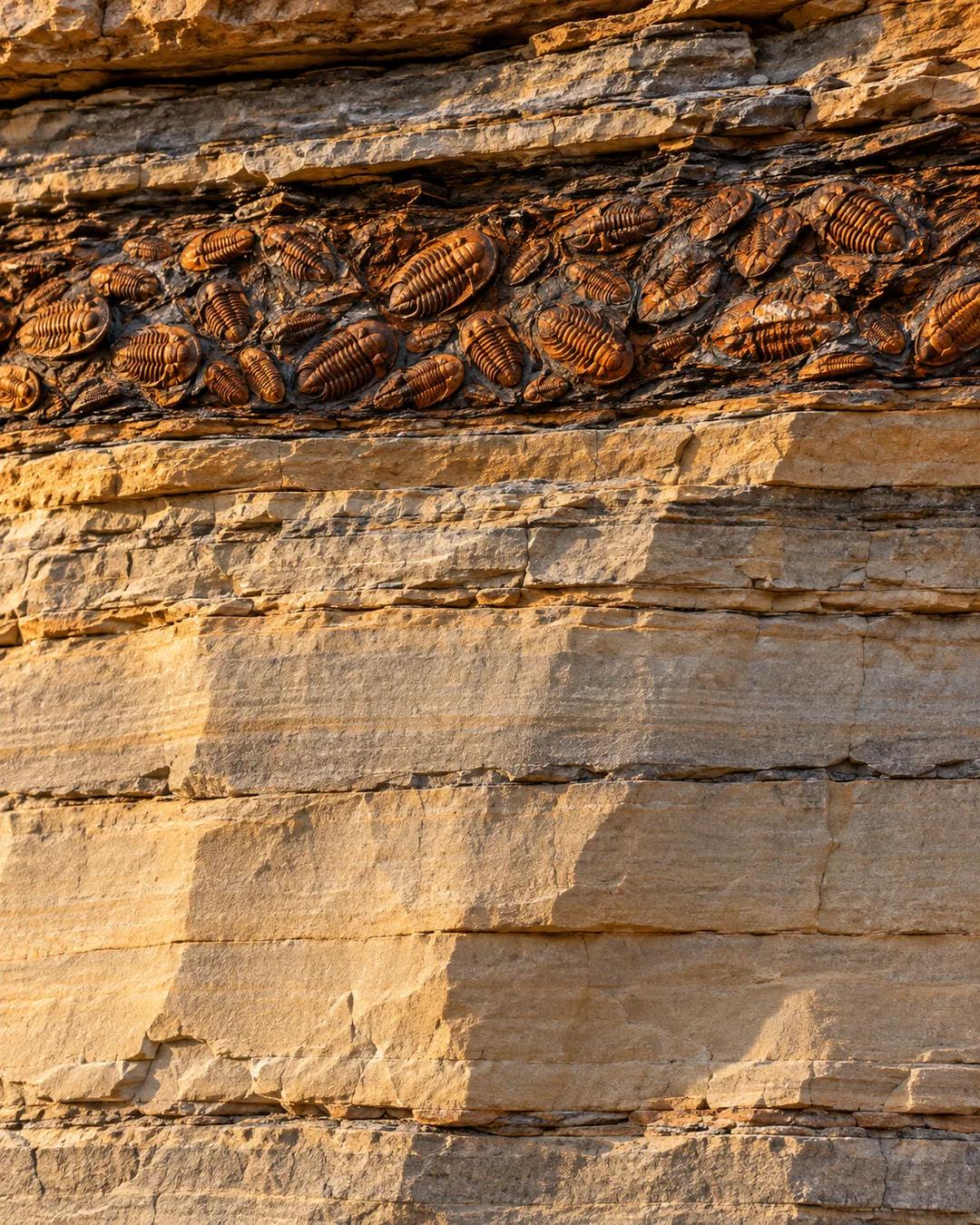
Life couldn't explode any earlier

The timing puzzle
Scientists call that burst the Cambrian explosion, and ever since its discovery they have asked why it happened when it did. In the 1990s, a theoretical biologist named Stuart Kauffman gave an answer: it couldn't have happened earlier. The raw material simply did not exist yet.
The adjacent possible
Kauffman named his theory the adjacent possible. What is possible next is governed by what is actual now. Each new development unlocks a further series of developments just beyond the frontier, so combinations and extensions that were unimaginable a few steps earlier become obvious. A future can move from outside the bounds of rational prediction to well within them.
The adjacent possible works as a shadow future hovering at the edges of the present state of things, a map of every way the present can reinvent itself. Author Steven Johnson popularized the idea in a 2010 book.
Why did rising oxygen matter for early animals?
Animals burn food with oxygen to power movement, and big, active bodies need far more of it than the microbial mats that dominated earlier seabeds. Geochemical records point to ocean oxygen rising in stages during the late Neoproterozoic, in the era just before the Cambrian. That rise lines up with the first appearance of larger animals. Cambrian seas held active predators such as Anomalocaris, which reached roughly a meter in length.
How did hard shells change the fossil record?
Before the Cambrian, most animals had soft bodies, and soft tissue rarely survives as a fossil. Around 540 million years ago, many separate animal lineages began building skeletons and shells from calcium carbonate, calcium phosphate, and chitin. Mineralized parts fossilize far more readily, so some of the sudden burst in the record reflects what was preserved as well as what evolved. Trilobites, with their mineralized exoskeletons, are among the most abundant fossils from the period.
How could eyes have set off an arms race?
In 2003, the zoologist Andrew Parker proposed the light switch theory, which holds that the arrival of eyes made hunting far more effective. A predator that can see its prey gives that prey a reason to evolve armor, speed, or burrowing, and each of those defenses then favors sharper senses in the hunter. Researchers still debate how much weight this deserves among the possible triggers. Trilobite eyes, built from calcite lenses, are among the oldest visual systems known from fossils.
How did Ediacaran life differ from Cambrian animals?
The Ediacaran biota, which lived roughly 635 to 539 million years ago, included frond-shaped, disc-shaped, and quilted forms that mostly stayed in one place. Most show no clear mouth, gut, or limbs, which makes them hard to compare with later animals. Cambrian animals added legs, jaws, shells, and eyes, along with the burrowing that churned up the seafloor. Mistaken Point in Newfoundland preserves some of the oldest Ediacaran fossils, dated to about 565 million years ago.
More from Curiosity Chronicle