Korva is a scroll of the internet’s best ideas.
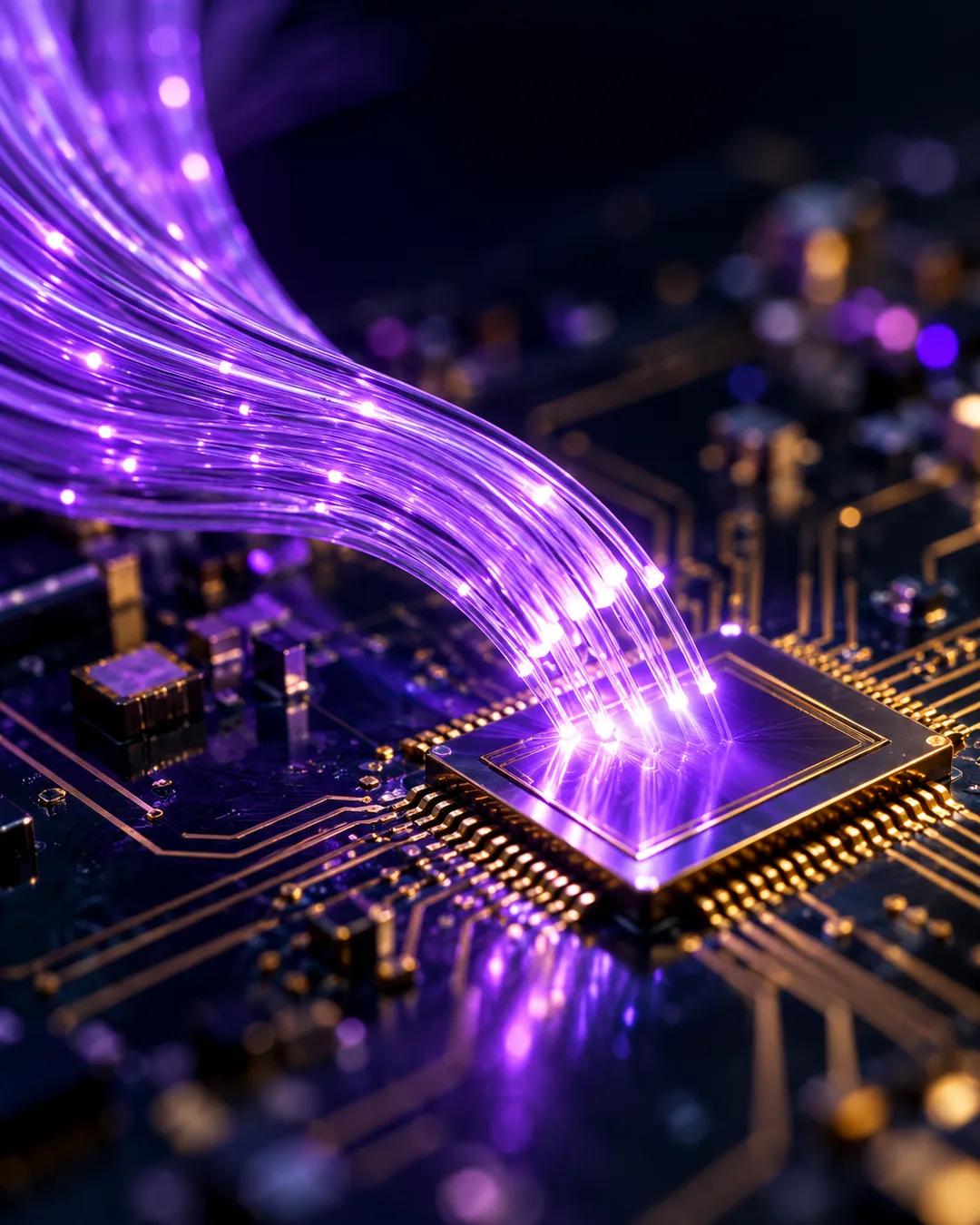
Light-based chips could disrupt Nvidia

Optics already in data centers
Data centers already use optics wherever they can: every connectivity piece of hardware that can be optic fiber now is. The only thing that has not been nailed is the chip.
The energy case
Optic chips would be very energy compliant, which would change the energy draw that data centers are known for today.
The Nvidia disruption bet
Intel once looked as though it could never be disrupted, and then came Nvidia. The bet is that within about ten years photonic computing becomes the Nvidia disruptor, or Nvidia buys those companies. Building a photonic company takes dramatically more capital than earlier technology did.
Why does light cost less energy than electricity?
Electrical signals push electrons through metal wires, which resist the current and turn part of the energy into heat. Light in an optical fiber carries signals with almost no resistive loss, and many wavelengths can share the same strand. Moving data between chips and cooling the heat it generates are major costs in data centers. Modern single-mode fibers lose around 0.2 decibels per kilometer at standard telecom wavelengths.
Why is a light-based chip so hard?
Silicon, the material of nearly all chips, is a poor light emitter because of its indirect bandgap, so it cannot easily produce laser light on its own. Photonic designs usually bring in other materials such as indium phosphide for the lasers and combine them with silicon waveguides. Aligning and bonding different materials at tiny scale is demanding work. Researchers have worked on integrating lasers with silicon for more than two decades.
How did optical fiber become practical?
In 1970, Corning researchers Robert Maurer, Donald Keck, and Peter Schultz made optical fiber with attenuation below 20 decibels per kilometer, the level seen as workable for communications. Telephone companies began installing fiber trunk lines in the late 1970s and 1980s. TAT-8, the first transatlantic fiber cable, entered service in 1988.