Korva is a scroll of the internet’s best ideas.
Longfellow's beard hid fire scars

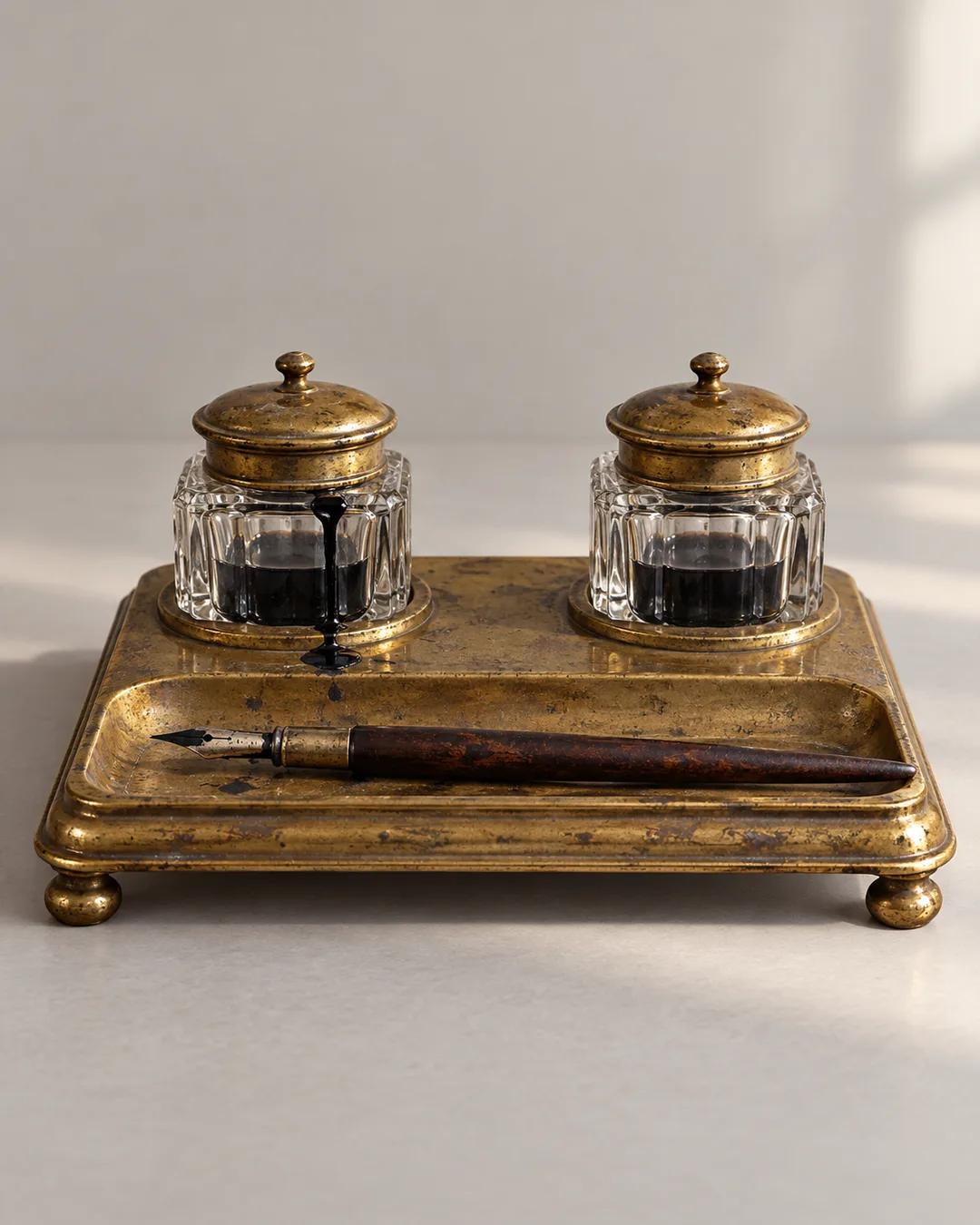
One of the plainest objects in the Century Safe was an ink stand that supposedly belonged to Longfellow, the celebrated poet who wrote Paul Revere's Ride. He is the reason every American knows the Redcoats are coming, because the version of the Revolutionary War most people carry around in their heads came from his pen.
When the safe was filled in 1876, he was still deep in mourning for his wife. She had been at home with him when her dress caught fire, and the burns he suffered trying to put it out were severe. He was never the same.
His poems about mourning effectively turned him into the nation's grief counselor.
Why was Longfellow the era's most famous poet?
Longfellow was the best-selling and most widely memorized American poet of the 19th century. His narrative poems, including Paul Revere's Ride, Evangeline, and The Song of Hiawatha, were read aloud at home and recited in classrooms. In 1884 he became the first American honored with a bust in Poets' Corner at Westminster Abbey in London.
How accurate is Paul Revere's Ride?
Longfellow published the poem in 1861, on the eve of the Civil War, and he took liberties with the history. In the real events of April 1775, a British patrol stopped Revere before he reached Concord, and William Dawes and Samuel Prescott also carried the warning. Historian David Hackett Fischer, in his 1994 book Paul Revere's Ride, laid out in detail how much the poem simplified that night.
How did Longfellow's wife die in 1861?
Frances Appleton Longfellow died in July 1861, a day after her dress caught fire at the family home in Cambridge, Massachusetts. Accounts say a flame ignited it as she was sealing packets of her daughters' hair with wax. Longfellow's burns kept him from attending her funeral. In 1879 he wrote the sonnet The Cross of Snow about her death, and it was not published until after he died.
More from 99% Invisible