Korva is a scroll of the internet’s best ideas.
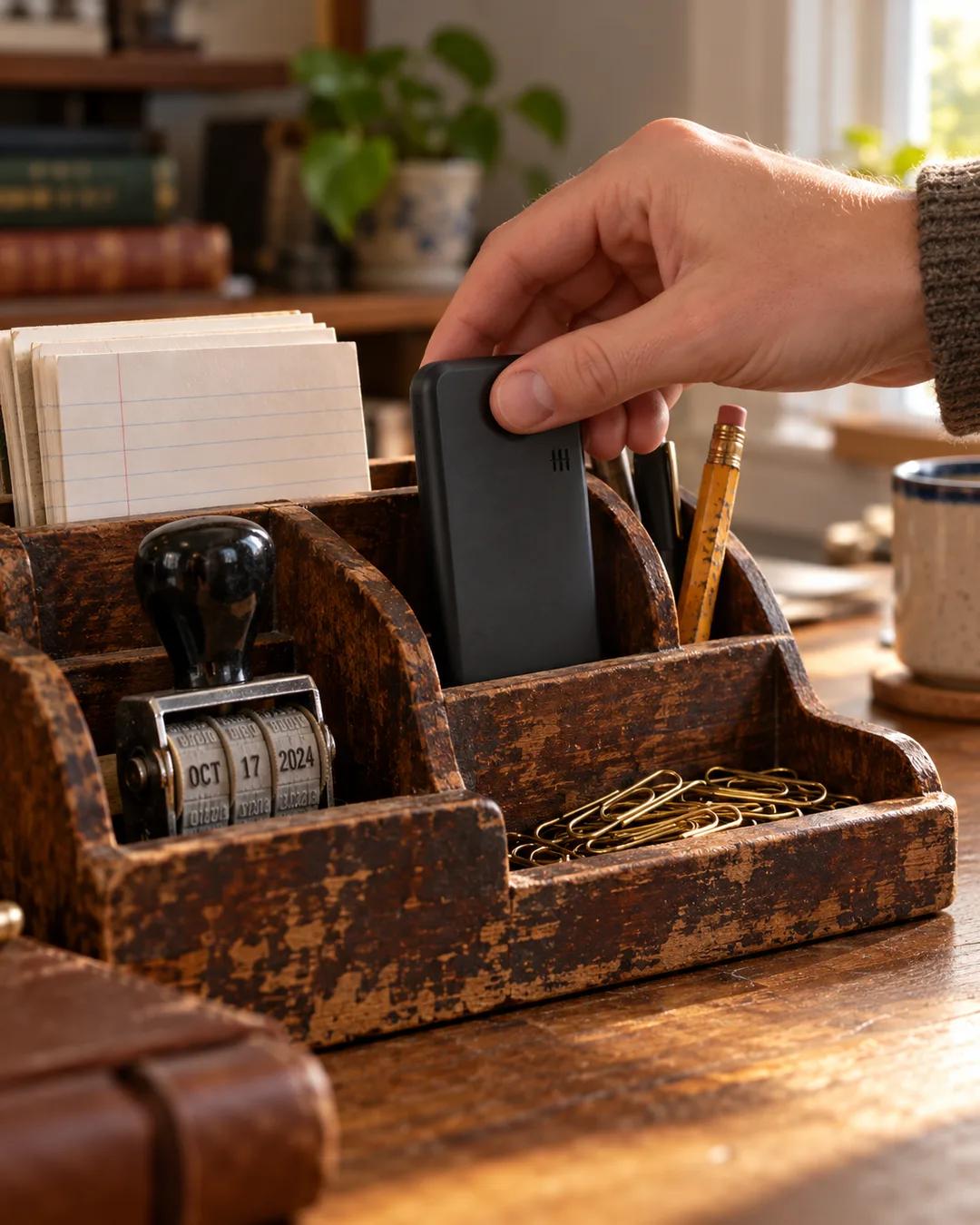

Nobody likes change
Nobody really likes change, and the bigger it is, the more people are afraid of it. Introducing change means leading people toward innovation instead of asking them to adopt completely different workflows.
Existing workflows
NumberEight's approach is to bring new things into existing workflows and existing terminology, matching how buyers already think. The product is privacy first, with a few small changes that make it more palatable and more familiar.
Repetition
Repetition does the rest. Every time the company enters a new channel, the questions are the same: who are these people, what is that data, and where is it coming from. Having answered them once, it answers them more easily the next time, and the fourth time is much easier than the first.
Why do people resist change so strongly?
Psychologists Daniel Kahneman and Amos Tversky showed in their 1979 prospect theory paper that losses weigh more heavily than equal gains. Their later work put the weight of a loss at about twice that of an equal gain. A change asks people to give up something certain for something promised, so it is felt first as a loss. Economists William Samuelson and Richard Zeckhauser documented a related status quo bias in a 1988 paper, finding that people disproportionately stick with their current option.
Why do innovations that fit old habits spread?
Everett Rogers, in his 1962 book Diffusion of Innovations, listed compatibility with existing values and practices as one of five traits that shape how fast an innovation spreads. The others are relative advantage, complexity, trialability, and observability. He drew on earlier studies such as the 1943 Iowa study of how farmers adopted hybrid seed corn.
Why did early cars look like carriages?
The first automobiles were called horseless carriages, and many kept the carriage's tall wheels and bench seats. Early websites copied the layout of printed pages. Designers call this borrowing of familiar forms skeuomorphism. Apple's early iPhone apps used stitched leather and paper textures in the calendar and notes apps.