Korva is a scroll of the internet’s best ideas.
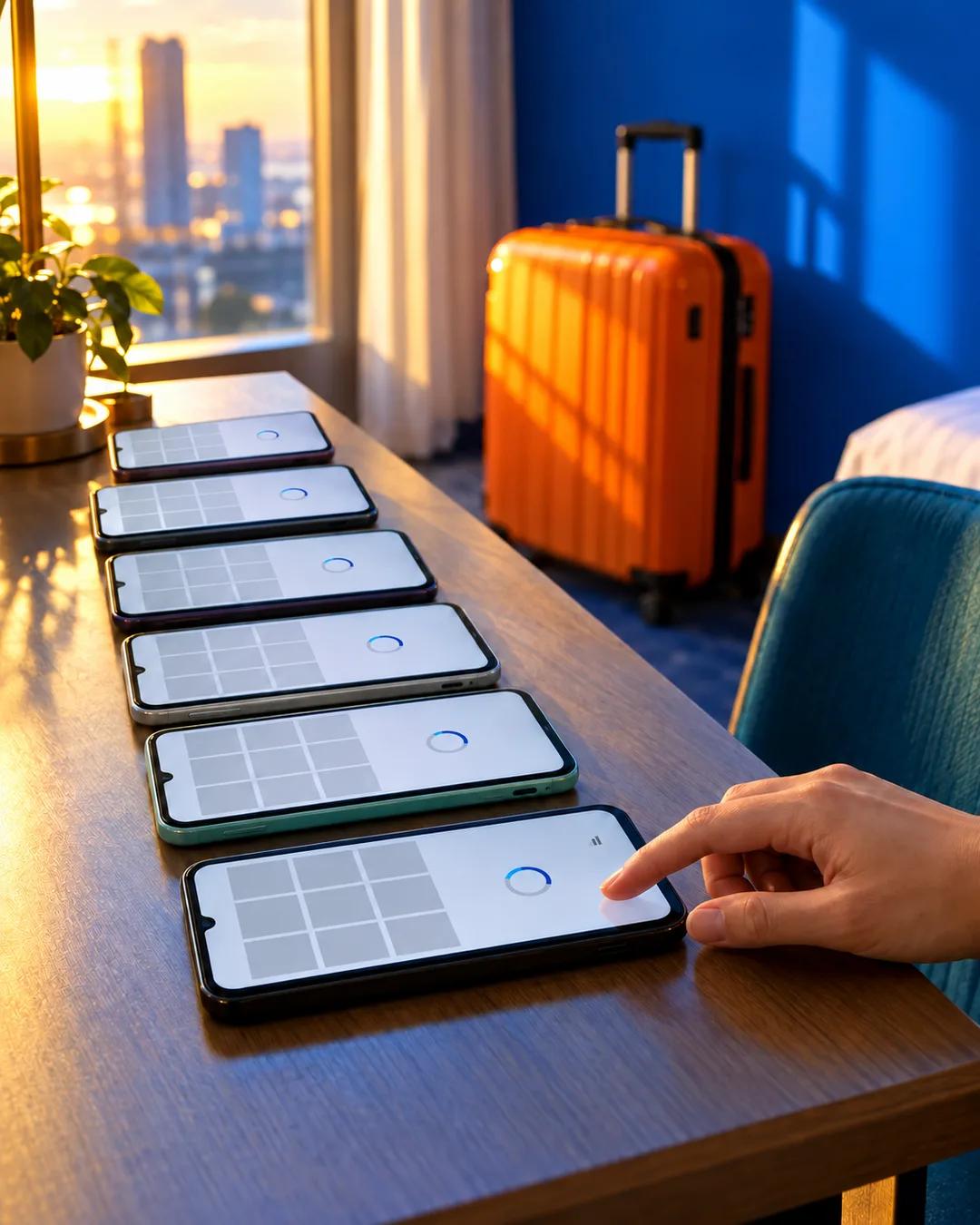
Marketplace feed wouldn't load in Chile

Marketplace was being tested in Chile ahead of a Latin America launch, and it was not doing as well as the other regions the team had launched. Nothing else they tried changed that.
So a very small crew of three made a research trip to Chile, carrying a whole bunch of Android phones. The cause surfaced as soon as the phones were opened up after landing: the LTE connection was much slower than what the team was used to in the US.
On those connections, the Marketplace feed barely loaded. People could not even load listings, which blocked growth in a way the numbers from home had not made obvious.
Why does slow LTE break a feed?
A feed needs many small requests: the list of items first, then a thumbnail for each one. On a slow or lossy connection each request waits behind the others, so delay, not top speed, often decides how fast a screen fills in. A phone on a crowded cell can see long delays even with a full signal. Engineers recreate these conditions in testing by throttling a connection on purpose.
Why test on older Android phones?
Android runs on thousands of device models, and in many markets the typical phone has less memory and a slower processor than a flagship. An app that feels instant on a new phone can stutter on one with two gigabytes of RAM. Android is the most widely used mobile operating system in the world, so its low-end phones set the experience for a large share of users.
How do teams test a launch in one country?
A staged rollout releases a product to one region before the rest, so the team can compare its metrics against regions that launched earlier. Differences in network quality, devices, and local habits show up as gaps in those numbers. A gap that no feature change explains often points to the environment instead. Companies have used this approach for decades to catch problems before a wide release.
More from Lenny's Podcast: Product | Growth | Career