Korva is a scroll of the internet’s best ideas.
Mary's letters hid in beer barrels

The barrel route
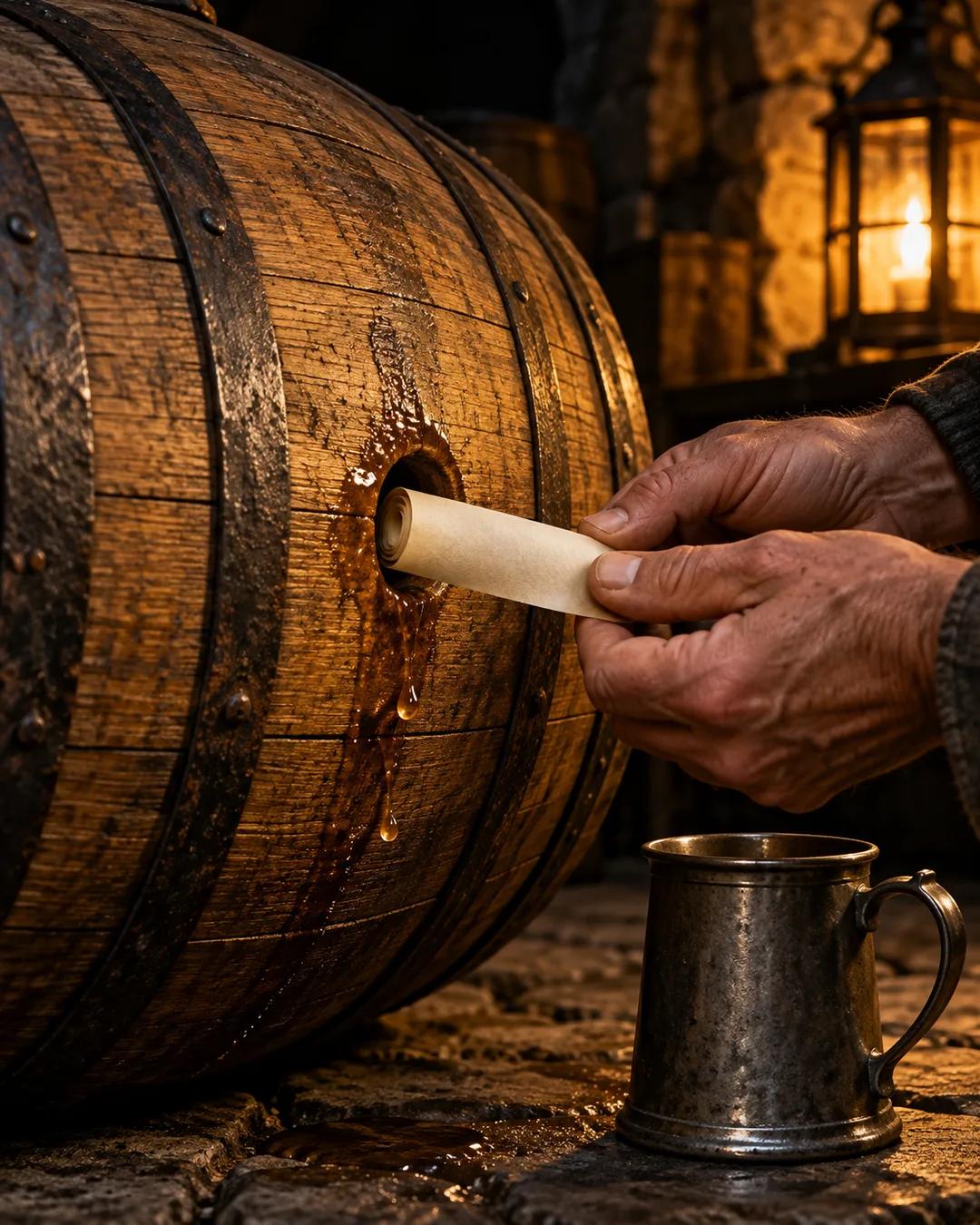
In 1586 Mary was held at Chartley Manor in Staffordshire, guarded by a granite-faced Puritan, Sir Amias Paulet, who banned her letters, searched her rooms at random, and searched anyone from her household who came back from the villages. Then a courier named Gilbert Gifford, an English Catholic who carried letters from Paris to the French embassy in London, came up with a plan. Letters would go into a beer-proof container, slide through the bunghole of the barrel the local brewer delivered to the manor, and be fished out by Mary's butler. Her replies would travel back the same way.
The Babington letter
It worked. Anthony Babington's letter proposing that six noble gentlemen assassinate Elizabeth reached her through the barrel, and so did her answer, which ended with a postscript telling him to burn it quickly. Days before the answer was written, riding in her carriage, Mary had looked out at a slender young man with yellow hair and smiled at him.
Walsingham's trap
The man was Thomas Phillips, a linguist, a mathematician, and the best code-breaker working for Elizabeth's spy chief, Sir Francis Walsingham. The whole route was Walsingham's trap. Gifford had been turned, Phillips had recruited the brewer, and Phillips opened every letter in both directions, deciphered it, and resealed it so well that nobody suspected. Mary's reply went to him, not to Babington. He made an English copy, drew a gallows on it, and called it the bloody letter.
How did Elizabethan code-breakers crack ciphers?
Most ciphers of the period swapped each letter for a symbol, often adding symbols for common words and meaningless symbols meant to confuse. Code-breakers cracked them by frequency analysis: the most common symbols probably stood for the most common letters, such as e and t in English. The method was first described by the Arab scholar Al-Kindi in the ninth century.
How could a spy open a sealed letter unnoticed?
Letters were closed with wax seals, and a skilled hand could lift one with a heated blade or take an impression of it. The letter was then read and resealed using a copy of the sender's seal. Walsingham's service employed a forger named Arthur Gregory who specialised in breaking and recreating seals.
Why did Walsingham let the plot keep running?
Mary had been linked to earlier plots, but there was never written proof in her own hand. Under the Act for the Queen's Safety, passed in 1585, a claimant to the throne could be tried if a plot was made for her benefit. A letter in which she approved Elizabeth's assassination would supply the proof the commission needed.
More from The Rest Is History