Korva is a scroll of the internet’s best ideas.
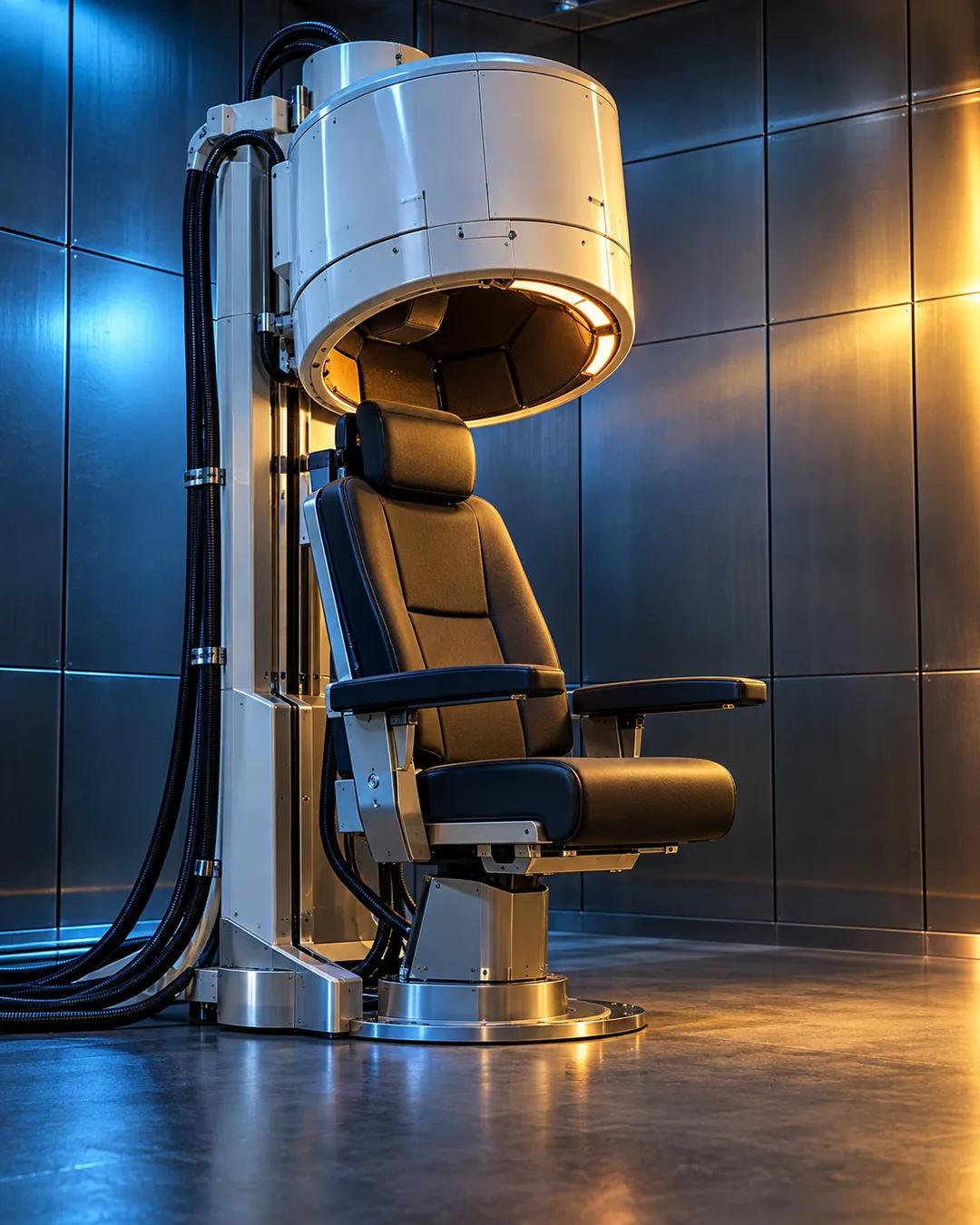
Meta decodes thoughts without surgery

A person wears a magnetoencephalography scanner, a helmet that reads the magnetic fields neurons produce, and the system reconstructs what they type from brain signals alone. It reached 61% average word accuracy, and 78% for the best participants. Earlier non-invasive methods managed roughly 8%.
Meta frames the work as a path to help millions of people with brain lesions who cannot communicate. Neuralink requires drilling a hole to implant electrodes, and Synchron threads sensors through blood vessels. This system needs neither, which makes it the most non-invasive option yet for those patients.
The hardware is the limit for now. Each scanner reportedly costs multiple millions of dollars, needs a magnetically shielded room, and sometimes weighs as much as a small car. Meta open sourced the system.
How can a helmet sense thoughts at all?
When neurons fire together, the electrical currents inside them create tiny magnetic fields. A magnetoencephalography scanner picks these up with extremely sensitive sensors called SQUIDs, which work only at superconducting temperatures. The fields are billions of times weaker than the Earth's magnetic field. Software then works backward from the pattern across the sensors to estimate which brain regions were active.
Why does the scanner need a shielded room?
The magnetic fields from the brain are so faint that a passing truck, an elevator, or the Earth's own field can swamp them. Magnetically shielded rooms are lined with layers of metal alloys, such as mu-metal, that steer outside fields away from the sensors. Traditional scanners also keep their SQUID sensors cold with liquid helium, which adds to the bulk and cost.
Why do implants usually beat scalp sensors?
The skull, scalp, and fluid around the brain smear and weaken the signals that pass through them. An implant sits at or inside the brain tissue, so it can listen to individual neurons or small groups of them. Recordings taken from outside the head blend the activity of enormous numbers of cells into one broad signal. That blending is why earlier non-invasive decoders were so much less accurate.
More from Lightspeed Venture Partners